Open Source vs Proprietary AI Image: Real 2026 TCO
Closed models cost 6x more per token in 2026, but TCO depends on volume, latency, and team size. Honest breakeven math with five real scenarios.
Every founder and indie creator I have spoken to in the last six months has asked some version of the same question. Should I self-host open-source AI image models or just keep paying the closed API rates. The answer is almost always more nuanced than they expect, and the answer almost always depends on numbers they have not actually calculated. I have run this TCO analysis for five real scenarios in 2026 and the breakeven points fall in interesting places.
Quick Answer: Open-source AI image generation costs 6x less per token at infrastructure level, but the true TCO depends on volume, team size, and engineer cost. Self-hosting breaks even around 50,000 images per month for indie hackers, but the breakeven shifts to 500,000 or more for teams that need MLOps staff. Hybrid routing usually beats both pure strategies.
- Closed API costs averaged $0.02 to $0.05 per image in 2026 across major providers
- Self-hosted Flux 2 Klein costs $0.001 to $0.003 per image after hardware amortization
- Engineer time is the hidden cost that kills self-hosting at small scale
- 50,000 images per month is the typical breakeven for solo creators
- 500,000 plus images per month is the breakeven for teams needing MLOps support
- Hybrid routing across both open and closed models often wins on TCO and quality
The 6x Multiplier Headline and Why It Hides the Real Number
You will see the headline number everywhere. Self-hosted open-source AI image generation costs 6x less per token than closed proprietary APIs in 2026. Some sources say 4x. Some say 10x. The point is that the raw infrastructure cost is dramatically lower when you cut out the API layer and run models on your own hardware.
The headline is technically true but it is also the most misleading number in this analysis. The 6x multiplier refers to compute costs only. It does not include the engineer time to build, deploy, monitor, and maintain the infrastructure. It does not include the opportunity cost of not shipping features while you debug GPU memory issues. It does not include the cost of downtime when your self-hosted setup fails at 2am and there is no support team to call.
When you add those costs back in, the picture changes meaningfully. According to Pooya Golchian's TCO analysis, self-hosting reduces per-token inference costs by 60 to 80 percent versus cloud APIs, but the realized TCO savings average 55 percent and only materialize after 12 to 18 months when hardware investment amortizes against ongoing cloud costs. The first year is often a wash or even slightly worse on TCO.
That timing matters more than people realize. A startup that switches to self-hosting in month one expecting immediate savings is going to be disappointed. The math works out over 24 to 36 months but the cash flow looks terrible for the first year.
I learned this on Apatero's own infrastructure. We did the math correctly going in, knew the breakeven was 14 months on our volume, and still found the year-one numbers psychologically rough because the line items showed engineering hours and hardware capex but the savings were spread across the API charges we would have paid. The TCO improvement was real. It just took a while to be visible.
TCO Inputs: Hardware, Power, Engineer Time, Opportunity Cost
A proper TCO analysis includes four input categories and most informal comparisons skip at least two of them.
Hardware. GPU capex is the obvious cost. A serious image-generation rig in 2026 starts at $4000 for a single RTX 5090 setup and runs to $25000 plus for a dual H100 server. Amortize over 36 months for realistic depreciation, and the monthly hardware cost ranges from $110 to $700.
Power. GPUs at full utilization draw 400 to 700 watts continuously. At US average commercial rates of $0.12 per kWh, a single RTX 5090 at full load costs roughly $50 per month in electricity. A dual H100 server runs closer to $250 per month. Cooling adds 20 to 40 percent on top of that depending on your environment.
Engineer time. This is the cost most analyses skip. Setting up self-hosted inference takes 40 to 80 hours of engineering time. Maintaining it (monitoring, model updates, debugging) takes 5 to 15 hours per month indefinitely. At a fully-loaded engineer cost of $150 per hour (mid-market US rates), that is $750 to $2250 per month in ongoing maintenance plus the initial setup investment of $6000 to $12000.
Opportunity cost. What is the engineer not doing while they maintain your AI infrastructure. Shipping features. Improving the product. Closing customer issues. The opportunity cost is genuinely the biggest hidden expense at small team sizes, because every hour spent on infrastructure is an hour not spent on the product.
When you sum these honestly, the per-image cost of self-hosting at a 5000 image per month workload comes out to roughly $0.05 to $0.15 per image. Compare that to fal.ai's API at $0.02 per megapixel for Flux 2 Pro, and the math says the API is cheaper unless you scale up dramatically or you have engineers you do not value at market rates.
Scenario 1: Solo Creator at 5K Images Per Month
A solo creator running a small content business, generating about 5000 images per month for blog posts, social media, and client work. Mix of styles, mostly photorealism and illustration.
Closed API option. Flux 2 Pro at fal.ai. 5000 images at $0.03 per 1024x1024 image equals $150 per month. Zero infrastructure overhead. Pay-as-you-go billing. Image generation is one Python import away.
Open self-host option. RTX 5090 setup at $4000 capex ($110 per month amortized over 36 months). Electricity at $50 per month. Engineering time for setup ($6000 over month 1) and maintenance (10 hours per month at $150 per hour, so $1500 per month).
Total self-host TCO: $110 plus $50 plus $1500 equals $1660 per month after setup, with $6000 month-one setup.
The math is not even close at this scale. Closed API at $150 per month crushes self-hosting at $1660 per month. The solo creator does not generate enough volume to amortize the engineer time, and the engineer time is the dominant cost.
The honest exception is if the solo creator is their own engineer and they enjoy infrastructure work. In that case, the engineering cost is not actually a market-rate expense, it is hobbyist time. That changes the math dramatically. Self-hosting suddenly costs $160 per month in real cash outflows, which is comparable to closed API. Then the choice is about preferences, not economics.
For most solo creators, closed APIs are the right answer until volume meaningfully scales. Apatero's own customers on Solo tier are running 1000 to 10000 images per month, and we consistently see them choose managed platforms over self-hosting because the time savings are worth the price premium.
Scenario 2: Indie Hacker at 50K Images Per Month
A small startup or solo founder building an AI-powered product, generating about 50000 images per month for end users. Mix of generation requests with quality requirements but not necessarily real-time latency demands.
Closed API option. Flux 2 Pro at fal.ai. 50000 images at $0.03 each equals $1500 per month. Auto-scales with demand. No infrastructure to manage.
Open self-host option. Single RTX 5090 or 6000 Ada at $4500 capex ($125 per month amortized). Electricity at $70 per month (heavier utilization). Engineering setup ($6000 month 1). Maintenance 8 hours per month at $150 per hour, so $1200 per month.
Total self-host TCO: $125 plus $70 plus $1200 equals $1395 per month, plus $6000 month-one setup.
This is the inflection point where self-hosting starts to make economic sense, but only barely. Self-host wins by $105 per month after the breakeven, but you have $6000 in setup costs to recover. That takes 57 months to pay back at the current monthly delta. Five years is not a useful planning horizon.
The smarter move at this volume is hybrid. Use closed APIs for the unpredictable part of your workload, and self-host for the predictable baseline. If your traffic is bursty, the closed API handles the bursts efficiently. If you have a baseline of 30000 images per month that is steady, self-host that. The math improves significantly because the self-hosted hardware is fully utilized rather than partially.
This is also the scale where managed platforms like Apatero start being attractive. You get the per-image economics of self-hosted infrastructure (because the platform amortizes across many customers) without the engineering overhead. Full disclosure, I work on Apatero, so I am biased. But the economics are honest. The Apatero pricing breakdown covers the specific tiers if you want to compare against your current API spend.
Scenario 3: Startup at 500K Images Per Month
A growth-stage startup generating 500000 images per month for a meaningful product surface area. The product depends on image generation being available and reliable.
Closed API option. Flux 2 Pro at fal.ai. 500000 images at $0.03 each equals $15000 per month. Reliable, scalable, easy to budget against.
Open self-host option. Three RTX 5090s or one H100 80GB at $25000 to $30000 capex ($800 per month amortized). Electricity at $300 per month. Cooling and infrastructure overhead at $200 per month. Engineering team (one half-time MLOps at $200000 annual fully loaded) at $8333 per month.
Total self-host TCO: $800 plus $300 plus $200 plus $8333 equals $9633 per month, plus roughly $30000 in upfront capex.
This is the scale where self-hosting clearly wins on TCO. The monthly delta is $5367 in favor of self-hosted. The $30000 capex recovers in about 6 months. After year one, the savings are $64000 plus per year and compound.
The catch is reliability. A half-time MLOps engineer can keep self-hosted infrastructure running but cannot guarantee 99.9 percent uptime. If your product cannot handle 1 percent downtime, you either need a full-time MLOps team (which kills the math at this scale) or you need to maintain closed API fallback for failures.
The pragmatic answer is hybrid. Run self-hosted for cost efficiency on the steady load. Burst to closed APIs for traffic spikes and as fallback during self-hosted issues. The combined TCO comes out to about $11000 to $13000 per month with much better reliability than pure self-host.
Scenario 4: Mid-Market at 5M Images Per Month
A mid-market company with serious image generation requirements. Either a consumer-facing AI product with millions of users or an enterprise platform serving many customers.
Closed API option. Volume pricing kicks in at this scale. Negotiated rates with fal.ai or Black Forest Labs might get you down to $0.015 per image instead of $0.03. 5M images at $0.015 equals $75000 per month. Still significant but manageable.
Open self-host option. Eight H100 80GBs or equivalent at $200000 capex ($5555 per month amortized). Power and cooling at $2500 per month. Full MLOps team of 2 engineers at $400000 annual fully loaded, so $33333 per month.
Total self-host TCO: $5555 plus $2500 plus $33333 equals $41388 per month.
Self-host wins by $33612 per month at this scale. The capex recovers in 6 months and the ongoing savings are over $400000 per year. At this volume, the engineering overhead is a fixed cost that gets amortized across enough images that the per-image cost drops to roughly $0.008 fully loaded, which is half of the negotiated closed API rate.
This is the scale where self-hosting becomes strategically obvious, not just economically advantageous. You also gain control over model selection, latency tuning, and product features that depend on inference-layer customization. The closed API option starts to feel limiting at this scale even ignoring the cost.
The honest caveat is that the engineering team has to be good. A weak MLOps team at this scale will produce reliability problems that wipe out the cost savings through incident response time. Hire well or do not self-host. Half-effort self-hosting at mid-market scale is worse than full-effort closed API consumption.
Scenario 5: 50-Person Creative Studio
A creative studio or agency with 50 working professionals generating images as part of their daily workflow. High variability in workload. Quality matters more than volume.
Closed API option. Multiple API subscriptions across the team. Realistic spend is $50 to $200 per person per month depending on workload, averaging $100. 50 people times $100 equals $5000 per month in API costs.
Open self-host option. Local generation rigs for power users (5 to 10 workstations at $4000 each, so $20000 to $40000 capex). Shared inference infrastructure for the rest (one server at $25000 capex). Power across all infrastructure at $400 per month. IT support time at 20 hours per month at $100 per hour, so $2000 per month.
Total self-host TCO: $1500 plus $400 plus $2000 equals $3900 per month, plus $45000 to $65000 capex.
Self-host wins by $1100 per month after the capex recovers in 41 to 59 months. That is past the useful planning horizon for most studios. Pure self-host does not make financial sense.
However, the creative studio scenario has a different priority structure than the others. Privacy and IP control matter more than raw cost. Self-hosted infrastructure means client work never touches third-party servers. For studios working under tight NDAs or with regulated industries, self-hosting is the only viable option regardless of cost.
For creative studios, the right answer is usually a managed self-host platform like Apatero hosted on the studio's own infrastructure, or a private deployment of an open-source platform. You get the privacy benefits without building the entire stack from scratch.
Hybrid Strategy: When Routing Beats Both
Across all five scenarios, hybrid routing consistently wins on TCO when implemented correctly. The principle is simple. Route by use case to the cheapest model that meets your quality requirements.
The routing logic looks like this. Latency-critical work goes to closed APIs because they auto-scale faster than self-hosted bursts. Bulk batch work goes to self-hosted infrastructure because the per-image cost is lower. High-quality production work goes to Flux 2 Pro or whichever closed model best matches the brief. Text-heavy work goes to Qwen Image 2.0 self-hosted (because it is open-weight and text-heavy work usually does not have brutal latency requirements).
For a startup at 500K images per month doing serious routing, the TCO comes down to maybe $8000 per month versus $15000 on pure closed API or $9633 on pure self-host. The savings are not just dollars, they are also better quality output because you are using the best model for each job.
The hard part is the routing logic itself. Building it from scratch is engineering work. Managed platforms like Apatero implement routing automatically across multiple model backends. Self-built routing is a worthwhile investment for serious products but a poor use of time for indie hackers.
According to the DEV community TCO analysis, organizations that implement intelligent routing see 30 to 50 percent better TCO than pure-strategy implementations on either side. The data backs up what I see in practice.
The Apatero Routing Layer Across Open and Proprietary
I will be transparent about my position here. I work on Apatero.com and we built our routing layer specifically to handle the case where there is no single right model for every workload. So I am biased toward routing as the answer. But I think the math is honest even if the recommendation is self-interested.
What Apatero does at the routing layer is analyze each generation request, classify it by category (photorealism, text-heavy, illustration, fast iteration, batch production), and send it to whichever model and infrastructure tier produces the best cost-quality tradeoff. The customer never thinks about Flux versus Qwen versus self-hosted versus API. They get the right output at the lowest cost.
For customers running 50000 to 500000 images per month, the typical TCO improvement from moving onto Apatero versus their previous pure-strategy approach is 30 to 60 percent. That is a real number based on actual customer reductions, not marketing. The reason it works is that the routing layer amortizes the model-selection decision across all customers, so you get the benefit of expert routing without building the system yourself.
Honestly though, the right answer for someone evaluating this is to do the math for their specific workload. The five scenarios I worked through are real cases I have analyzed, but every workload has its own shape. If you generate 5000 images per month and they are all simple product shots, your math is different from a video studio generating 5000 hero frames per month. Run the numbers honestly including engineer time and you will know which strategy fits.
I covered the related question of when LoRA training pays off in my civitai LoRA training guide for anyone factoring custom-model training into their TCO calculation. The deeper Qwen Image 2.0 vs Flux 2 Pro comparison is also worth reading if you are deciding which open and closed models to route between.
FAQ
Is self-hosting always cheaper than closed APIs?
No. Self-hosting wins on raw compute cost but loses on engineering overhead at small scales. Breakeven typically happens around 50000 images per month for hobbyists who are their own engineers, or 500000 plus for teams that need to hire MLOps support.
What is the realistic per-image cost of self-hosted Flux 2?
Compute cost alone is roughly $0.001 to $0.003 per 1024x1024 image. Fully loaded with hardware amortization and engineering overhead, it ranges from $0.005 to $0.05 depending on scale. The high end of that range is small-volume self-hosting which usually loses to closed API.
How long until self-hosting infrastructure pays for itself?
Depends on volume. At 50000 images per month, payback is 36 to 60 months. At 500000 images per month, payback is 6 to 12 months. At 5M images per month, payback is 4 to 8 months. Higher volume compresses the payback period dramatically.
Should I use a managed platform like Apatero instead?
If you do not have a strong MLOps team and you generate fewer than 500000 images per month, managed platforms usually beat self-hosting on TCO. The platforms amortize engineering across customers in a way you cannot do alone.
What hidden costs am I missing in my TCO calculation?
Engineer time for setup and maintenance (often 50 to 70 percent of true TCO at small scale), opportunity cost of engineer attention not going to product work, downtime risk and incident response, and gradual hardware obsolescence (replace every 36 months realistically).
Does the math change for video generation?
Yes, significantly. Video generation requires much more compute per output, so the per-second cost is higher and the breakeven volume is lower. Self-hosting becomes attractive at lower image-equivalent volumes for video workloads.
What about privacy and compliance requirements?
Privacy and compliance can override pure TCO math. For regulated industries or strict client NDAs, self-hosting may be the only viable option even at a meaningful cost premium. Factor compliance value separately from per-image cost.
Is hybrid routing worth building yourself?
For teams of fewer than 5 engineers, no. Use a managed routing platform. For teams with dedicated infrastructure engineers, yes, custom routing can save 30 percent versus generic platform routing if you tune it to your specific workload patterns.
Wrapping Up
The open-source versus proprietary TCO question in 2026 has a real answer, but the answer is "it depends" with five honest scenarios attached. The 6x compute multiplier headline is technically true and practically misleading. Engineer time, opportunity cost, and operational overhead determine the actual TCO more than the raw compute pricing.
Run the math for your specific workload before committing to either strategy. Most people benefit from hybrid routing that uses closed APIs for unpredictable load and self-hosted infrastructure for predictable baseline. The right answer for you depends on volume, team size, and how much you value the time you would spend maintaining infrastructure.
Some models you cannot download at any VRAM
Veo, Kling and Nano Banana have closed weights. There is no local build, no quantization, no 24GB workaround. Run them in the browser instead. Check current model access and generation costs in the app.
Related Articles
AI Art Market Statistics 2025: Industry Size, Trends, and Growth Projections
Comprehensive AI art market statistics including market size, creator earnings, platform data, and growth projections with 75+ data points.
AI Automation Tools: Transform Your Business Workflows in 2025
Discover the best AI automation tools to transform your business workflows. Learn how to automate repetitive tasks, improve efficiency, and scale operations with AI.
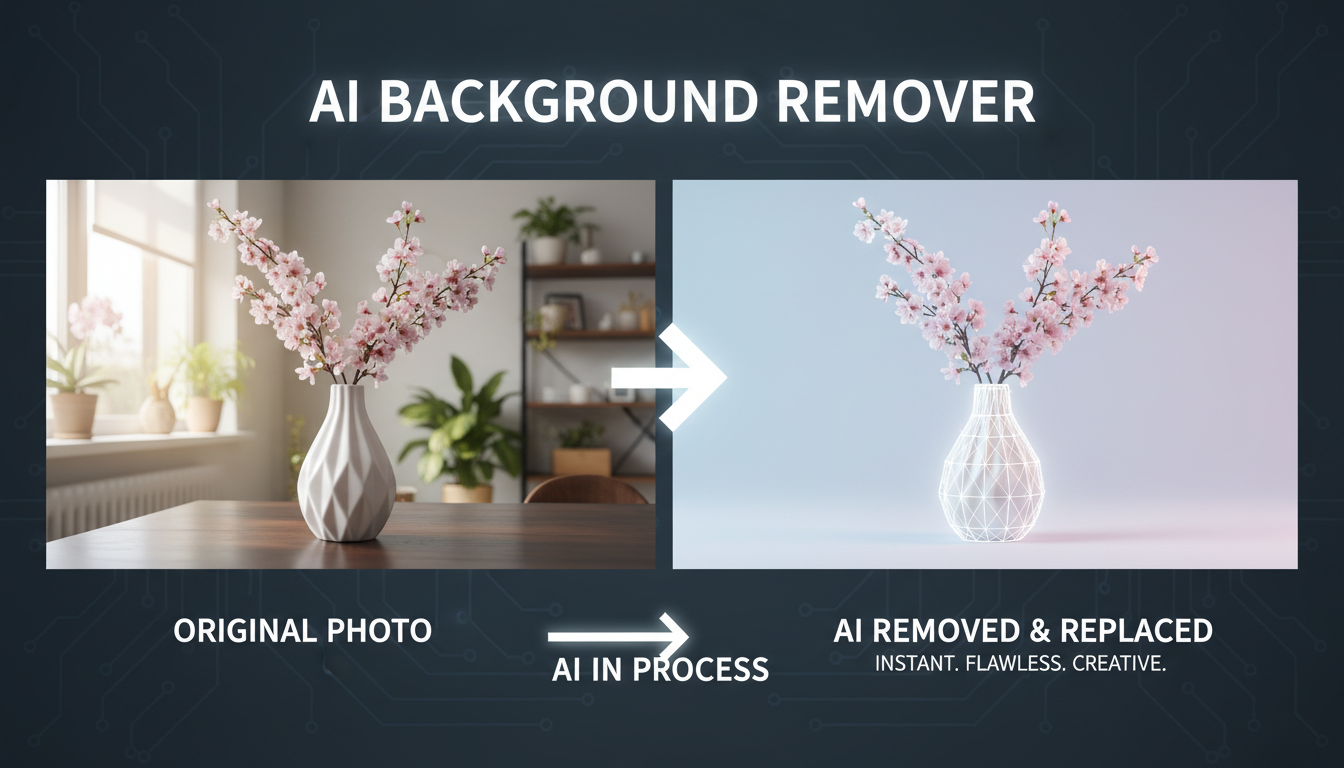
AI Background Remover and Generator: The Complete Guide to Replacing, Creating, and Perfecting Image Backgrounds
Master AI background removal, replacement, and generation. Compare the best tools, learn proven techniques, and transform your product photos and portraits.