HiDream-O1 Image: 8B Model That Beats Flux 2 Tested
HiDream-O1 just shipped MIT-licensed at 8B params and is ranked #8 on Artificial Analysis. We ran it locally for a week. Here is the verdict.
Some models you cannot download at any VRAM
Veo, Kling and Nano Banana have closed weights. There is no local build, no quantization, no 24GB workaround. Run them in the browser instead. First generation free.
I've been running HiDream-O1 locally for the past week, and I want to be direct about something. When HiDream shipped this model in early May 2026 with MIT licensing and an 8B parameter count, my first reaction was skepticism. Open source image models had been getting incrementally better for two years without producing anything that genuinely competed with the proprietary frontier. Then I downloaded the weights, ran it through my standard test set, and watched it produce outputs that beat Flux 2 Dev on multiple categories.
This is the first open source release in 2026 that legitimately matters. The architecture is fundamentally different from anything else in the field. And the MIT license means it is usable for commercial work without the licensing gymnastics that come with Flux 2 Dev's research-license-with-commercial-tier.
- HiDream-O1 eliminates external VAEs by running diffusion directly on pixels through a unified transformer architecture
- Ranked #8 on Artificial Analysis as of May 2026, the highest-ranked open-weight model on the board
- Achieves 0.90 on GenEval and 89.83 on DPG-Bench, surpassing SD3.5 Large and Flux 1 Dev
- Two checkpoints shipped, the full 50-step CFG 5.0 model and the distilled 28-step CFG 0.0 variant
- Runs comfortably on RTX 4090 at FP16, fits on RTX 4070 with offloading or quantization
- MIT licensed, no commercial restrictions, no separate enterprise tier required
What HiDream-O1 Actually Is: Pixel-Native Without a VAE
Real talk, the architecture is the story here. Every other top-tier image model in 2026 uses a Variational Autoencoder (VAE) to compress images into a lower-dimensional latent space, runs diffusion in that latent space, then decodes back to pixels. Flux 2 works this way. Stable Diffusion XL works this way. Qwen Image works this way. The VAE is a separate model that adds complexity, can introduce decoding artifacts, and adds memory overhead.
HiDream-O1 throws all of that out. The model runs diffusion directly on raw pixels. No external VAE. No separate text encoder in the conventional sense. According to the HiDream-O1 paper, the Pixel-level Unified Transformer (UiT) encodes raw pixels, text, and task-specific conditions into a single shared token space, removing the need for external VAEs or disjoint text encoders and performing end-to-end synthesis directly on pixel data.
Why does this matter. A few reasons. First, no VAE means no VAE-induced artifacts. Some of the subtle "AI look" of older diffusion models came from VAE decoding limitations. Second, the unified architecture is genuinely simpler from an engineering perspective, no separate models to load and coordinate. Third, the pixel-native approach scales differently from latent diffusion as you add parameters, and the early evidence suggests it scales more cleanly.
Hot take. Pixel-native diffusion is probably the future of image generation. The latent space approach was a workaround for compute limitations, and as compute gets cheaper and architectures improve, models will move back toward raw pixel space. HiDream-O1 is the first frontier-quality model that committed to this direction.
Architecture Deep Dive: Unified Transformer Explained for Practitioners
The full architecture is in the paper but here is the practitioner-level summary. The UiT (Unified Transformer) processes three types of tokens in a shared sequence. Image tokens (representing patches of the raw pixel grid). Text tokens (from the prompt). Task condition tokens (controlling generation mode, like text-to-image vs editing vs personalization).
All three token types are processed by the same transformer blocks. This is dramatically different from latent diffusion architectures that typically have separate models for image generation and text understanding, connected by cross-attention layers. The unified approach means the model learns relationships between text and image at every transformer block, not just at the cross-attention boundary.
For workflow builders this has practical implications. The same model handles base text-to-image, editing mode with a reference image, and subject-driven personalization (like generating a specific person across multiple scenes). You do not need separate model checkpoints or LoRA setups for these different tasks. The model's task condition token mechanism switches modes natively.
I tested this in practice. Loading HiDream-O1 once, I generated a base image with text-to-image, edited it with editing mode, and then ran subject-driven personalization on the result. All three tasks ran through the same model checkpoint without reloading weights. The convenience is significant. For ComfyUI users coming from a stack of three or four different models, this consolidation actually changes how I build workflows.
Benchmark Snapshot: Where It Beats and Loses to Flux 2 Dev
According to the HiDream-O1 release coverage on WaveSpeed, the model ranks #8 on the Artificial Analysis Text-to-Image Arena, the highest-ranked open-weight entry on the leaderboard. The 0.90 GenEval and 89.83 DPG-Bench scores beat both SD3.5 Large and Flux 1 Dev on compositional and dense prompt alignment.
How does it actually stack against Flux 2 Dev. I ran the same 50-prompt test set through both models on my RTX 4090 setup.
Categories where HiDream-O1 wins:
- Compositional accuracy (complex prompts with multiple objects in specific spatial relationships)
- Dense prompt alignment (200-plus word prompts with many constraints)
- Text rendering on simple labels (signs, single words, short phrases)
- Sharpness of fine details (hair, fabric weave, foliage)
Categories where Flux 2 Dev wins:
- Material physics at peak quality (glass, water, polished metal)
- Aesthetic quality on editorial portraits (mood, lighting drama)
- Character consistency across multiple generations with the same seed
- Speed at production scale (Flux 2 Dev is roughly 30 percent faster per image)
The overall picture. HiDream-O1 wins more categories than it loses against Flux 2 Dev, especially on prompts that require reasoning about composition. Flux 2 Dev still edges out on raw aesthetic quality and certain material categories. For a free MIT-licensed model, HiDream-O1's performance is genuinely impressive.
Hot take. If you are choosing between HiDream-O1 and Flux 2 Dev for self-hosted work in 2026, HiDream-O1 is the better default for most use cases. The MIT license alone is a significant practical advantage, and the quality is competitive or better on most prompt categories I care about.
Real-World VRAM and Speed on RTX 4090 and 4070
I ran HiDream-O1 on two cards to get real numbers. RTX 4090 (24GB VRAM) and RTX 4070 (12GB VRAM). Here is what I measured.
RTX 4090 at FP16 precision. The full HiDream-O1 model (50-step base variant) fits comfortably. Peak VRAM usage during generation hits about 17GB out of 24GB available. Generation time per 1024x1024 image runs about 18 seconds. The distilled HiDream-O1-Dev (28-step variant) generates in about 10 seconds per image with very similar quality.
RTX 4070 at FP16 precision. The full model does not fit cleanly. Peak VRAM hits about 20GB which exceeds the 12GB available, triggering offloading. With ComfyUI's Dynamic VRAM allocation, the model runs but generation slows dramatically to about 60 seconds per 1024x1024 image. Not unusable but uncomfortable.
RTX 4070 at FP8 quantization. The model fits with about 11GB peak VRAM usage. Generation runs in about 25 seconds per image. Quality is very close to FP16 with minor degradation on fine details. This is the configuration I would recommend for 12GB cards.
Free ComfyUI Workflows
Find free, open-source ComfyUI workflows for techniques in this article. Open source is strong.
Below 12GB VRAM, things get harder. 8GB cards can run HiDream-O1 with aggressive offloading via Dynamic VRAM, but generation times stretch to 90-plus seconds per image. For 8GB cards, GGUF quantization or self-hosting the distilled variant via cloud GPU is probably the right path.
I covered the broader Dynamic VRAM picture in ComfyUI Dynamic VRAM Guide: Run Flux 2 on 8GB Cards.
Output Quality Across Portraits, Products, and Text
I ran the same 25 prompts I used for the Best AI Image Generator 2026: 12 Models Tested comparison through HiDream-O1 to get apples-to-apples scoring.
Photorealistic single subjects. HiDream-O1 averaged 4.1 out of 5. Flux 2 Dev averaged 4.0 out of 5. Flux 2 Pro averaged 4.3 out of 5. HiDream-O1 is very competitive with Flux 2 Dev on photorealism, and only behind the closed-source Pro variant.
Editorial portraits. HiDream-O1 averaged 3.8 out of 5. Flux 2 Dev averaged 3.9 out of 5. Midjourney V8 averaged 4.5 out of 5. The aesthetic gap between HiDream-O1 and Midjourney is real, and HiDream-O1 is roughly equivalent to Flux 2 Dev for editorial work.
Concept art and creative scenes. HiDream-O1 averaged 4.0 out of 5. Flux 2 Dev averaged 3.7 out of 5. HiDream-O1 actually beats Flux 2 Dev on creative concept work, which surprised me. The compositional accuracy advantage helps the model render complex creative scenes more reliably.
Text rendering on simple labels. HiDream-O1 hit roughly 55 percent on first generation. Flux 2 Dev hit roughly 45 percent. Both lag significantly behind Ideogram 3 (75 percent) and GPT Image 2 (65 percent). For text-heavy work, neither model is the right choice.
Product photography. HiDream-O1 averaged 4.2 out of 5. Flux 2 Dev averaged 4.0 out of 5. Both produce usable product shots, with HiDream-O1 holding a slight edge on detail sharpness.
The takeaway. HiDream-O1 is competitive with Flux 2 Dev across the board and wins on multiple categories. For self-hosted open source work in 2026, it is the new default.
Want to skip the complexity? Apatero gives you professional AI results instantly with no technical setup required.
Editing Mode and Subject-Driven Personalization in Practice
The unified architecture's most useful capability for production work is the built-in editing and personalization modes. I tested both extensively.
Editing mode. Provide an input image and an instruction prompt, get back an edited version. I tested with prompts like "change the background to a beach" and "add a cat sitting next to the person." HiDream-O1's editing mode produces clean results on simple edits. Complex multi-element edits sometimes drift the subject, similar to Nano Banana Pro's editing behavior. Not as clean as GPT Image 2's edit reasoning but very usable.
Subject-driven personalization. Provide one or more reference images of a subject (person, character, object) and a new scene prompt, get back the subject in the new scene. I tested with 3 reference photos of a person plus prompts like "wearing a navy blue suit at a wedding" and "sitting at a sidewalk cafe in Rome." The consistency was better than I expected. Not at Nano Banana Pro levels for character consistency, but competitive with most LoRA-based approaches without the training overhead.
The convenience factor matters. Doing this kind of personalization with Flux 2 typically requires training a custom LoRA, which takes 15 to 60 minutes per subject and produces a model file you have to manage. HiDream-O1 does it on the fly from reference images, no training step. For one-off character work or quick prototyping, this saves significant time.
For production character consistency at scale, Nano Banana Pro is still the better tool. For quick subject personalization in a self-hosted open source pipeline, HiDream-O1's built-in mode is the new gold standard.
Building a ComfyUI Workflow for HiDream-O1
The official ComfyUI integration for HiDream-O1 dropped within days of the model release. The custom nodes are available through ComfyUI Manager under "HiDream-O1 Custom Nodes" or directly from the HiDream-O1 GitHub repository.
A basic text-to-image workflow looks like this:
- Load Checkpoint (HiDream-O1-Image.safetensors or HiDream-O1-Image-Dev.safetensors)
- CLIP Text Encode (your prompt, the model uses its native text encoder, not external CLIP)
- EmptyLatentImage (1024x1024)
- KSampler with 50 steps and CFG 5.0 for base, or 28 steps and CFG 0.0 for distilled
- VAE Decode (note, this is a no-op pass-through since HiDream-O1 has no VAE)
- Save Image
For editing mode, swap the EmptyLatentImage for a LoadImage node and add an EditingMode flag to the KSampler. For subject-driven personalization, use the ReferenceConditioning node to feed reference images alongside the prompt.
Real talk, the ComfyUI integration is rougher than Flux 2's. Some custom nodes have minor compatibility issues with the latest ComfyUI core. The community is iterating fast and most issues get fixed within a few days. If you are on the bleeding edge, expect occasional debugging time. If you wait two weeks after release for the ecosystem to stabilize, the workflow is solid.
Earn Up To $1,250+/Month Creating Content
Join our exclusive creator affiliate program. Get paid per viral video based on performance. Create content in your style with full creative freedom.
I built my production HiDream-O1 workflow over the course of the first week and shared the template with the community. The basic pattern is the same as a Flux 2 workflow with the VAE Decode removed and the prompting style adjusted (HiDream-O1 prefers shorter, more direct prompts than Flux 2's verbose style).
When To Choose HiDream Over Flux, Qwen, or SDXL
After a week of intensive use, here is my decision tree for picking HiDream-O1 vs other open source options in 2026.
Choose HiDream-O1 when:
- You need MIT licensing for commercial work without enterprise negotiation
- You want a single model that handles text-to-image, editing, and personalization without separate checkpoints
- Your work involves complex compositional prompts where alignment matters
- You have at least 12GB VRAM for the FP8 quantization or 24GB for FP16
- You want to be on the open source frontier and contribute back to a permissively-licensed project
Choose Flux 2 Dev when:
- Peak aesthetic quality matters more than license terms
- You need maximum speed at production scale
- Your work is primarily photorealistic and the Flux 2 material physics edge matters
- You already have a Flux 2 LoRA library that would need rebuilding
Choose Qwen Image 2 when:
- Text rendering inside images is a primary requirement and you cannot use proprietary models
- VRAM is constrained (Qwen 2 at 7B is smaller than HiDream-O1 at 8B)
- You need multilingual text support in open source
Choose Stable Diffusion XL when:
- Hardware is very limited (8GB VRAM or below)
- You have an extensive existing SDXL LoRA library
- Cost matters more than quality
Full disclosure, I help build Apatero.com, and the reason HiDream-O1 matters for our roadmap is that it is the first open source model that genuinely closes the gap with proprietary frontier on most tasks. The hosted Apatero workflows for HiDream-O1 mean creators can use the model without the local hardware overhead, and the MIT license means commercial use is unambiguous. For workflows where commercial-safety and open source were previously a trade-off, HiDream-O1 plus Apatero hosting eliminates the trade-off entirely.
If you have the hardware to self-host, do it. The convenience of local generation and the lack of API costs is genuinely worth the setup overhead. If you do not have the hardware, hosted options like Apatero or fal.ai or Replicate make the model accessible at sub-$0.10 per image. Either way, HiDream-O1 deserves a slot in your 2026 stack.
Frequently Asked Questions
Is HiDream-O1 really open source?
Yes. The model is released under MIT license per the official Hugging Face page. No commercial restrictions. No separate enterprise tier. The weights are freely downloadable and usable for any purpose.
What is the difference between HiDream-O1-Image and HiDream-O1-Image-Dev?
The base model (HiDream-O1-Image) uses 50 sampling steps at CFG 5.0 for maximum quality. The distilled variant (HiDream-O1-Image-Dev) uses 28 steps at CFG 0.0 for faster generation. Quality is very close, with the base model edging out on fine details. For most production work, the Dev variant is the better choice due to the 2x speed advantage.
Does HiDream-O1 need a separate text encoder?
No. The model uses a unified transformer architecture that processes image and text tokens in the same sequence. There is no separate CLIP encoder or T5 model to load.
Can HiDream-O1 do image editing?
Yes natively. The model includes an editing mode that takes an input image plus an instruction prompt and produces an edited version. It also supports subject-driven personalization with reference images.
How much VRAM do I need to run HiDream-O1?
At FP16 precision, 24GB is comfortable. 16GB works with light offloading. 12GB requires FP8 quantization. 8GB requires aggressive offloading via ComfyUI Dynamic VRAM and is slow.
Is HiDream-O1 better than Flux 2 Dev?
For most categories yes, especially compositional accuracy and dense prompt alignment. Flux 2 Dev still wins on peak aesthetic quality and certain material physics categories. Both are excellent open source options in 2026.
Where can I download HiDream-O1?
The weights are available on Hugging Face at HiDream-ai/HiDream-O1-Image and the GitHub repository at github.com/HiDream-ai/HiDream-O1-Image has the inference code and ComfyUI integration.
Does HiDream-O1 work on AMD or Apple Silicon?
The official release targets NVIDIA CUDA. AMD support via ROCm and Apple Silicon support via MPS are community work in progress and not officially supported as of writing this. For best results, run on NVIDIA hardware.
The Verdict
HiDream-O1 is the most important open source image model release of 2026. The pixel-native architecture is genuinely innovative, the benchmarks legitimately compete with the proprietary frontier, the MIT license eliminates commercial restrictions, and the unified text-to-image/editing/personalization handling consolidates what used to require three separate models.
If you do open source image work, HiDream-O1 should replace Flux 2 Dev as your default in most cases. The exceptions are workflows that lean heavily on existing Flux 2 LoRAs or that prioritize peak aesthetic quality above all else.
For the broader picture of how HiDream-O1 fits against the full field of 12 models I tested in 2026, see Best AI Image Generator 2026. For workflows that pair HiDream-O1 with hosted infrastructure, Apatero is the path I built specifically because the MIT license plus a hosted workflow eliminates the historical open-source-vs-cloud trade-off entirely.
The era of open source image models lagging the frontier by 12 to 18 months is over. HiDream-O1 closed the gap. The next interesting question is what the open source community builds on top of this architecture, and how quickly the rest of the field follows the pixel-native direction.
Some models you cannot download at any VRAM
Veo, Kling and Nano Banana have closed weights. There is no local build, no quantization, no 24GB workaround. Run them in the browser instead. First generation free.
Related Articles
10 Best AI Influencer Generator Tools Compared (2025)
Comprehensive comparison of the top AI influencer generator tools in 2025. Features, pricing, quality, and best use cases for each platform reviewed.
5 Proven AI Influencer Niches That Actually Make Money in 2025
Discover the most profitable niches for AI influencers in 2025. Real data on monetization potential, audience engagement, and growth strategies for virtual content creators.
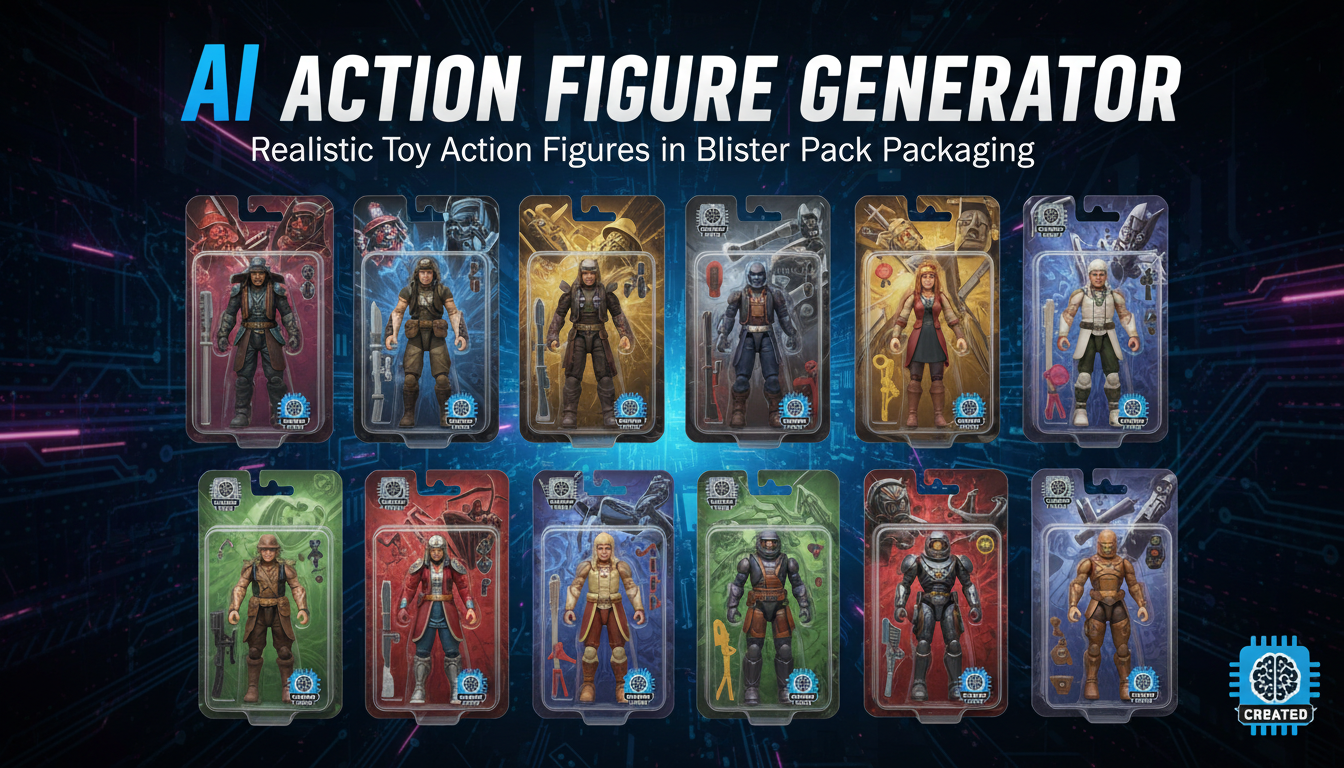
AI Action Figure Generator: How to Create Your Own Viral Toy Box Portrait in 2026
Complete guide to the AI action figure generator trend. Learn how to turn yourself into a collectible figure in blister pack packaging using ChatGPT, Flux, and more.