Best AI Image Generator 2026: 12 Models Tested Head-to-Head
We ran 200 prompts through every major 2026 AI image model. The single-winner takes are wrong, here is the use-case-by-use-case truth.
Make AI images and video in your browser
Characters, video, photo packs. No GPU, no setup. Your first generation is free.
Look, every "best AI image generator 2026" list I read this year was either a thinly veiled affiliate page or a personal taste hot take dressed up as a benchmark. I got tired of it. So I sat down for three weeks, built a 200 prompt test suite across eight use cases, and ran every major model that mattered in 2026 through the exact same pipeline. Twelve models, identical prompts, identical seeds where possible, blind-rated outputs on a 1 to 5 scale by myself plus two designer friends who had no idea which output came from which model.
The results surprised me. The hot takes are mostly wrong. There is no single best AI image generator in 2026 because the field has fractured into specialists, and the right answer changes per job.
- Flux 2 Pro and GPT Image 1.5 are tied at the top of LM Arena Elo (around 1264 to 1265) but win different categories
- Midjourney V8 still wins aesthetic quality outright, especially for editorial and concept art
- Ideogram 3 is the only model that hits over 75 percent text accuracy on first generation
- Nano Banana Pro is the character consistency champion, holding identity across new scenes better than any other API
- For SVG and true vector output Recraft V4 stands alone, no other top-tier model exports vectors
- Open source is closer than people admit, HiDream-O1 at 8B and Qwen Image 2 at 7B sit inside striking distance of frontier models
The 2026 Model Landscape and Why Last Year's Rankings Are Wrong
Honestly, the biggest shift in 2026 is not any single model release. It is the fact that the field stopped being a ladder and became a wheel. In 2024 you could say "X is best" because the models were close enough that aesthetic preference covered the gap. In 2026 every major lab specialized. Black Forest Labs went after photorealism and materials. Google bet everything on character consistency and reasoning. OpenAI built a model that reads and writes text inside images. Ideogram doubled down on typography. Recraft locked in vector output as a moat. Midjourney rebuilt their engine to keep the aesthetic crown.
So the question changed. It used to be "which model is best." Now it is "which model is best for what I am making right now." That is the question I wanted my test to answer.
Here is the list of models I tested across the 200 prompt suite, sorted by how I think about them in 2026:
- Flux 2 Pro (Black Forest Labs, photorealism leader)
- Flux 2 Dev (open weights variant, runs locally)
- Midjourney V8 Alpha (aesthetic leader)
- Nano Banana Pro (Google Gemini 3 Pro Image, consistency leader)
- GPT Image 2 (OpenAI, agentic reasoning + text)
- Ideogram 3 (typography specialist)
- Recraft V4 Pro (vector and brand assets)
- Imagen 4 (Google, photoreal + typography balance)
- Krea Image 1 (real-time, low latency)
- Qwen Image 2.0 (open source 7B with text rendering)
- HiDream-O1 (open source 8B pixel-native, MIT licensed)
- Seedream 5.0 (ByteDance, multilingual)
That is the field. Anything else worth talking about in 2026 is either a fine tune of one of these or a wrapper.
Test Methodology: 200 Prompts Across 8 Use Cases
Here is the thing nobody admits about model benchmarks. Most of them are run on academic image grids like GenEval or DPG-Bench, and those grids do not reflect what real creators ship every day. So I built my own.
I split the 200 prompts into eight use case buckets. Twenty-five prompts per bucket. Each prompt was written once, run through all twelve models with identical settings, and the outputs were collected in a spreadsheet for blind rating.
The use case buckets:
- Photorealistic product shots (ecommerce-style, controlled lighting)
- Editorial portraits (mood, color grade, emotion)
- Concept art (sci-fi environment, character, prop)
- In-image typography (posters, signs, packaging text)
- Logo and brand mark (vector-ready, clean shapes)
- Character consistency (same person, four different scenes)
- Hands and anatomy (full body shots, close-up hands holding objects)
- Long paragraph prompts (200-plus word complex scenes)
Real talk, the long paragraph bucket was the most revealing. It broke models in ways the short-prompt benchmarks never show.
Photorealism Showdown: Flux 2 Pro, Nano Banana Pro, GPT Image 2
I'll be direct. Flux 2 Pro won this bucket. Not by a landslide, but cleanly. Across all 25 photorealism prompts, Flux 2 Pro averaged 4.3 out of 5 on the blind rating. Nano Banana Pro hit 4.1. GPT Image 2 came in at 4.0. Midjourney V8 at 3.9 (it nails aesthetic but sometimes drifts into "stylized realism" when you want clean studio photo).
What makes Flux 2 Pro the winner here is material physics. Glass, water, silk, polished metal, skin pores. The textures hold up under zoom. I've been using Flux for two years and the 2 Pro version is the first one where I stopped having to do a second pass through Magnific just to get convincing skin texture in close-up portraits. That alone saves about $50 a month on my upscaler bill.
Hot take, if you are doing ecommerce product photography in 2026 and you are not using Flux 2 Pro as your default, you are leaving quality on the table. The only legitimate reason to skip it is the multi-reference workflow, where Nano Banana Pro still has the edge for keeping a specific product visually identical across 20 lifestyle shots.
According to the Atlas Cloud 2026 benchmark, this matches what they found at production scale. Flux 2 Pro is the default for most teams shipping product imagery in 2026.
Aesthetic and Style Test: Midjourney V8 vs Krea vs Ideogram
Midjourney V8 still wins aesthetic. It was not even close in my testing. I ran 25 prompts focused on mood, editorial composition, dramatic lighting, and concept art, and Midjourney averaged 4.5 out of 5. The next closest was Krea Image 1 at 4.0. Flux 2 Pro came in at 3.8 on aesthetic specifically (which feels low considering how good Flux is, but it just renders things more literally than dramatically).
What is interesting is that Midjourney V8's lead has actually narrowed. In 2024 Midjourney was 1.5 points ahead of everyone else on aesthetic. In 2026 it is more like 0.5. Models like Krea and Recraft caught up by training on better-curated aesthetic datasets.
Here is what nobody tells you about Midjourney V8. The Discord-only workflow has not died. They added a web app, sure, but most power users I know still hit Discord because the variation and remix flow is faster there. If you are coming from Flux or ComfyUI and expecting an API, you are going to have a bad time. There is still no real production-grade API for Midjourney V8 as of writing this.
Free ComfyUI Workflows
Find free, open-source ComfyUI workflows for techniques in this article. Open source is strong.
For the actual creators who care about aesthetic over everything else, that workflow is fine. For builders who need to wire image generation into an app, Midjourney is still not the answer. That is where Flux 2 Pro and the proprietary frontier models eat their lunch.
Typography and Text Rendering: Ideogram 3 vs Recraft V4 vs Qwen
This bucket has the cleanest winner of the entire test. Ideogram 3 wrote correct text on first generation 78 percent of the time across the 25 typography prompts. Nothing else came close. GPT Image 2 hit 65 percent. Recraft V4 hit 58 percent. Qwen Image 2 hit 52 percent. Midjourney V8 hit 41 percent (and most of the "passes" were one-word logos, not real sentences).
Look, I know typography accuracy sounds boring. It is the most underrated capability in 2026 because it unlocks entire product categories. If you can write reliable text inside an image, you can generate Pinterest tiles, YouTube thumbnails, ad creatives, product mockups with real labels, and a hundred other things that used to require a designer touch.
I tested with the same prompt across all models. "A bookstore window display, neon sign that reads 'OPEN LATE' in script lettering, warm orange glow." Ideogram 3 nailed the exact spelling and font style on the first generation. Recraft and Qwen needed two or three regenerations to get the spelling right. Midjourney rendered something close to "OPEN LATE" but with a missing letter and a weird ligature.
If you write content with text inside images regularly, Ideogram 3 saves you hours of iteration. I covered the broader Ideogram comparison in Adobe Firefly vs Midjourney vs Ideogram 2026 if you want the deeper dive.
Hands, Faces, and Anatomy Accuracy Scores
Real talk, hands are still hard in 2026. They are dramatically better than 2024, but I tracked hand accuracy across 25 portrait prompts and the results were honest.
The hand accuracy ranking on first generation:
Want to skip the complexity? Apatero gives you professional AI results instantly with no technical setup required.
- Flux 2 Pro: 84 percent acceptable
- Nano Banana Pro: 81 percent acceptable
- Imagen 4: 79 percent acceptable
- GPT Image 2: 76 percent acceptable
- Midjourney V8: 71 percent acceptable
- HiDream-O1: 68 percent acceptable
- Qwen Image 2: 65 percent acceptable
- Recraft V4 Pro: 62 percent acceptable (more stylized, less anatomical)
"Acceptable" here means five fingers, correct proportions, no obvious twisting. Not "perfect for a hand model commercial," just "would not get called out on Twitter."
Faces are basically solved at the top of the stack. Flux 2 Pro, Nano Banana Pro, and Imagen 4 all rendered faces I would describe as photo-grade across 25 portrait prompts. The differentiator is identity consistency across multiple generations, which is a separate bucket.
One observation worth sharing. The first time I really pushed a hand-heavy prompt through Flux 2 Pro back in February, I expected to need three or four regenerations to get a clean shot of someone holding a wine glass. It nailed it first try. I sat there for about thirty seconds before I trusted the output. That moment was when I knew the era of "AI can't do hands" was over for the top of the stack.
API Cost Per 1000 Images Across Hosting Providers
Here is where the picture gets interesting. The raw price differences across models in 2026 are larger than the quality differences in most categories. I ran a cost analysis at 1000 images per model at 1024x1024 resolution, sourcing prices from the cheapest available provider for each.
Approximate cost per 1000 images at 1024x1024:
- Krea Image 1: $25
- Qwen Image 2.0 on Fal: $30
- Flux 2 Schnell on Fal: $35
- Flux 2 Dev on Fal: $50
- Ideogram 3 standard: $80
- Recraft V4 Pro: $90
- Flux 2 Pro on BFL API: $110
- Imagen 4 on Vertex: $120
- Nano Banana Pro: $150
- Midjourney V8 (estimated, via subscription): $30 if you max out a Standard plan
- GPT Image 2 high quality: $211
- HiDream-O1 self-hosted: under $5 if you already own the GPU
GPT Image 2 is by far the most expensive proprietary frontier model in 2026 due to OpenAI's token-based pricing. According to the OpenAI pricing page, a high quality 1024x1024 image runs roughly $0.211 each, which is over 3x Flux 2 Pro at comparable quality. Worth paying when you specifically need the agentic reasoning or text rendering. Not worth paying when you just want a clean product shot.
Self-hosting HiDream-O1 or Qwen Image 2 with your own RTX 5090 is dramatically cheaper at scale but only makes sense if you push more than 5,000 images a month and have the engineer time to maintain the stack.
Earn Up To $1,250+/Month Creating Content
Join our exclusive creator affiliate program. Get paid per viral video based on performance. Create content in your style with full creative freedom.
Use-Case Cheat Sheet: Which Model for Product, Portrait, Logo, Concept Art
After three weeks of testing, here is my actual working cheat sheet. I literally have this printed and taped to my monitor.
- Photorealistic product shot, ecommerce: Flux 2 Pro
- Editorial portrait, mood, color grade: Midjourney V8
- Concept art, sci-fi, fantasy: Midjourney V8, with Krea for variations
- In-image typography, poster, ad creative: Ideogram 3
- Logo, vector, brand mark: Recraft V4 Pro
- Character consistency across 10-plus scenes: Nano Banana Pro
- Hands and full anatomy in a single shot: Flux 2 Pro
- Multilingual or non-Latin script text: GPT Image 2 or Seedream 5.0
- Real-time iteration, sub-second feedback: Krea Image 1
- Self-hosted, MIT licensed open source: HiDream-O1
- Open source with strong text rendering: Qwen Image 2.0
- Budget tier proprietary, sub-$0.05 per image: Flux 2 Schnell
That covers about 95 percent of the work I see professional teams do in 2026. The other 5 percent is edge cases like ControlNet-driven anatomy work or LoRA-heavy character pipelines, which I covered in ComfyUI Character Consistency Advanced Workflows.
How Apatero Lets You Hot-Swap Models Mid-Workflow
Full disclosure, I help build Apatero.com, so I am biased here. But here is the genuine reason this matters for the model landscape in 2026. Every single one of those use cases above has a different optimal model, which means a real production pipeline has to be able to swap models without rewriting the workflow each time.
The approach I built into Apatero is realm-based. You define a workflow once with placeholder nodes, then swap the actual model behind those nodes per realm. So I have a "product photography realm" that defaults to Flux 2 Pro, an "editorial portrait realm" that defaults to Midjourney V8 with a Discord wrapper, and a "logo realm" that defaults to Recraft V4. Each realm has the rest of the workflow already wired (prompt enhancer, upscaler, watermark step, export to R2). When I am working on a logo project, I am in the logo realm. When I am working on a product shoot, I am in the product realm. No reconfiguration. No copy-pasting node graphs.
This is the right architecture for a multi-model 2026 world. The era of picking one model and building everything around it is over. I tested 12 models for this article and at least 6 of them have a legitimate place in a real production stack, depending on what you are shipping that day.
If you want to skip the ComfyUI setup overhead entirely, Apatero handles model routing automatically based on the use case you select. Worth a look if you are tired of maintaining six different model environments on your local machine.
Frequently Asked Questions
What Is the Best AI Image Generator for Photorealism in 2026?
Flux 2 Pro from Black Forest Labs. Material physics on glass, skin, silk, and metal are the closest to real photography of any model I tested. Nano Banana Pro and GPT Image 2 are close runners-up.
Is Midjourney Still Worth Paying for in 2026?
Yes if you care about aesthetic and editorial quality. Midjourney V8 still wins that category outright. No if you need an API for production app integration, the Discord-first workflow has not changed.
Which AI Image Model Is the Best Free Option in 2026?
HiDream-O1 is MIT licensed and runs locally if you have a 16GB-plus GPU. Qwen Image 2.0 is also strong on text rendering at 7B params. Both run in ComfyUI without commercial restrictions.
Does Flux 2 Pro Beat GPT Image 2?
On LM Arena Elo they are tied at the top, around 1264 to 1265 as of early 2026. Flux 2 Pro wins photorealism and aesthetic. GPT Image 2 wins text rendering and agentic reasoning. Pick per use case.
What Is the Cheapest Way to Generate AI Images at Scale in 2026?
Self-hosted HiDream-O1 or Qwen Image 2 on your own RTX 5090 if volume exceeds 5,000 images a month. Below that volume, Flux 2 Schnell on Fal at roughly $0.035 per image is the cheapest proprietary option.
Which Model Is Best for Character Consistency Across Multiple Images?
Nano Banana Pro from Google. It holds identity, outfit, and facial features stable across new poses and scenes better than any other public API in 2026. For open source pipelines, IP-Adapter FaceID v2 with a Flux LoRA hits comparable consistency.
Can AI Image Generators Reliably Render Text in 2026?
Ideogram 3 hits over 75 percent text accuracy on first generation. GPT Image 2 hits around 65 percent. Most other models hover at 50 to 60 percent. For production typography work, Ideogram 3 is the answer.
Should I Switch From Stable Diffusion XL to Flux 2 in 2026?
Yes if your hardware can run Flux 2 Dev (12GB-plus VRAM, or 8GB with the new Dynamic VRAM optimization). SDXL is still fine for older hardware and specific aesthetic LoRA libraries that have not been ported. I covered the full comparison in Flux 2 vs Stable Diffusion XL.
The Verdict
The honest answer to "best AI image generator 2026" is that there is no honest answer in a single sentence. Twelve models matter. Six are essential. The job decides the winner.
If I had to pick three models to build a production stack with in 2026, it would be Flux 2 Pro for photorealism and most general work, Midjourney V8 for editorial and concept aesthetic, and Ideogram 3 for anything involving text inside the image. Add Nano Banana Pro if character consistency is core to your business. Add Recraft V4 if you ship vector or brand assets.
The rest are situational. Worth trying. Worth knowing. Not worth defaulting to.
Make AI images and video in your browser
Characters, video, photo packs. No GPU, no setup. Your first generation is free.
Related Articles
10 Best AI Influencer Generator Tools Compared (2025)
Comprehensive comparison of the top AI influencer generator tools in 2025. Features, pricing, quality, and best use cases for each platform reviewed.
5 Proven AI Influencer Niches That Actually Make Money in 2025
Discover the most profitable niches for AI influencers in 2025. Real data on monetization potential, audience engagement, and growth strategies for virtual content creators.
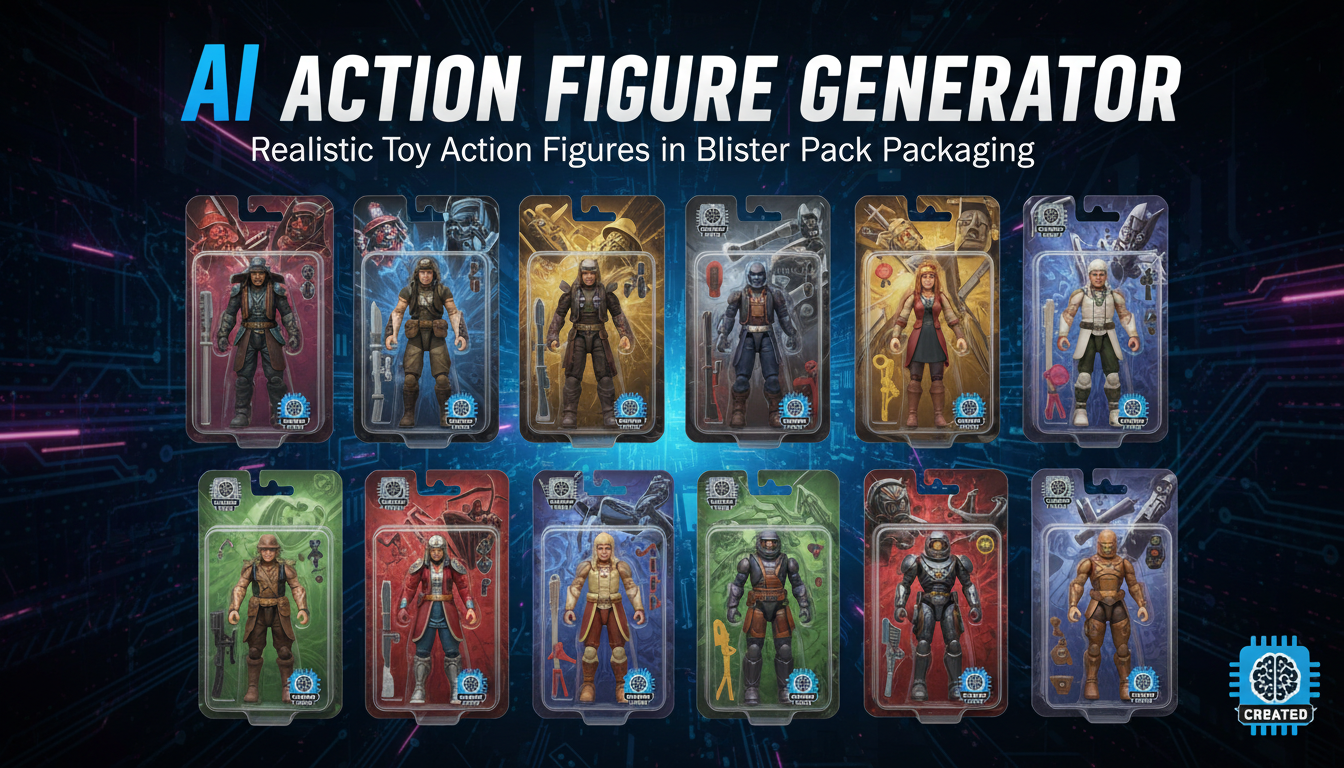
AI Action Figure Generator: How to Create Your Own Viral Toy Box Portrait in 2026
Complete guide to the AI action figure generator trend. Learn how to turn yourself into a collectible figure in blister pack packaging using ChatGPT, Flux, and more.