AI Workflow Automation: Build No-Code Pipelines That Run Your Business
Learn how to build AI workflow automation pipelines using Make.com, Zapier, n8n, and ComfyUI. Real business examples, ROI data, and step-by-step setup guides.

I'll be honest with you: the phrase "workflow automation" used to make my eyes glaze over. It sounded like something enterprise IT departments cared about, not something a solo creator or small business owner needed to think about. Then I started tracking my actual time, and the numbers were humbling. I was spending roughly 12 hours a week on tasks that were completely mechanical, things like reformatting spreadsheets, moving data between apps, generating social media posts from blog drafts, and sending follow-up emails. That is not work. That is administration.
Once I rebuilt those processes as AI-powered automation pipelines, I got those 12 hours back every single week. Not by working faster or hiring someone. By connecting software that already existed and adding AI decision-making at the right steps. That shift changed how I think about what a small team can accomplish. This guide covers exactly how to do it, the tools that actually work in 2026, and the business cases where the ROI is real enough to justify the setup time.
AI workflow automation lets you build pipelines that handle repetitive business tasks automatically, using tools like Make.com, Zapier, and n8n as the connective tissue and AI models (GPT-4o, Claude, Gemini) as the decision layer. You connect triggers to actions, add AI steps that write, classify, or transform data, and the pipeline runs 24 hours a day without your involvement. No coding required for most business use cases.
What Is AI Workflow Automation and Why Does It Actually Matter?
Most people understand basic automation. If something happens in app A, do something in app B. That is what Zapier built its business on, and it works fine for simple connective tissue work. What changed in the last two years is the addition of AI as a native step inside these pipelines. Now instead of just moving data, your workflow can read an email, understand its intent, draft a personalized reply, check your calendar for availability, and send the response, all without a human touching it.
The distinction between old automation and AI-augmented automation is enormous in practice. Old automation is deterministic. It can move a row from a spreadsheet to a CRM. AI automation is judgmental: it can read a customer complaint, assess the severity and sentiment, route it to the right team member with a drafted response, and log a summary in your project management tool. That is an entirely different category of leverage.
The tools that make this possible have matured dramatically. Make.com (formerly Integromat) has a native AI module with direct connections to OpenAI, Anthropic, and Google AI. Zapier added AI actions and their own AI field transformer. n8n, the open-source alternative, has an entire LangChain integration layer that lets you build multi-step AI agents. And for image generation pipelines specifically, ComfyUI remains the most powerful option for high-volume automated workflows, as I covered in detail in my guide to ComfyUI batch processing for 1000+ images.
The business case for investing time in this is straightforward. A typical knowledge worker spends 20-30% of their time on tasks that are either data entry, reformatting, routing, or basic writing that follows a template. AI automation can handle nearly all of that category. At a loaded cost of $50/hour, eliminating 10 hours of that work per week generates $26,000 in annual value per person. Most automation pipelines cost less than $100/month to run.
- AI workflow automation combines traditional trigger-action logic with AI decision-making steps, enabling pipelines that handle judgment-based tasks, not just data movement.
- Make.com is the best choice for complex multi-branch pipelines with visual logic. Zapier is easiest for simple one-to-one connections. n8n is ideal if you need self-hosting or advanced AI agent capabilities.
- The highest-ROI use cases in 2026 are customer service triage, content repurposing pipelines, lead qualification, and AI image generation workflows.
- ComfyUI combined with n8n or Make.com creates powerful image automation pipelines that can generate hundreds of on-brand visuals daily with zero manual work.
- Most no-code pipelines take 2-4 hours to build and pay for themselves in time savings within the first week of operation.
Which Automation Platform Should You Actually Use?
Choosing between Make.com, Zapier, and n8n is one of those decisions that causes analysis paralysis, and most guides online are either sponsored or out of date. I have used all three extensively in production, so let me give you my unvarnished take on where each one actually excels.

Make.com is my first recommendation for most business users because its visual builder is genuinely excellent for complex logic. You can build branches, loops, aggregators, and error handlers all on a canvas, and the complexity that would require writing code in other tools is genuinely achievable without it. Make has over 1,800 native app integrations and first-class OpenAI, Anthropic, and Google AI modules. The pricing is based on operations rather than tasks, which is more cost-efficient for high-volume workflows. A business plan at $16/month gets you 10,000 operations, which is enough to run most small business automation stacks.
Zapier is the right choice when you want the absolute lowest friction path from idea to running automation. Their interface is simpler than Make's, their app library is larger (6,000+ apps), and their AI step called "Zapier AI Actions" is genuinely useful for adding GPT-4o into a flow without configuration complexity. The trade-off is cost: Zapier gets expensive quickly at scale, and their pricing model (task-based) means high-volume workflows can hit $100-200/month more easily than Make. For simple email-to-CRM type connections, Zapier is perfect. For anything with conditional logic or multiple AI steps, Make wins on both capability and cost.
n8n is the platform I use for anything where I need either self-hosting, maximum AI flexibility, or complex agent-style workflows. It is open-source, so you can run it on your own server for essentially zero platform cost. The LangChain integration means you can build actual AI agents with memory, tool use, and multi-step reasoning inside a visual workflow. The learning curve is steeper than the other two, but if you are running an AI content agency or a business with high automation volume, n8n's economics are unbeatable. A $50/month VPS running n8n can handle workflows that would cost $500/month on Zapier.
Here is a quick comparison of where each platform fits:
- Make.com: Best for complex business logic, moderate volume, teams who want visual workflow building without code
- Zapier: Best for simple connections, maximum app compatibility, users who want the fastest setup
- n8n: Best for AI agent workflows, high volume, self-hosting, developer-friendly teams
For image generation pipelines, all three can trigger ComfyUI via its API, but n8n's HTTP request handling and loop capabilities make it the most flexible for batch image workflows. I have a pipeline running on n8n that generates 200+ product images per day based on catalog data from a Google Sheet, a task that would be prohibitively expensive on Zapier at that volume.
How Do You Build a Content Automation Pipeline From Scratch?
Content creation is where most people first discover the real power of AI automation, and it is genuinely one of the highest-ROI applications available right now. The core insight is that most content follows predictable patterns. A blog post has a structure. A social caption has a format. A product description follows a template. Once you recognize that, you can build pipelines that take a single input (a topic, a URL, a product name) and produce a full suite of content assets automatically.
Let me walk through a real pipeline I built for a client running an e-commerce store. The trigger is a new product being added to their Shopify store. Make.com detects the new product, grabs the title, description, and image URL, then sends that data to GPT-4o with a prompt that generates an SEO-optimized product description, three social media captions (one for Instagram, one for X, one for LinkedIn), a short email newsletter blurb, and a set of five Google Shopping ad headlines. All of that comes back in a structured JSON response, which Make.com then parses and writes to the appropriate fields: Shopify product description, a Buffer queue for social scheduling, a Mailchimp draft, and a Google Ads asset group. The whole pipeline runs in under 90 seconds and replaces what used to be 45 minutes of manual work per product.
Building this yourself takes a few hours, not days. The general structure for a content automation pipeline is:
- Set your trigger (new spreadsheet row, form submission, RSS feed item, webhook from your CMS)
- Add a data preparation step to format your inputs cleanly
- Call an AI model with a well-structured prompt and request JSON output
- Parse the AI response into individual fields
- Write each field to its destination app
- Add an error handler that notifies you via Slack or email if any step fails
The AI prompt quality matters enormously at step 3. Vague prompts produce generic content. Specific prompts with examples, tone guidelines, and word count targets produce content that actually sounds like your brand. I spend more time on the prompt than on the pipeline configuration, and the results reflect that investment.
For image generation within content pipelines, I connect ComfyUI via its API endpoint to generate custom visuals for each piece of content. You can explore the specifics of high-volume image generation in my ComfyUI batch processing guide, but the short version is: ComfyUI accepts JSON workflow configurations via API, which means any automation platform that can make HTTP requests can trigger it. This is how you build pipelines that produce fully illustrated blog posts, product pages with custom imagery, or social media assets, all without opening a single app manually.
The social media scheduling piece specifically has become much more sophisticated in 2026. You can read more about the full social media automation stack in my social media automation and content scheduling guide, which covers platform-specific scheduling tools that integrate cleanly with these content pipelines.
What Are the Best AI Automation Use Cases for Real Business ROI?
Not every automation is worth building. I have made the mistake of automating things that did not actually save meaningful time, and I have also seen businesses automate the wrong parts of their workflow and end up with brittle pipelines that require constant maintenance. The use cases I am going to describe have the clearest ROI and the most stable implementation patterns in 2026.

Customer service triage is probably the single highest-leverage automation for any business that handles significant inbound volume. The pipeline works like this: all incoming support emails and chat messages are routed to your automation platform, which sends the content to an AI model with context about your product, common issues, and resolution protocols. The AI classifies the issue type, assesses sentiment and urgency, drafts a response, and either sends it automatically (for simple, high-confidence cases) or queues it for human review with the draft pre-written. One e-commerce business I know of reduced their support response time from 6 hours to 11 minutes using this pattern, and their customer satisfaction scores went up because the responses were more consistent than their human-drafted ones.
Lead qualification is another area where AI automation delivers disproportionate value. When a new lead comes in through your website form, an automation pipeline can instantly cross-reference their company size (via Clearbit or Hunter.io), score them against your ideal customer profile using AI, send a personalized first-touch email drafted to match their specific industry and company context, and update your CRM with all of this data before a human ever looks at the record. Sales teams using this pattern report that their first-touch response rate increases significantly because the outreach is actually relevant, not generic.
Data processing and reporting is less glamorous but enormously valuable for operations-heavy businesses. If you are manually pulling data from multiple sources, formatting it, and building reports, that is an automation waiting to happen. Make.com and n8n can pull data from databases, spreadsheets, and APIs on a schedule, send it to an AI model for analysis and insight generation, and produce a formatted report delivered to Slack or email. I run a weekly business metrics report this way that used to take me two hours to compile and now arrives in my inbox every Monday morning automatically.
AI image generation pipelines have become a full business category in their own right. Creative agencies, e-commerce brands, and publishers are running ComfyUI-based pipelines that generate hundreds of custom images per day based on product catalogs, content briefs, or templated brand guidelines. The economics here are compelling: a human designer might produce 10-15 custom product images in a day. An automated ComfyUI pipeline connected to a business workflow can produce 500-1,000 with the right hardware. At Apatero.com, we have written extensively about building these image automation systems because the ROI in the right context is almost absurd.
Here are the automation use cases ranked by ROI and ease of implementation:
- Customer service auto-triage and response drafting (high ROI, moderate setup)
- Content repurposing from long-form to social, email, and ads (high ROI, low setup)
- Lead qualification and personalized first-touch outreach (very high ROI, moderate setup)
- Product image generation from catalog data (very high ROI for e-commerce, higher setup)
- Invoice processing and data extraction from documents (high ROI, low setup with good OCR)
- Competitive monitoring and weekly briefings (medium ROI, low setup)
- Employee onboarding document generation (medium ROI, low setup)
The pattern that separates high-ROI automations from low-ROI ones is whether the task has a clear, consistent structure and whether errors have low consequences. Customer email drafts are reviewed before sending, so an AI error just means a human corrects it. An automation that directly deletes database records based on AI classification would be terrifying. Match the automation to the risk tolerance of the output.
Building Customer Service Bots That Actually Work
Customer service bots have a terrible reputation, mostly because they were built badly. The traditional chatbot was a decision tree masquerading as intelligence, and customers learned quickly that it was useless. Modern AI-powered customer service automation is fundamentally different, and the gap in quality is large enough that many businesses have achieved genuine customer satisfaction improvements by replacing human first-response with AI.
The architecture for a working customer service bot in 2026 is more sophisticated than a simple prompt-response loop. You need a knowledge base the AI can search, context from the customer's account history, clear escalation criteria, and a handoff protocol that does not frustrate customers when they need a human. Here is what that looks like in practice on a platform like n8n:
An incoming message triggers the workflow. n8n retrieves the customer's recent order history and any open tickets from your CRM. It then queries a vector database (Pinecone, Weaviate, or even a simple Google Sheet for smaller operations) containing your product documentation, return policy, FAQ content, and troubleshooting guides. This context is bundled with the customer message and sent to an AI model with instructions about your tone, escalation triggers (keywords like "legal," "lawyer," "fraud" always escalate), and response guidelines. The AI response comes back, n8n checks for escalation triggers, and either sends the response automatically or routes to a human queue with the full context visible.
The knowledge base quality is the variable that determines whether this works or fails. Spend time structuring your documentation before you build the bot. I have seen businesses spend two weeks on the n8n configuration and 20 minutes on the knowledge base, then wonder why the bot keeps giving wrong answers. It is always the knowledge base. The AI is only as good as the information you give it.
For high-volume operations, the cost economics of AI customer service are genuinely transformative. At roughly $0.002 per interaction using current model pricing, you could handle 10,000 customer interactions per month for $20 in AI costs. Even with platform and infrastructure overhead, you are looking at a fraction of the cost of human agents for the first-response layer. The human agents then handle only the complex, high-value interactions where judgment and empathy matter.
Apatero.com has covered the broader landscape of AI automation tools for business workflows if you want a comprehensive tool comparison beyond what I cover here. The customer service automation piece specifically integrates well with the content and social automation workflows, since the same AI infrastructure can serve both purposes.
How Do You Measure Success and Avoid Common Automation Pitfalls?
Building automation is the easy part. Building automation that stays working six months later without constant maintenance is harder, and most guides skip this entirely. I have had pipelines break on me at exactly the wrong moment, and the lessons from those failures are more valuable than the setup instructions.

The most common failure mode is brittle data dependencies. Your automation works perfectly until one of your source apps changes its data format, renames a field, or adds a required parameter to its API. Suddenly every workflow that touches that app breaks at once. The mitigation is to build in data validation steps early in your pipelines. Before you send data to an AI model or write it to a destination app, check that the fields you expect are actually present and formatted correctly. A simple "does this field exist and is it non-empty" check, with an error notification if it fails, saves enormous debugging time.
Error handling is not optional. Every production pipeline needs a notification when something fails, logging of what failed and with what data, and ideally a fallback behavior (like routing to a human if the AI step fails). Make.com has excellent native error handling with rollback options. n8n requires more manual configuration but is equally capable. Zapier's error handling is more limited, which is one reason I prefer the other two for critical business workflows.
Monitoring your automation performance matters more than most people realize. Track the volume of tasks processed, error rates, and the quality of outputs over time. AI model behavior can drift as providers update their models, and what worked perfectly with GPT-4o six months ago might produce slightly different outputs after a model update. I do a quarterly audit of my most important pipelines, running a sample of historical inputs through them and checking that the outputs still meet quality standards.
On the question of ROI measurement, be concrete. Before you build an automation, write down how long the manual version takes, how often it happens, and what the fully loaded cost is per occurrence. After the automation runs for a month, compare actual time savings against that estimate. This discipline serves two purposes: it helps you prioritize which automations to build first, and it gives you defensible numbers when you are explaining the investment to a client or employer.
The businesses that extract the most value from AI workflow automation treat it as an ongoing practice, not a one-time project. They have a backlog of automation ideas, they build the highest-ROI ones first, they maintain what they have built, and they continuously add intelligence to existing pipelines as AI capabilities improve. That compounding effect is where the real advantage comes from. A business that has been systematically automating for two years has a cost structure and operational capacity that a late-starting competitor simply cannot match.
Frequently Asked Questions
Do I Need to Know How to Code to Build AI Automation Pipelines?
No. Make.com, Zapier, and the basic tier of n8n are all genuinely no-code. You configure workflows by connecting modules in a visual interface and filling in fields. That said, some knowledge of JSON formatting and basic logic operators (AND, OR, IF/THEN) is helpful for anything beyond simple two-step connections. If you hit the limits of no-code, most platforms allow you to add custom code in JavaScript or Python at specific steps without rewriting the whole workflow.
What Is the Difference Between Make.com and Zapier for AI Automation?
The main differences are complexity, cost, and AI integration depth. Make.com handles complex multi-branch logic better and charges by operations (more efficient at scale). Zapier has more app integrations and a simpler interface but gets expensive with high volume. For adding AI steps, both have native OpenAI and Claude integrations, but Make's configuration options are more granular, which matters when you need precise control over model parameters and response parsing.
Can I Automate Image Generation at Scale Without Expensive Hardware?
Yes. You can use cloud-based AI image APIs (fal.ai, Replicate, Stability AI) as the image generation step in any automation pipeline without owning any GPU hardware. The cost per image ranges from $0.02 to $0.05 depending on the model and resolution. For very high volumes where per-image cost matters, running ComfyUI on a rented GPU cloud instance through providers like RunPod or Vast.ai brings costs down significantly. This is what I recommend for businesses generating 500+ images per day.
How Do I Connect My Automation Pipeline to a Customer Service Chatbot?
The most common pattern is to use a webhook as the trigger. Your chat platform (Intercom, Zendesk, Crisp, or a custom chatbot widget) sends a webhook to your automation platform when a new message arrives. The automation platform processes the message, generates a response using an AI model, and posts the response back to the chat platform via API. Both Make.com and n8n handle this bidirectional webhook pattern well. The setup typically takes 3-4 hours for someone building it the first time.
How Much Does It Cost to Run a Typical Business Automation Stack?
A typical small business automation stack covering content repurposing, lead qualification, and customer service triage might cost $50-150 per month total, including platform fees and AI API costs. Make.com at $16/month, Claude or GPT-4o API at $30-50/month depending on volume, and miscellaneous app integration costs covers most use cases. At that price point, even saving 5 hours per week at a modest $30/hour delivers 10x ROI.
What Are the Risks of Automating Customer Communications?
The main risks are sending inappropriate responses due to AI errors, revealing information the customer was not supposed to receive, and failing to escalate situations that required human judgment. Mitigations include: reviewing and approving AI-drafted responses for a first period before enabling auto-send, building creative escalation triggers for keywords and sentiment thresholds, and maintaining clear human override capabilities. Never fully automate communications for situations involving refunds above a threshold, legal language, or emotionally charged situations.
Can n8n Really Replace Zapier for Most Use Cases?
For technically comfortable users, yes. n8n has equivalent or better capabilities for most workflow automation tasks, and its open-source self-hosted deployment eliminates platform costs entirely. The trade-offs are a steeper setup curve and more maintenance responsibility if you self-host. For teams that want managed hosting without the self-hosting complexity, n8n also offers a cloud version at pricing that is competitive with Make.com. The LangChain integration in n8n is significantly more advanced than anything Zapier offers, which matters for complex AI agent workflows.
What Business Types Benefit Most From AI Workflow Automation?
E-commerce, content agencies, SaaS businesses, real estate agencies, and professional services firms (law, accounting, consulting) see the clearest ROI. The common thread is high-volume, repetitive tasks with structured data. E-commerce benefits from product content generation and customer service automation. Content agencies benefit from repurposing pipelines. SaaS benefits from lead qualification and customer onboarding automation. If your business involves significant amounts of data entry, document generation, or templated communication, AI workflow automation will meaningfully change your cost structure.
How Do I Get Started if I Have Never Built an Automation Before?
Start with a single, simple workflow that solves a pain point you feel daily. Good first automations are: new form submission to CRM plus a personalized reply email, new blog post to a draft set of social captions, or a weekly report compiled from multiple data sources. Build it in Make.com or Zapier, run it for two weeks, and refine it based on what breaks or falls short. That hands-on experience with one real workflow teaches you more than any tutorial. Then expand from there. Most people who try it build three automations in their first month and cannot imagine going back to doing those tasks manually.
Are AI Automation Pipelines Reliable Enough for Production Business Use?
Yes, with proper error handling. The major platforms (Make.com, Zapier, n8n cloud) have 99.9%+ uptime SLAs and robust failure logging. The bigger reliability risk is in the AI model outputs being inconsistent, which you mitigate through structured output requests (ask for JSON, validate the schema), temperature settings (lower temperature for consistent formatting), and manual review periods when first deploying a pipeline. Production automation pipelines running for years with thousands of executions per day are completely normal in 2026. The technology is mature.
Make AI images and video in your browser
Characters, video, photo packs. No GPU, no setup. Check your welcome allowance and the displayed cost before generating.
Related Articles
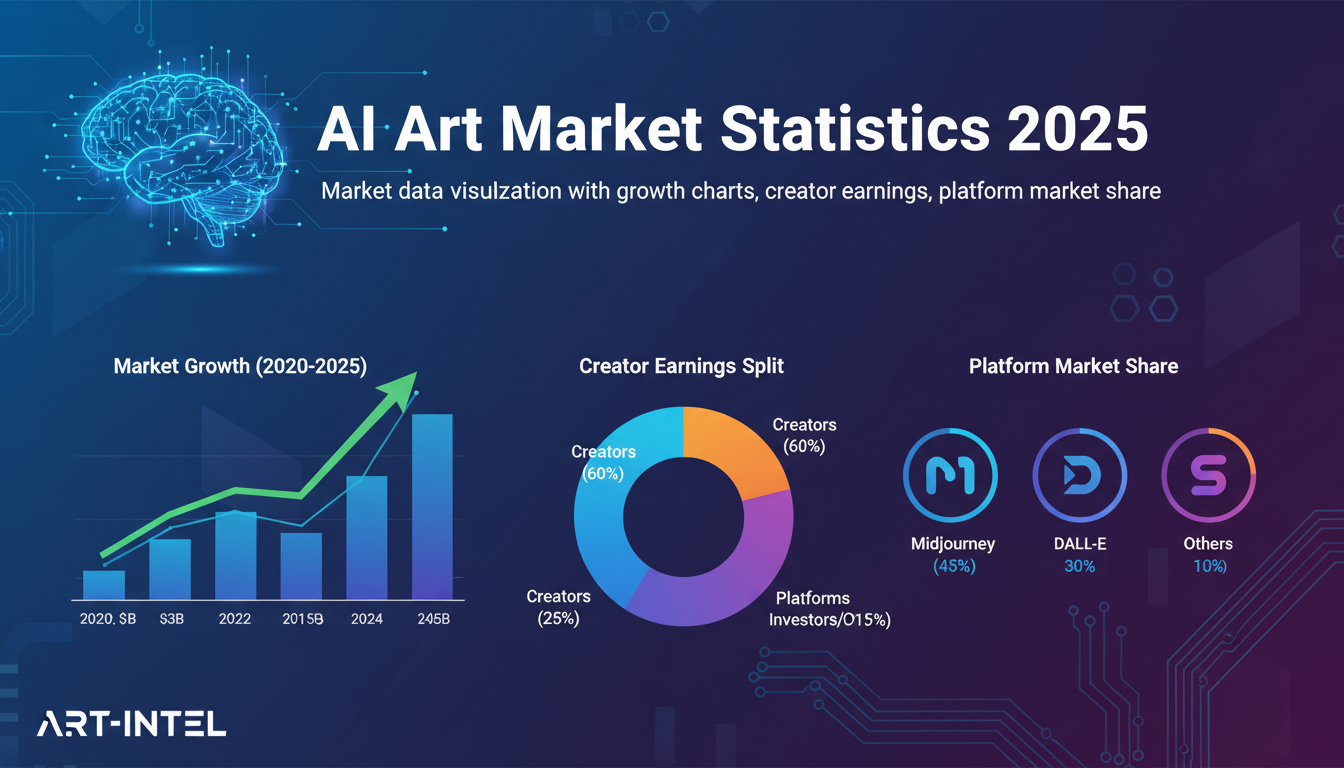
AI Art Market Statistics 2025: Industry Size, Trends, and Growth Projections
Comprehensive AI art market statistics including market size, creator earnings, platform data, and growth projections with 75+ data points.
AI Automation Tools: Transform Your Business Workflows in 2025
Discover the best AI automation tools to transform your business workflows. Learn how to automate repetitive tasks, improve efficiency, and scale operations with AI.
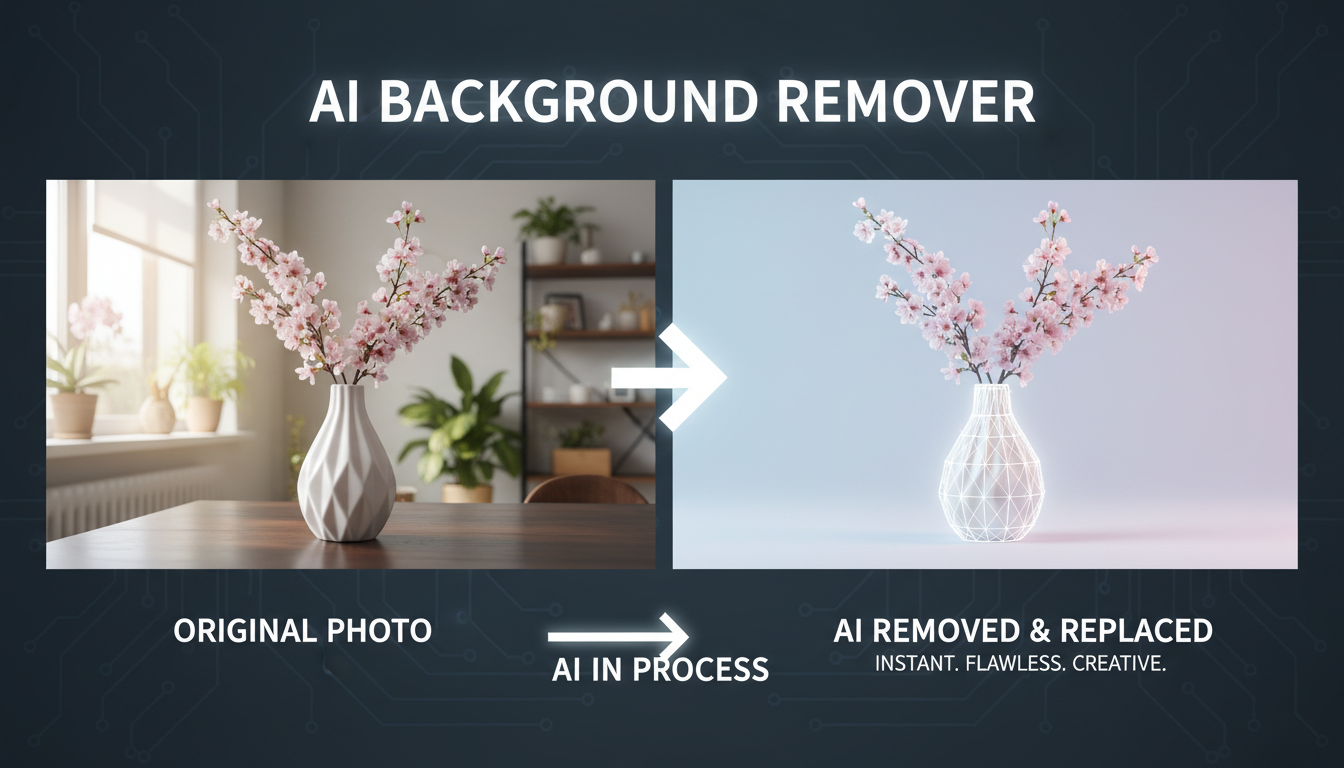
AI Background Remover and Generator: The Complete Guide to Replacing, Creating, and Perfecting Image Backgrounds
Master AI background removal, replacement, and generation. Compare the best tools, learn proven techniques, and transform your product photos and portraits.