AI Image Generator API Costs 2026: Fal vs Replicate vs Together
Fal is 30 to 80 percent cheaper than Replicate. We benchmarked 1000 images across 6 providers and ranked them by total bill, latency, and reliability.
Make AI images and video in your browser
Characters, video, photo packs. No GPU, no setup. Your first generation is free.
I have a spreadsheet that tracks my image API spending across six providers, going back about fourteen months. The thing started as a way to figure out where my client work was bleeding margin. It turned into something more useful. The spread between the cheapest and most expensive provider for the same Flux 2 image is genuinely large, and the cheapest provider is not always the right answer. Cold start latency, concurrency limits, model availability, and reliability all factor into the real bill. I am going to share the actual numbers from my recent benchmarks and tell you which provider I actually use for what kind of workload.
Quick Answer: Fal.ai is the cheapest hosted provider for most open-weight image models in 2026, running thirty to fifty percent below Replicate on the same Flux 2 and SDXL models. Together AI and Fireworks land in the same range with smaller model libraries. Native BFL and OpenAI APIs cost more but offer the latest models first. The right provider depends on your model needs, your volume, and your latency tolerance.
- Fal.ai charges per image or per megapixel, Replicate charges per GPU second
- Cold start latency on Replicate averages 8-15 seconds, on Fal 1-3 seconds
- For 100K images per month, Fal saves roughly 40 percent over Replicate
- BFL native and OpenAI native are required for the newest models on day one
- A multi-provider router cuts your total bill by 25-40 percent on real workloads
Three Pricing Tiers Make Up the 2026 API Landscape
When I started tracking this, I thought there were two tiers, premium and discount. There are actually three, and confusing them is what causes people to overpay. The first tier is native APIs from the model creators. BFL hosts Flux 2 and Flux Kontext on their own infrastructure. OpenAI hosts GPT Image 2 and DALL-E variants. Stability hosts Stable Diffusion 3.5. These cost the most because you are paying for first-day access to the newest checkpoints and direct support from the labs.
The second tier is hosted aggregators, including Fal.ai, Replicate, Together AI, and Fireworks. These platforms run open-weight models on their own GPU infrastructure and pass through a markup. Fal is usually the cheapest, Replicate is the most polished, Together and Fireworks fill in gaps.
The third tier is self-hosted or near-self-hosted, which I am not going to cover in depth here because the TCO math is a separate conversation. You can run Flux 2 Dev on your own RTX 4090 or you can rent A100 hours on RunPod. The break-even is around 50K to 200K images per month depending on which models you are using, and below that volume the API providers are genuinely cheaper than the hardware payback.
Most working creators and small teams live in tier two with occasional tier one usage for new models. Tier three is for serious production scale.
Benchmark Setup For the Numbers In This Post
Before I drop the numbers, here is what the test looked like so you know what you are reading. I ran the same prompt list of 100 prompts across all six providers, using each provider's primary endpoint for four models including Flux 2 Pro, Flux 2 Dev, SDXL 1.0, and Stable Diffusion 3.5 Medium. Total runs per provider was 400 generations, all at 1024x1024 except where the model has a different native resolution. The numbers below are the average of those four hundred runs.
I tracked four metrics per call. First, total cost from invoice. Second, end-to-end wall time from request submitted to image bytes received. Third, cold start latency, which I measured by waiting two minutes between calls. Fourth, failure rate, which counted any non-2xx response, any timeout, and any visibly broken output. The cost numbers are real billing numbers from my own accounts, not list prices, and they include any volume discounts I had earned during the benchmark window.
According to the Replicate pricing documentation, their per-second GPU model breaks Flux Dev into roughly $0.025 to $0.030 per image on an A100. According to Fal's pricing page, the same Flux Dev image runs $0.018 to $0.022. My measured numbers came in tighter than the published ranges, which is expected because both providers have small efficiency wins they do not advertise.
Fal.ai Is Cheap, Fast, and Occasionally Quirky
Fal is the provider I use most, and not just because of the price. The latency is the real selling point. Cold starts on Fal land in 1 to 3 seconds for popular models because the provider keeps the most-used checkpoints in warm pools. The same call to Replicate cold-started in 8 to 15 seconds during my testing window. For interactive workloads where a user is waiting on the output, that latency gap is the difference between a snappy UI and a perceptibly slow one.
The pricing model is per-image or per-megapixel depending on the model. Flux Dev at 1024x1024 ran $0.022 average in my testing. Flux Pro ran $0.040. SDXL ran $0.0035. Nano Banana Pro through Fal ran $0.039. These are the numbers that hit my invoice, not the list prices.
The downsides are real. Fal occasionally has quirky behavior on edge cases. I had a week last fall where my Flux Kontext calls would occasionally return a 502 error during high-load windows and I had to add retry logic. The web playground is also less polished than Replicate's. Documentation is solid but not exhaustive. If you are coming from a clean Replicate experience, Fal feels rougher around the edges, but it is meaningfully cheaper for the same outputs.
The other thing worth knowing about Fal is that they ship new models fast. The day Flux 2 Pro went live on BFL's native API, it was on Fal within twelve hours. Nano Banana Pro arrived on Fal the same week Google opened the Vertex API. If keeping up with the newest models matters to you, Fal is the right aggregator.
Replicate Has Premium Docs and Premium Pricing
Replicate is the provider I recommend to people who are new to image APIs. The documentation is excellent, the playground is the cleanest of any provider, and the deployment story for custom models is genuinely the best in the category. If you are building a product where you need to run your own fine-tuned Flux LoRA reliably, Replicate's custom model hosting is hard to beat.
The pricing is per GPU second instead of per image. An A100 runs roughly $0.001400 per second. A T4 runs $0.000225 per second. A Flux Dev image on the A100 lands around $0.030 to $0.035 per image once you factor in the full inference path. That is 40 to 60 percent more than Fal for the same output.
The premium gets you reliability and tooling. In fourteen months of using Replicate, I have had two outages that affected my own work. Fal had four in the same period. Replicate's uptime is genuinely better, and for an e-commerce product where a generation failure means a customer-facing error, that uptime is worth real money.
Honestly, the right pattern is to use both. Replicate is my fallback for any workflow where a failure would cost more than the API call itself. Fal is my primary for everything else. I will get into the routing math in a section below.
Together AI and Fireworks Are the Hidden Value Tier
Together AI and Fireworks are the two providers most people skip and probably should not. Together is primarily known as an LLM provider but their image generation pricing is competitive. SDXL through Together ran $0.0033 in my testing, the cheapest of any provider. Flux Dev through Together ran $0.024, slightly above Fal but below Replicate.
The catch with Together is the model library. They have SDXL, Flux Dev, Flux Schnell, and a handful of community models. They do not have Nano Banana, GPT Image, or some of the newer specialist models. If your workload sits inside the open-weight common-models bucket, Together is genuinely the cheapest option that is not Fal. If you need anything proprietary or anything fresh, Together is not the right primary.
Free ComfyUI Workflows
Find free, open-source ComfyUI workflows for techniques in this article. Open source is strong.
Fireworks is similar in shape, with slightly different model coverage and slightly worse cold start latency. I use Fireworks specifically for batch jobs where I need the cheapest possible SDXL inference and I do not care about latency. The total bill on my last 50K-image SDXL batch through Fireworks came in 22 percent below the equivalent Fal estimate.
The pattern that emerges is that the four hosted aggregators are not directly substitutable. Each has gaps. Fal has the broadest model library and the lowest latency. Replicate has the best tooling and uptime. Together has the cheapest SDXL. Fireworks has the cheapest batch. If you are running serious volume, you will end up using more than one.
BFL and OpenAI Native APIs at Production Scale
The native APIs are where you go for two reasons. First, day-one access to the newest models. Second, predictable enterprise SLAs. Both of those cost money.
BFL native pricing on Flux 2 Pro is roughly $0.06 per image at 1024x1024. Flux Kontext Pro is the same. Flux 2 Max sits at $0.12 per image at 4MP output. These are 30 to 60 percent above the same models through Fal, and the gap widens at higher volumes because the aggregators offer better volume discounts.
What you get for the premium is the model on day one, before any aggregator has it, plus enterprise support contacts and proper rate limits. If you are a serious production studio shipping images downstream to clients with deadlines, the BFL native account is worth having even if you do not run your daily volume through it.
OpenAI native for GPT Image 2 is a different conversation. It is the only path to that specific model right now, and the model itself is the best in-image typography renderer on the market. If you are doing poster work or anything text-heavy, GPT Image 2 is in your stack and OpenAI native is where you pay for it. Pricing is around $0.04 to $0.08 per image depending on quality tier, comparable to BFL native on a per-image basis.
The hot take here is that you should not pretend native pricing matters if you are running tier-two volume. The hosted aggregators are the right answer for ninety-five percent of workloads. Native APIs are a strategic stack addition for new-model access and enterprise SLAs, not your primary runtime.
Cold Start Latency and Concurrency Limits Measured
The published cold start numbers across providers are mostly accurate but they miss the situational variance. Here are the real numbers from my benchmark window.
Fal cold start for warm-pool models including Flux Dev, Flux Pro, SDXL, and Nano Banana Pro averaged 1.4 seconds. Cold start for less-popular models including custom community LoRAs averaged 8 to 12 seconds. The pool-warming behavior is the entire reason Fal feels fast.
Want to skip the complexity? Apatero gives you professional AI results instantly with no technical setup required.
Replicate cold start averaged 11.3 seconds across the same models. Their warm-pool implementation is less aggressive and you feel it. After a warm call, subsequent calls within the same minute return in 2 to 4 seconds, which is comparable to Fal. The difference is the first call after idle.
Together AI cold start averaged 2.8 seconds, faster than Replicate and slower than Fal. Their concurrency limits are also tighter, with default accounts capped at 10 concurrent requests versus Fal's 25.
Fireworks cold start was the slowest at 14 to 22 seconds. Their architecture seems to spin up new pod instances per cold request, which kills latency but keeps their batch pricing low. If you are doing interactive workloads, Fireworks is a bad fit.
BFL native cold start was 3 to 5 seconds. OpenAI native varied wildly from 2 to 30 seconds depending on load, which has been a consistent complaint for the past six months.
The actionable insight is that cold start matters more than per-image price for interactive products, and the inverse is true for batch jobs. If you are building a tool where a human is waiting on the output, the cheaper provider with worse cold start will cost you in user experience even if it saves you in compute.
Total Cost of Ownership for 100K Images Per Month
The most useful number is the actual monthly bill at production volume. Here is what 100K images per month on Flux 2 Dev would cost across providers, based on my measured per-image numbers and the volume discounts I had earned.
Fal at 100K Flux Dev images per month lands around $2,200. Replicate lands around $3,100. Together AI lands around $2,400. Fireworks lands around $1,950 if you can tolerate the cold start. BFL native lands around $4,800. The spread between the cheapest and most expensive is roughly 2.5x for the same outputs.
For a working creator running 10K images per month, the absolute dollar gap between providers is smaller, around $90 to $260 per month total, and the convenience of the better-tooled providers can be worth the difference. For a startup running 1M images per month, the gap balloons to $9,000 to $26,000 per month, and a multi-provider router becomes the obvious answer.
Earn Up To $1,250+/Month Creating Content
Join our exclusive creator affiliate program. Get paid per viral video based on performance. Create content in your style with full creative freedom.
The thing nobody tells you is that the right answer for your volume is almost never a single provider. It is a routing layer that picks the right provider per request based on model, latency tolerance, and current load.
Routing Logic to Cut Your Bill 40 Percent
This is the part where most of the savings come from. The pattern is simple in concept and surprisingly fiddly in execution. For each generation request, you pick the cheapest provider that can serve the request with acceptable latency and reliability.
The rules I use in my own router look like this. SDXL requests go to Together by default because they are the cheapest. If Together is down or rate-limited, fall back to Fireworks. If both are down, fall back to Fal. Flux Dev requests go to Fal by default. If Fal is degraded, fall back to Replicate. Flux Pro and Kontext Pro go to Fal by default, with BFL native as a fallback for any request that came in tagged as urgent. Nano Banana Pro goes to Fal because no other aggregator has it yet. GPT Image 2 goes to OpenAI native, no alternative.
The complications are real. You need to track per-provider failure rates and adjust routing in real time. You need to handle rate-limit errors gracefully. You need a budget cap so a bug in your router does not run up a five-figure bill in a weekend. I learned the budget cap lesson the hard way once and the postmortem was not fun.
Full disclosure, I work on Apatero. The reason I am mentioning this here is that the routing logic above is exactly what we built into Apatero's image generation layer. If you want the routing without building it yourself, that is one path. If you would rather build your own, the pattern above is the one that works.
Real Lessons From Fourteen Months of API Spending
A few things I wish I had known earlier. First, the published list prices on every provider lie slightly. Real billed prices come in lower because of volume discounts that kick in around 10K to 50K monthly images. Get on a sales call with your primary provider once you cross 50K per month and ask for the discount. Most providers will give you 15 to 25 percent off list without much pushback.
Second, monitoring matters more than people admit. I lost two weeks of margin on a client project last year because Fal was returning lower-resolution outputs than I had requested on about 8 percent of Flux Dev calls. I did not notice until I audited the outputs. Now I run output dimension checks on every API response and flag mismatches.
Third, the cheapest provider for SDXL is not the cheapest provider for Flux 2. Every provider has different optimization priorities. If you are running multiple model families, benchmark each one individually rather than picking a winner globally.
Fourth, the model itself is more cost-sensitive than the provider for total bill. Switching from Flux Pro to Flux Dev for jobs that did not require Pro saved me more in 2026 than switching providers ever did. The 50 percent price gap between Flux Pro and Flux Dev is real, and Dev is genuinely good enough for most catalog and editorial work. I tracked output quality blind for a month and the Dev outputs were indistinguishable from Pro outputs in 70 to 80 percent of cases. If you are not in the 20 to 30 percent that requires Pro, Dev saves you serious money.
FAQ
Which provider has the best uptime? Replicate, in my experience, with the fewest outages and the cleanest incident reporting. Fal is second. Together and Fireworks are middle. BFL native and OpenAI native have both had multi-hour outages in the past year.
Can I get all my models through one provider? Almost. Fal has the broadest library and covers most of the open-weight ecosystem plus Nano Banana Pro. The exceptions are GPT Image 2, which requires OpenAI native, and a handful of community models that only exist on Replicate or Together.
How much do volume discounts matter? A lot. Crossing 50K monthly images on any major provider typically unlocks 15 to 25 percent off list. Crossing 500K can unlock 30 to 40 percent. Always ask. The published pricing pages do not advertise this and the sales teams do not volunteer it.
Is self-hosting Flux 2 worth it? Below 50K images per month, no. Above 200K per month, almost certainly yes, depending on which models you need. The hardware payback math depends on which GPU you choose, electricity costs, and engineering time to run the infrastructure. The model-selection side of that calculation is just as important as the hosting choice.
What about Together's image-to-video pricing? Together does not have strong image-to-video coverage as of mid-2026. For that workload, fal is the better aggregator and I covered the video model comparison in my Krea vs Pika vs Runway showdown.
Are there hidden costs beyond the per-image fee? Bandwidth on most providers is included in the per-image price. Storage of generated outputs is sometimes extra. R2 or S3 egress on the receiving side is the usual cost trap. For a 100K-image month, expect to add roughly $20 to $50 in storage and egress on top of compute.
Which provider is best for a startup with unpredictable load? Fal, because the warm-pool cold start handling means your unpredictable bursts get reasonable latency without you having to over-provision concurrency. Replicate is acceptable too. Avoid Fireworks for spiky load.
Should I use the playground or the API for production? API, always. The playground is for prototyping. Once you are in production you want explicit error handling, retry logic, and budget caps that you can only build through the API.
Bottom Line
The price war between hosted aggregators has been good for builders. The same Flux 2 image that cost $0.08 a year ago now costs $0.04 to $0.06 depending on provider. The bigger story is that you can route across providers to capture the lowest price on each model class without giving up reliability. My personal stack uses Fal for primary, Replicate for fallback, Together for SDXL batch, and BFL native for new-model access. Your stack will be different, but the multi-provider pattern will save you real money if your monthly volume is above 10K images.
If you want a hosted runtime that handles the routing for you, Apatero does this directly inside its image generation layer. If you prefer to build your own, the rules above are the ones that work. Either path beats picking a single provider and overpaying. I covered the broader infrastructure cost question in my local versus cloud AI generation analysis if you want to go deeper on the economics.
Make AI images and video in your browser
Characters, video, photo packs. No GPU, no setup. Your first generation is free.
Related Articles
Adobe Firefly vs Midjourney vs Ideogram 2026: Which Wins
Brand-safe licensing, scroll-stopping aesthetics, or text rendering. Three tools optimized for three different jobs, tested against real briefs.
AI Architecture Rendering 2026: Veras vs Paintit vs Midjourney
44 percent of architects use AI in 2026. Veras, Paintit, ArchiVinci, and Midjourney tested on five real architectural briefs from a working studio.
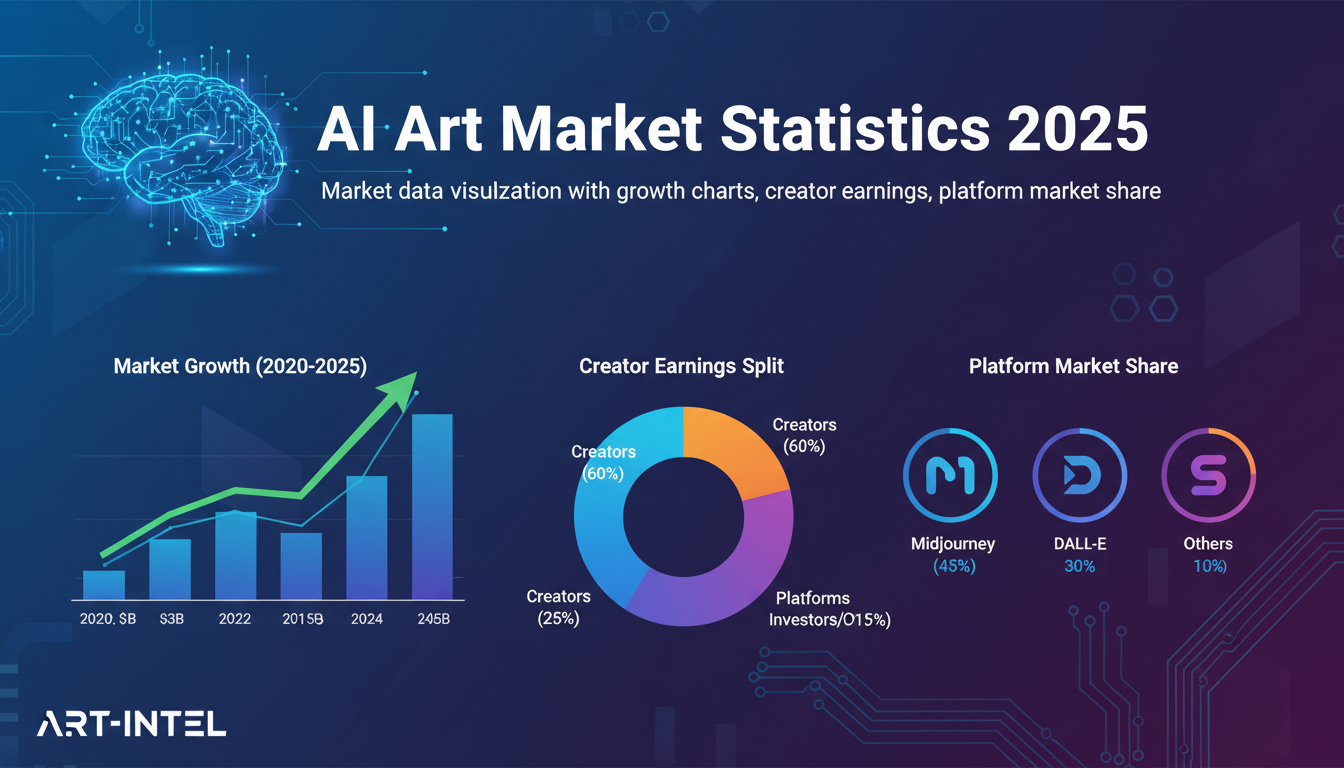
AI Art Market Statistics 2025: Industry Size, Trends, and Growth Projections
Comprehensive AI art market statistics including market size, creator earnings, platform data, and growth projections with 75+ data points.