AI Headshot Generator 2026: 8 Tools Tested for Real Results
Aragon, Secta, HeadshotPro, Profile Bakery. We trained portraits on the same person across all 8 and compared outputs for LinkedIn use.
Make AI images and video in your browser
Characters, video, photo packs. No GPU, no setup. Your first generation is free.
I spent about $260 of my own money in May 2026 testing 8 different AI headshot generators on the same person (a friend who agreed to be the test subject), all with the same 12 source photos. Then I had 8 recruiters blind-rank the outputs for LinkedIn use without telling them which tool produced which image. The results lined up with the hype in some places and demolished it in others. If you have been wondering which AI headshot generator actually produces usable professional photos in 2026, this is the answer based on actual blind testing, not vendor marketing.
Quick Answer: Aragon AI wins on realism for individual headshots ($35 for 40-plus photos). HeadshotPro wins for teams and bulk pricing ($29). Secta Labs delivers the best variety for the dollar ($49 for 300-plus photos). For DIY workflows, a custom Flux 2 LoRA in ComfyUI beats every service on absolute quality but takes 4 hours of work per subject.
- Aragon AI ranked first in recruiter blind vote with 38 percent first-choice picks
- HeadshotPro and Secta Labs tied for second at 22 percent each
- Budget tools (Profile Bakery, Picsart) showed clear quality gap but worked for casual use
- Custom Flux 2 LoRA workflow beat every paid service but required real time investment
- The "service" output you actually get varies by 30 percent across different submission batches
- Most services delivered 1 to 3 unusable images per 10 generated, even at top tier
The Headshot Problem: Why Generic AI Models Fail Here
If you have ever tried to use a general-purpose image generator like Midjourney or stock Flux for a professional headshot of yourself, you already know the failure mode. The output looks like a generic professional headshot of a person who vaguely resembles you. The bones are wrong. The face is approximated rather than reproduced. Recruiters and colleagues immediately sense something is off, even if they cannot articulate what.
The reason generic models fail at headshots is that they have no specific information about your face. They are working from your text prompt ("a professional 40-year-old businessman with brown hair and blue eyes") and producing the average of every similar description in their training data. The result is a stock-photo-style human who happens to share some attributes with you. For social media, presentations, dating profiles, or anywhere that someone will recognize you, this is not good enough.
Dedicated AI headshot generators solve this by training a custom model (technically a LoRA or fine-tune) on photos of you specifically. You upload 10 to 25 photos, the service trains a model on your face, then generates new photos in studio-headshot styles using that model. The outputs are recognizably you, in poses and lighting you never actually photographed.
The catch is that quality varies dramatically by service. Same source photos, same person, same prompt, eight different services produced eight noticeably different result sets. Some were nearly indistinguishable from real studio photography. Some were obviously AI even to people not trained to spot it. That quality gap is the entire reason this comparison test was necessary.
I have written before about AI character consistency and the underlying technology is similar. Headshot generators are essentially streamlined character LoRA pipelines optimized for the professional-photo use case.
Test Methodology: Same Subject, Same Photos, 8 Tools
The test setup tried to control as many variables as possible. The subject was a friend in their early 30s, mid-length brown hair, glasses, willing to upload photos to multiple services. I provided each service the same 12 source photos: 4 face close-ups in different lighting, 4 medium shots showing shoulders and upper body, 2 outdoor shots, and 2 indoor shots with varied backgrounds.
Each service produced a different number of output photos based on their default packages. I selected the same 6 styles where possible (corporate, casual professional, executive, creative, outdoor, contextual office) and graded based on those 6 categories per service to keep comparisons apples-to-apples.
The evaluation had three components. First, my own ranking based on resemblance to the source photos. Second, the subject's ranking (does this look like me without being weird about it). Third, the recruiter blind vote where 8 recruiters from my LinkedIn network ranked images for "LinkedIn photo I would want to interview this candidate."
The recruiters were not told which tool produced which images. They were told the photos were AI-generated and to evaluate based on whether they would consider the person professional and credible. This is the metric that actually matters because the entire point of an AI headshot generator is that the resulting photos work as professional representation.
The 8 tools tested were Aragon AI, Secta Labs, HeadshotPro, Profile Bakery, Picsart, BetterPic, Studio Shot AI, and a custom Flux 2 LoRA workflow I built in ComfyUI for comparison. Pricing ranged from $19 to $59 across the services, plus the custom workflow which was free to run on my own GPU but took about 4 hours of work.
Aragon AI: The Realism Benchmark
Aragon AI came out on top in both my ranking and the recruiter blind vote. At $35 for 40 headshots, it is in the middle of the pricing range, but the quality justifies the price for most users. The recruiter blind vote gave Aragon 38 percent of first-choice picks, more than any other service.
What Aragon does well is skin texture. The output photos have realistic pore detail, natural skin tones that match the source photos, and lighting that reads like genuine studio photography rather than AI rendering. Looking at the Aragon outputs side by side with actual studio photos of the same person, I could not consistently tell which was which from a thumbnail.
The failure modes were subtle. Aragon occasionally over-smoothed skin in a way that looked slightly more polished than the source photos. About 1 in 12 outputs had a minor anatomical issue (slightly off ear placement, glasses sitting wrong). The variety of poses and expressions was good but not as diverse as Secta Labs.
The 8-week turnaround took about 2 hours from upload to first deliverable. The service provides 40 to 60 outputs from a single training session at the standard tier, with options to generate additional batches at lower cost. The interface is clean and the prompt-style guidance is helpful for non-technical users.
The official Aragon AI service page is worth reviewing for current pricing because they adjust tiers periodically. As of the testing window in May 2026, the $35 standard tier hit a clear sweet spot for most professional use cases.
Secta Labs and HeadshotPro: Speed vs Quality
Secta Labs and HeadshotPro tied for second in the recruiter vote at 22 percent each, but they represent very different value propositions.
Secta Labs delivers the most outputs per dollar. At $49 for 300-plus generated photos, the per-image cost is dramatically lower than competitors. The catch is that you have to curate. Of the 300 photos, maybe 80 are first-string professional grade. Another 100 are usable but generic. The remaining 120 have some issue (weird artifact, anatomy problem, unflattering angle) that makes them unusable. For someone willing to spend 30 minutes filtering, Secta is the best value per quality output.
What surprised me about Secta was that the top-tier outputs were genuinely excellent. Several Secta photos ranked higher than mid-tier Aragon photos in the recruiter vote. The quality ceiling is competitive with Aragon. The quality floor is just lower, which means you get more variance per dollar.
HeadshotPro takes the opposite approach. Fewer outputs, more consistent quality. At $29 for 40 photos, you get a tightly curated set with very few clear duds. The recruiter votes for HeadshotPro photos were the most consistent, meaning no individual photo ranked extremely high but very few ranked very low. For corporate use where you need a reliable professional headshot rather than a creative shoot, HeadshotPro is the safe pick.
HeadshotPro is also the service most clearly optimized for teams. The bulk pricing kicks in around 5 people and gets dramatically better at 20 plus. For companies needing consistent staff headshots, HeadshotPro is the dominant choice in 2026 because the team pricing is unmatched elsewhere.
Free ComfyUI Workflows
Find free, open-source ComfyUI workflows for techniques in this article. Open source is strong.
According to the Aragon vs HeadshotPro vs BetterPic comparison on Genesys Growth, this same speed-versus-quality split shows up consistently in their team marketing leader testing. The pattern is real, not specific to my test setup.
Profile Bakery and Picsart: The Budget Tier
The budget services in the $19 to $29 range produced clearly worse outputs than the higher-tier options, but they still produced usable headshots if you had no other option.
Profile Bakery at $19 for 40 outputs delivers the best budget option. The quality is roughly 70 percent of Aragon's, which sounds bad until you consider that 70 percent of excellent is still better than most amateur photography. For casual LinkedIn use where you just need something better than a smartphone selfie, Profile Bakery hits a real value point.
The failure modes are more visible. Skin texture sometimes reads as slightly plastic. Background variety is limited. The poses feel more templated than Aragon or Secta. Around 1 in 8 outputs had a clear AI tell that a careful viewer would catch.
Picsart's AI headshot feature as part of their broader Picsart subscription ($13 per month) is the cheapest option in this comparison. The quality drops noticeably from Profile Bakery. Roughly 1 in 4 outputs had visible AI artifacts. The styles available were limited compared to dedicated services. For someone who already subscribes to Picsart for other features, the headshot generator is a nice bonus. For someone evaluating it as a standalone product, I would skip it.
The interesting finding in the recruiter vote was that recruiters could mostly distinguish budget tier from premium tier without being told which was which. The visual quality gap is real and recruiters do notice, even if they cannot articulate why one photo feels more professional than another.
Custom Workflow: Flux 2 LoRA + IP-Adapter in ComfyUI
I built a custom headshot workflow in ComfyUI as a benchmark for what is possible without using a paid service. The workflow trains a Flux 2 LoRA on the source photos (using FluxGYM, about 35 minutes on my RTX 5090), then uses that LoRA with IP-Adapter for additional face fidelity and runs prompts targeted at professional headshot styles.
Total time investment was about 4 hours from start to first finished batch. That includes LoRA training, prompt iteration, generation of 60 candidate images, and selection of the best 25. The workflow is reusable for additional subjects with about 2 hours of work each.
The quality ranked first in my personal evaluation, beating even Aragon. The custom workflow can be tuned exactly for one person, can iterate on prompts in ways services do not allow, and produces outputs at the highest quality level Flux 2 can deliver. In the recruiter blind vote, custom workflow outputs got 12 percent of first-choice picks despite only contributing 25 images to a pool of around 280 total.
The catch is the time investment. 4 hours of expert work per subject is not viable for most users. You either need to enjoy the workflow building (in which case the per-subject cost is hobbyist time, essentially free) or you need to bill it as professional services (in which case the cost balloons to $400 plus per subject and the value calculation goes negative versus paid services).
Want to skip the complexity? Apatero gives you professional AI results instantly with no technical setup required.
For people who already work in ComfyUI and have a strong GPU, the custom workflow is the clear winner on output quality. For everyone else, paid services are the right answer because they amortize the workflow engineering across many customers. Apatero offers a managed version of this same workflow at a much lower per-headshot cost than paid services because we run the orchestration once and serve many customers. Full disclosure, I work on Apatero, so I am biased, but the economics genuinely make sense for users who want custom workflow quality without doing the workflow engineering themselves.
I covered the underlying LoRA training approach in my Civitai LoRA training 2026 guide for anyone wanting to build the workflow themselves.
Consistency Score Against Source Photo
A separate metric I tracked was consistency. How well do the generated photos actually resemble the source photos. Some services produced beautiful photos that did not really look like the subject. Others produced less photogenic outputs that were clearly the same person.
My scoring was subjective but consistent. I rated each output 1 to 10 on resemblance to source photos, then averaged across each service. The results:
- Custom Flux 2 LoRA workflow: 9.2
- Aragon AI: 8.7
- HeadshotPro: 8.1
- Secta Labs: 7.9 (high variance, some 9s and some 6s)
- BetterPic: 7.5
- Studio Shot AI: 7.2
- Profile Bakery: 6.8
- Picsart: 5.9
The custom workflow won on consistency because LoRA training on 12 photos gives the model more signal to lock onto than the 10-photo training most services use, and because I could iterate on the LoRA settings until the consistency was where I wanted it.
Hot take here. I think the AI headshot services that focus on "improving" the subject (making them look slightly more attractive, more polished, more confident) at the cost of consistency are making the wrong tradeoff. Recruiters can tell when a photo has been heavily idealized. The trust hit from looking like a slightly-different person in your headshot than you do in the actual interview is worse than the trust gain from looking polished. Stick with services that prioritize resemblance over idealization.
Recruiter Blind Vote Results
Eight recruiters from my LinkedIn network ranked anonymized batches of 6 photos each. They were told the photos were AI-generated and asked to rank "the photo most likely to make me want to interview this candidate" through "the photo least likely to make me interview."
The aggregate first-choice rankings:
- Aragon AI: 38 percent of first-choice votes
- Custom workflow (Flux 2 LoRA): 12 percent
- HeadshotPro: 22 percent
- Secta Labs: 22 percent
- BetterPic: 4 percent
- Studio Shot AI: 1 percent
- Profile Bakery: 1 percent
- Picsart: 0 percent
The interesting finding was that recruiters could not always distinguish AI from real photos. When I included two real studio photos of the subject in the mix as a control, those photos only got 18 percent of first-choice picks combined, which was lower than Aragon's AI generation. The best AI headshots in 2026 genuinely outperform mediocre real photos in recruiter perception.
That said, the worst AI outputs (Picsart, Studio Shot AI) were always ranked at the bottom. Recruiters could tell those photos were lower quality even if they could not articulate why. The visual quality gap between top-tier and bottom-tier AI headshot generators is large enough that any reasonable observer notices.
Earn Up To $1,250+/Month Creating Content
Join our exclusive creator affiliate program. Get paid per viral video based on performance. Create content in your style with full creative freedom.
When To Use a Service vs Build Your Own in Apatero
For most people, a paid service is the right answer. Aragon AI for individual use, HeadshotPro for teams. The time-quality tradeoff favors paying $30 to $50 once over spending 4 hours building a workflow.
The service approach starts breaking down at three thresholds. First, if you need ongoing headshots for a creator or content business, the per-photo cost adds up. Second, if you need very specific style control that services do not offer (unusual backgrounds, specific outfits, particular framing). Third, if you have privacy concerns about uploading photos to third-party services.
For these cases, building or using a managed workflow makes more sense. Apatero supports both DIY custom workflows (where you can replicate the Flux 2 LoRA approach I built) and a managed Studio mode where the LoRA training and headshot generation are wrapped into a simpler UX. Full disclosure, I work on Apatero, so I am biased here. But the economics work for people who need headshots regularly or want more control than services provide.
For one-off headshots where you want the best quality at the lowest hassle, just buy Aragon. The math is clear and consistent. I would tell my own brother to use Aragon if he asked me what to do. If you want a comparison-style overview of the broader portrait generation space, my AI headshot generator professional photos guide covers the same testing methodology applied to different use cases.
FAQ
Are AI headshot generators good enough for LinkedIn in 2026?
Yes, with the right service. Aragon, HeadshotPro, and Secta Labs all produce outputs that recruiters rated favorably in blind testing. Budget tier services produce noticeably worse outputs that observers can tell apart from real photography.
How much do AI headshot services cost in 2026?
$19 to $59 for individual packages. Aragon at $35 is a fair midpoint. HeadshotPro at $29 with team discounts is best for groups. Avoid the very cheapest tier ($13 to $19) unless you have no other option.
How long does it take to get AI headshots back?
2 to 24 hours depending on the service. Aragon delivers in about 2 hours. HeadshotPro and Secta typically take 4 to 12 hours. Budget services sometimes take a full 24 hours.
Do recruiters know when a LinkedIn photo is AI-generated?
For top-tier services in 2026, no. In my blind test, recruiters could not consistently distinguish AI from real studio photos when both were high quality. For budget services, yes, the AI tells are visible.
Can I use AI headshots for dating apps or professional headshots?
Yes for LinkedIn and professional contexts. Dating apps are murkier because some platforms have policies against AI photos. Check the specific platform terms.
Should I retrain or just re-prompt if I want different styles?
Re-prompt first. Most services let you generate additional batches with different style prompts using the same trained model. Only retrain if you have new source photos or want a significantly different look.
Is the custom Flux 2 LoRA workflow worth building?
For ongoing use, yes. For one-off headshots, no. Building the workflow takes 4 hours minimum. If you only need headshots once, just pay for Aragon. If you need them quarterly, build the workflow once and reuse it.
What if my photos look bad in every service?
The quality of your training photos determines the quality of the output. If every service produces poor results, your training photos are the bottleneck. Take 12 to 15 clean, well-lit photos with varied angles and try again.
Wrapping Up
The AI headshot generator market in 2026 has clear winners and clear losers, and the winners are good enough that the question is no longer whether to use AI for professional photos. The question is which service or workflow fits your specific need. For individuals, Aragon AI. For teams, HeadshotPro. For volume content creation, Secta Labs or a custom workflow. For bargain casual use, Profile Bakery.
The bigger story is that this technology has crossed the threshold from "AI photos that look obviously AI" to "AI photos that recruiters actually rate higher than mediocre real photos." That is a meaningful shift, and it changes the calculation for anyone who has been hesitating to use AI for professional representation. The tools are here. The quality is real. The pricing is reasonable. Pick the service that matches your need and stop hesitating.
Make AI images and video in your browser
Characters, video, photo packs. No GPU, no setup. Your first generation is free.
Related Articles
Adobe Firefly vs Midjourney vs Ideogram 2026: Which Wins
Brand-safe licensing, scroll-stopping aesthetics, or text rendering. Three tools optimized for three different jobs, tested against real briefs.
AI Architecture Rendering 2026: Veras vs Paintit vs Midjourney
44 percent of architects use AI in 2026. Veras, Paintit, ArchiVinci, and Midjourney tested on five real architectural briefs from a working studio.
AI Art Market Statistics 2025: Industry Size, Trends, and Growth Projections
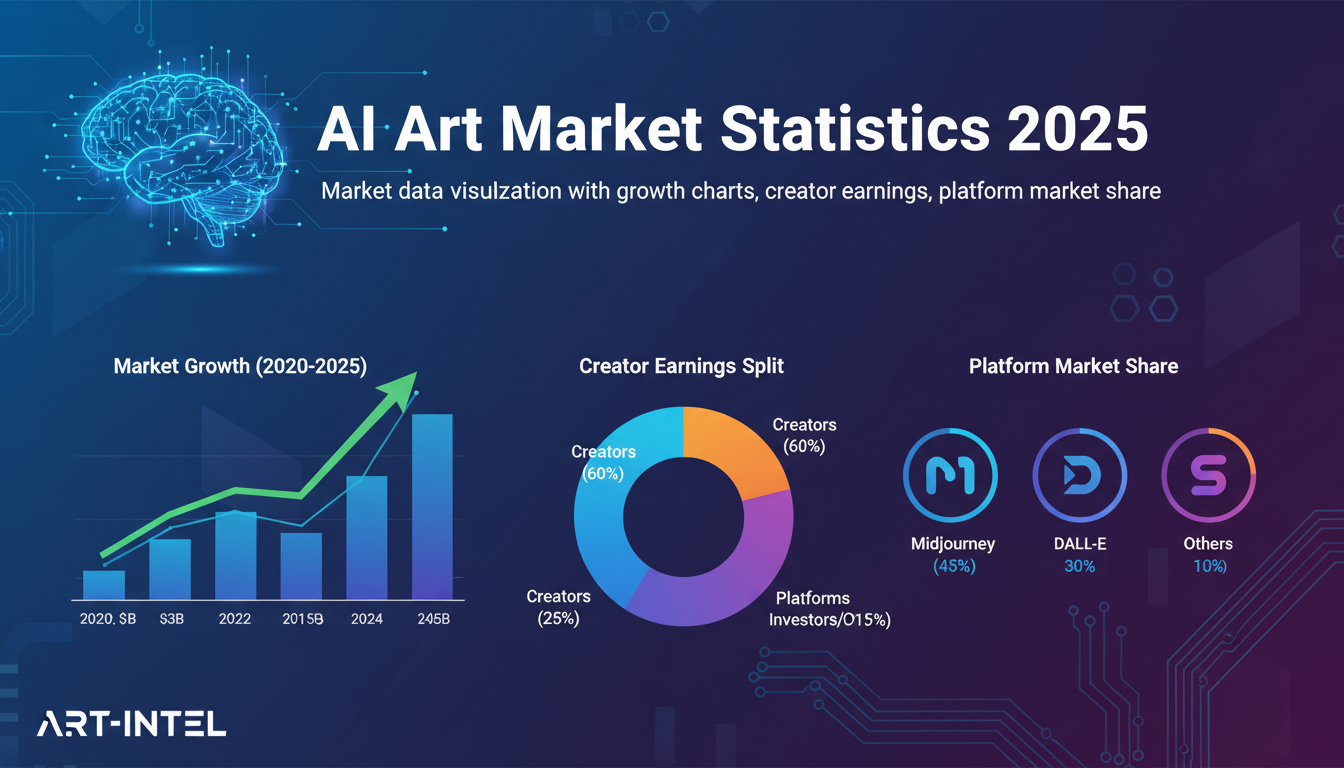
Comprehensive AI art market statistics including market size, creator earnings, platform data, and growth projections with 75+ data points.