What is Flux 2 Klein? The Fastest AI Image Generator Explained
Discover Flux 2 Klein from Black Forest Labs - the fastest open-source AI image generator that creates images in under 1 second. Learn about its features, versions, and why it's transforming AI art.

Make AI images and video in your browser
Characters, video, photo packs. No GPU, no setup. Your first generation is free.
If you've been following AI image generation, you've probably heard about Flux. But there's a new player that's making serious waves in the community: Flux 2 Klein. Released by Black Forest Labs in January 2026, this model is being called the fastest AI image generator ever created, capable of producing high-quality images in under one second.
The AI art community has been buzzing about this release because it solves one of the biggest pain points with previous Flux models: speed. While Flux Dev produces stunning images, it takes nearly a minute on most hardware. Flux 2 Klein changes that equation entirely, and in this guide, I'll break down everything you need to know about this game-changing model.
Why Flux 2 Klein Matters
The team at Black Forest Labs, founded by former Stability AI engineers who created Stable Diffusion, has been on a mission to push the boundaries of what's possible with AI image generation. Their original Flux models quickly became favorites among AI artists for their exceptional quality, particularly in areas where other models struggled: text rendering, complex compositions, and photorealistic outputs.
However, there was always a tradeoff. Flux Dev, while beautiful, was slow. Really slow. On an RTX 4090, you'd wait 45-60 seconds for a single 1024x1024 image. That made iterating on prompts tedious and killed the creative flow for many users. Flux Schnell helped somewhat with its 4-step generation, but quality suffered noticeably.
Flux 2 Klein represents Black Forest Labs' answer to this problem. They've managed to create a model that's not just fast, but fast enough to feel nearly real-time on modern hardware. We're talking about generating images in the time it takes to take a sip of coffee.
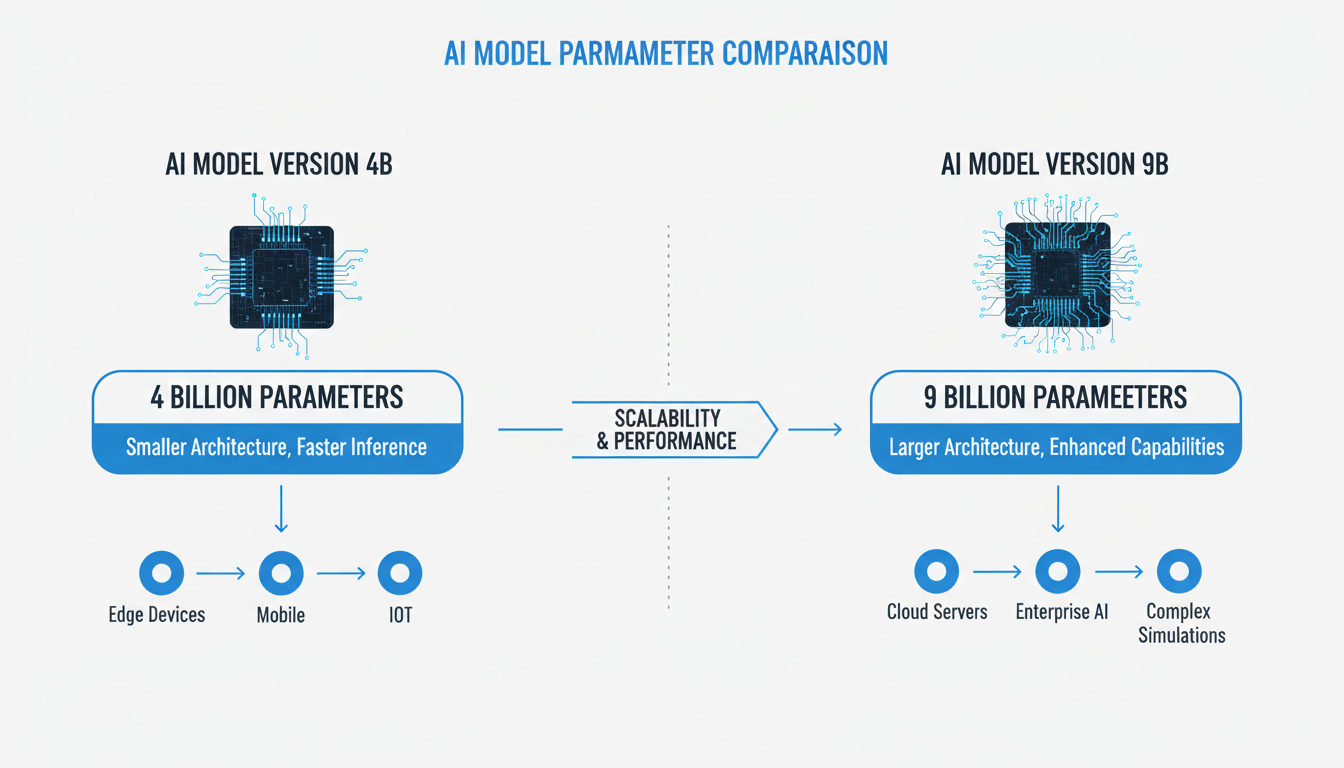 The Flux 2 Klein family includes both 4B and 9B parameter models for different use cases
The Two Versions: 4B and 9B
One of the smartest decisions Black Forest Labs made was releasing two versions of Flux 2 Klein, each targeting different users and use cases.
Flux 2 Klein 4B
The 4B (4 billion parameter) version is the real headline grabber. It's released under the Apache 2.0 license, which means anyone can use it for commercial purposes without paying Black Forest Labs a cent. This is huge for startups, indie developers, and businesses looking to integrate AI image generation into their products.
The 4B model requires approximately 13GB of VRAM, making it accessible on GPUs like the RTX 3090, RTX 4070, and RTX 4080. On an RTX 4090, it generates 1024x1024 images in about 1.2 seconds. Even on more modest hardware, you're looking at generation times under 5 seconds.
What's remarkable is that despite being "compact," the 4B model doesn't feel like a compromise. The image quality holds up surprisingly well against larger models, especially for most common use cases like portraits, landscapes, and product photography.
Flux 2 Klein 9B
The 9B (9 billion parameter) version steps things up in terms of quality while remaining impressively fast. It targets around 0.5 to 2 seconds per image depending on your hardware, with noticeably better detail retention and prompt adherence compared to the 4B version.
The catch? It's released under the FLUX Non-Commercial License, meaning it's free for researchers, hobbyists, and personal projects, but commercial use requires a separate agreement with Black Forest Labs. If you're building a product or service, you'll need to reach out to them for licensing terms.
Technical Architecture
Flux 2 Klein uses what Black Forest Labs calls a "distilled" architecture. In simple terms, they've taken the knowledge from their larger, slower models and compressed it into these smaller, faster versions through a process called knowledge distillation.
The model retains the core strengths of the Flux family:
- Unified text-image understanding: Text and image tokens are processed together in a single stream, which is why Flux models are so good at following complex prompts.
- Rectified flow matching: This is the underlying technique that makes Flux models generate with fewer steps while maintaining quality.
- Strong text rendering: Unlike many AI models that produce garbled text, Flux 2 Klein can generate legible typography, making it useful for mockups and designs.
The 4B model fits comfortably in 13GB of VRAM, while the 9B version needs around 20GB for optimal performance, though there are quantized versions that reduce these requirements.
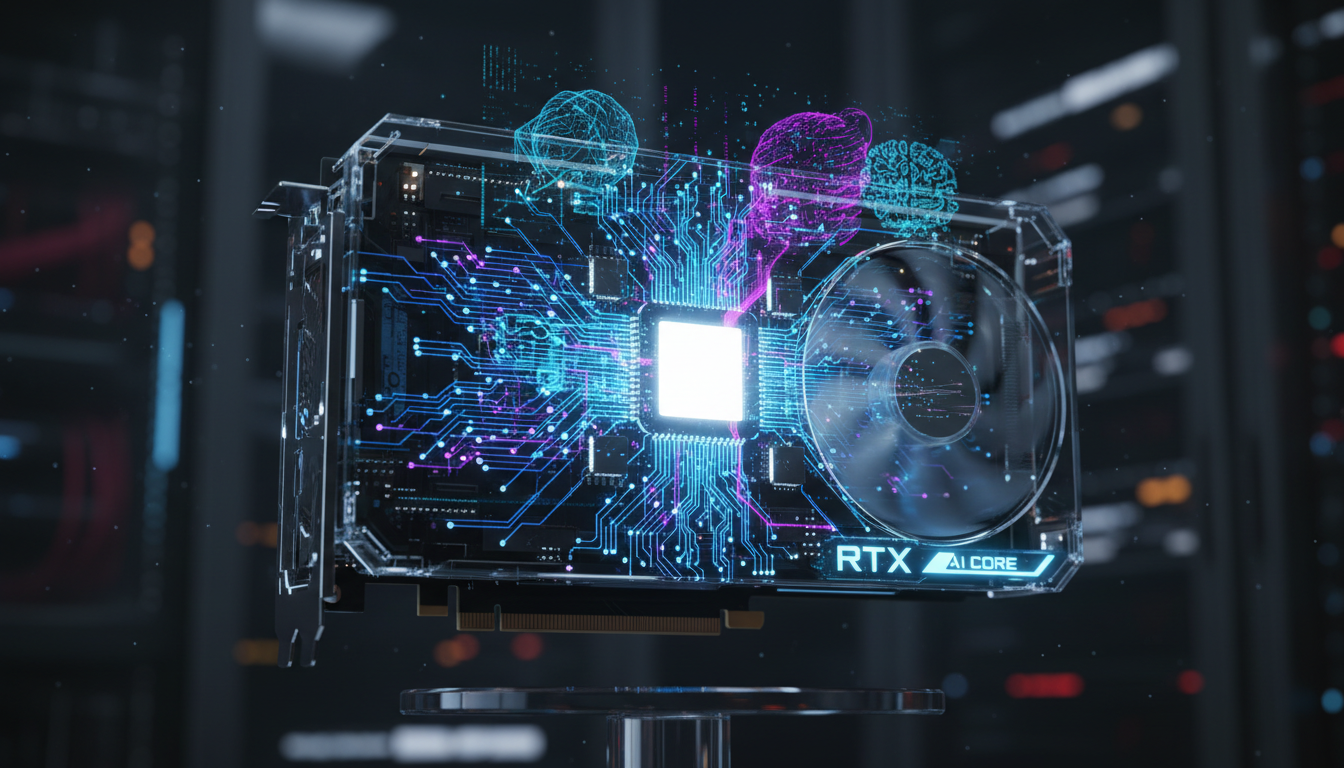 Flux 2 Klein is optimized to run efficiently on consumer GPUs like the RTX 3090 and RTX 4090
Free ComfyUI Workflows
Find free, open-source ComfyUI workflows for techniques in this article. Open source is strong.
What Can You Create with Flux 2 Klein?
The versatility of Flux 2 Klein is one of its strongest selling points. Here's what the model excels at:
Photorealistic Portraits
Flux models have always been strong at generating realistic human faces, and Klein is no exception. The model handles skin textures, lighting, and facial features with impressive accuracy. For portrait work, it's one of the best options available, especially when you need fast iteration.
Text and Typography
This is where Flux 2 Klein really shines compared to competitors like SDXL. Need a sign with readable text? A book cover with a title? A UI mockup with labels? Klein handles it with surprising accuracy. While not perfect 100% of the time, it's leagues ahead of what Stable Diffusion models can achieve.
Complex Scenes
Multi-element prompts that would confuse other models are handled gracefully by Flux 2 Klein. You can describe a scene with multiple characters, specific poses, and detailed backgrounds, and the model will generally produce coherent results.
Artistic Styles
From anime to oil painting to digital art, Flux 2 Klein adapts to style prompts effectively. The community has already started creating LoRA adapters to push specific styles even further.
How Does It Compare to Other Models?
Let's put Flux 2 Klein in context with other popular AI image generators:
vs. Flux Dev
Flux Dev still produces slightly higher quality images, particularly for complex artistic work. However, Klein is 4-5x faster. For most users, the quality difference isn't worth the time tradeoff. If you're iterating on prompts or need volume, Klein is the clear choice.
Want to skip the complexity? Apatero gives you professional AI results instantly with no technical setup required.
vs. SDXL
SDXL remains faster than Klein 9B but slower than Klein 4B in most configurations. Quality-wise, Flux 2 Klein has a clear edge in text rendering, pose accuracy, and photorealism. SDXL still has advantages in the LoRA ecosystem and ControlNet support, though Klein's community is growing rapidly.
vs. Stable Diffusion 3
SD3 Medium sits somewhere between these options. It's faster than Flux Dev but slower than Klein, with quality that's competitive but generally considered slightly behind the Flux family. The licensing situation with SD3 has also been controversial, making Klein's clear Apache 2.0 license for the 4B version more attractive.
Getting Started with Flux 2 Klein
Ready to try Flux 2 Klein yourself? Here's what you need:
Hardware Requirements
For the 4B model:
- Minimum: 16GB VRAM GPU (RTX 4060 Ti 16GB, RTX 3090)
- Recommended: 24GB VRAM GPU (RTX 4090)
- Optimized versions can run on 12GB with some quality tradeoffs
For the 9B model:
- Minimum: 20GB VRAM GPU
- Recommended: 24GB+ VRAM GPU
Where to Download
Model weights are available on Hugging Face:
black-forest-labs/FLUX.2-klein-4B(Apache 2.0)black-forest-labs/FLUX.2-klein-9B(Non-commercial)
Software Options
The easiest way to run Flux 2 Klein is through ComfyUI, which has official workflow templates from Black Forest Labs. You can also use it through various API services if you don't have local hardware capable of running the model.
Earn Up To $1,250+/Month Creating Content
Join our exclusive creator affiliate program. Get paid per viral video based on performance. Create content in your style with full creative freedom.
The Commercial Opportunity
For businesses and developers, Flux 2 Klein 4B represents a significant opportunity. The Apache 2.0 license means you can:
- Build commercial products without licensing fees
- Modify the model for your specific needs
- Deploy it in production environments
- Create and sell services built on top of it
This positions Flux 2 Klein 4B as a direct competitor to other open-weights models like SDXL, but with a more modern architecture and cleaner licensing. For startups building AI-powered creative tools, this removes significant legal ambiguity.
What's Next for Flux?
Black Forest Labs has indicated that Flux 2 Klein is part of their broader Flux 2 family, with more models expected throughout 2026. The company recently announced plans to raise $300 million at a $3.25 billion valuation, suggesting significant resources for continued development.
The community is already producing LoRA adapters, style packs, and workflow optimizations for Klein. As this ecosystem grows, the model will only become more versatile and capable.
Key Takeaways
- Flux 2 Klein is the fastest high-quality AI image generator available, producing images in under 2 seconds
- Two versions exist: 4B (commercial-friendly Apache 2.0) and 9B (non-commercial, higher quality)
- Hardware requirements are reasonable: 13GB VRAM for 4B, 20GB for 9B
- Text rendering is exceptional compared to SDXL and SD3
- ComfyUI support is official with ready-to-use workflows
- Commercial use is allowed with the 4B version at no cost
Frequently Asked Questions
What is Flux 2 Klein?
Flux 2 Klein is an ultra-fast AI image generation model from Black Forest Labs, released in January 2026. It comes in 4B and 9B parameter versions and can generate high-quality images in under 2 seconds on consumer hardware.
Is Flux 2 Klein free to use?
The 4B version is released under Apache 2.0, making it completely free for both personal and commercial use. The 9B version is free for non-commercial use but requires a license for commercial applications.
What GPU do I need for Flux 2 Klein?
The 4B model runs on GPUs with 13GB+ VRAM (RTX 3090, RTX 4070, RTX 4080). The 9B model needs 20GB+ VRAM for optimal performance, though quantized versions can run on less.
How fast is Flux 2 Klein compared to Flux Dev?
Flux 2 Klein is approximately 4-5x faster than Flux Dev. Where Flux Dev takes 45-60 seconds per image on an RTX 4090, Klein 4B generates in about 1.2 seconds.
Can Flux 2 Klein render text in images?
Yes, text rendering is one of Flux 2 Klein's strongest features. It produces legible text far more consistently than SDXL or SD3, making it useful for mockups, posters, and designs with typography.
Is Flux 2 Klein better than SDXL?
For most use cases, yes. Flux 2 Klein produces higher quality images with better prompt adherence, especially for text, poses, and photorealism. SDXL still has advantages in ecosystem maturity and ControlNet support.
Where can I download Flux 2 Klein?
Model weights are available on Hugging Face under the black-forest-labs organization. The 4B and 9B versions are separate downloads.
Does Flux 2 Klein support ControlNet and IP-Adapter?
Not at launch. Flux 2 Klein uses a new architecture that existing ControlNet and IP-Adapter weights are not compatible with. The community is actively porting these tools, and initial ControlNet variants are expected within a few months of release. For now, native reference image support covers most use cases.
Can I train LoRAs on Flux 2 Klein?
Yes, LoRA training is supported and the community has already released various style and character LoRAs for Flux 2 Klein.
What's the difference between Flux 2 Klein 4B and 9B?
The 9B version produces higher quality images with better detail and prompt adherence but requires more VRAM and has a non-commercial license. The 4B version is faster, more accessible, and fully open for commercial use.
Flux 2 Klein represents a significant leap forward in accessible AI image generation. Whether you're a hobbyist looking for fast iteration or a business seeking to build AI-powered products, this model deserves serious consideration. The combination of speed, quality, and permissive licensing makes it one of the most compelling releases in the AI art space this year.
For those wanting even more creative freedom and AI capabilities, platforms like Apatero offer hosted solutions with 50+ models, video generation, and LoRA training on the Pro plan, making it easy to explore AI art without managing your own hardware.
Make AI images and video in your browser
Characters, video, photo packs. No GPU, no setup. Your first generation is free.
Related Articles
Adobe Firefly vs Midjourney vs Ideogram 2026: Which Wins
Brand-safe licensing, scroll-stopping aesthetics, or text rendering. Three tools optimized for three different jobs, tested against real briefs.
AI Architecture Rendering 2026: Veras vs Paintit vs Midjourney
44 percent of architects use AI in 2026. Veras, Paintit, ArchiVinci, and Midjourney tested on five real architectural briefs from a working studio.
AI Art Market Statistics 2025: Industry Size, Trends, and Growth Projections
Comprehensive AI art market statistics including market size, creator earnings, platform data, and growth projections with 75+ data points.