RVC vs ElevenLabs: Voice AI Technology Comparison for Creators
Compare RVC and ElevenLabs for voice AI projects. Understand differences in voice cloning, quality, cost, and use cases for content creation.
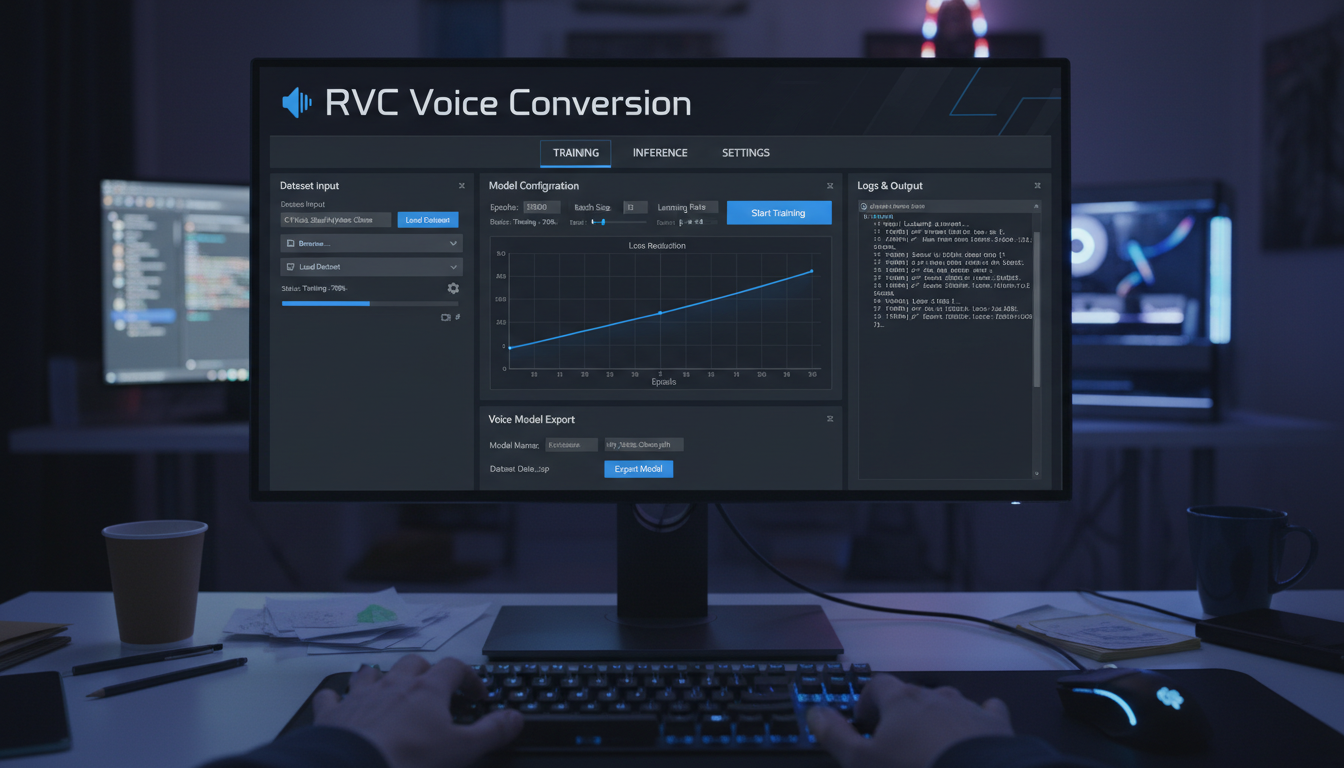
Generate the voice in your browser
Text to speech and voices for your videos, no model to install. Your first generation is free.
Voice AI technology comes in different flavors, with RVC and ElevenLabs representing fundamentally different approaches. RVC converts one voice into another (voice-to-voice), while ElevenLabs synthesizes speech from text (text-to-speech with voice cloning). Understanding these differences helps creators choose the right tool for their specific needs.
This comparison explores both technologies, their strengths, limitations, and best use cases.
Quick Answer: RVC is a free, local voice-to-voice conversion tool ideal for singing, voice acting, and real-time conversion. ElevenLabs is a paid text-to-speech service with voice cloning, best for narration, content creation, and applications needing generated speech. Use RVC when you have audio to convert; use ElevenLabs when you need to generate speech from text.
:::tip[Key Takeaways]
- Each rvc vs elevenlabs: voice ai technology comparison for creators option has distinct strengths for different use cases
- Pricing varies significantly - consider your volume and feature needs
- Test free tiers before committing to paid plans
- Your specific workflow requirements should drive the final choice :::
- Fundamental technology differences
- Quality and capability comparison
- Cost and accessibility analysis
- Best use cases for each
- When to use which tool
Fundamental Differences
RVC: Voice-to-Voice
What RVC does:
Input: Audio with voice Process: Converts one voice to another Output: Same audio with different voice Preserves: Timing, emotion, expression, intonation
Core function:
- Singing voice conversion
- Speaking voice conversion
- Real-time voice changing
- Voice character transfer
Key characteristic: Requires source audio to convert
ElevenLabs: Text-to-Voice
What ElevenLabs does:
Input: Text Process: Generates speech from text Output: Audio of text being spoken Creates: Speech timing, expression, intonation
Core function:
- Text-to-speech synthesis
- Voice cloning for TTS
- Audiobook narration
- Content voiceover
Key characteristic: Creates speech from written text
Different Problems, Different Solutions
They solve different needs:
RVC solves:
- "I have audio in voice A, need it in voice B"
- Voice acting with your performance
- Singing covers in different voices
- Real-time voice changing
ElevenLabs solves:
- "I have text, need it spoken"
- Generating audiobooks
- Creating voiceover content
- Adding speech to applications
Quality Comparison
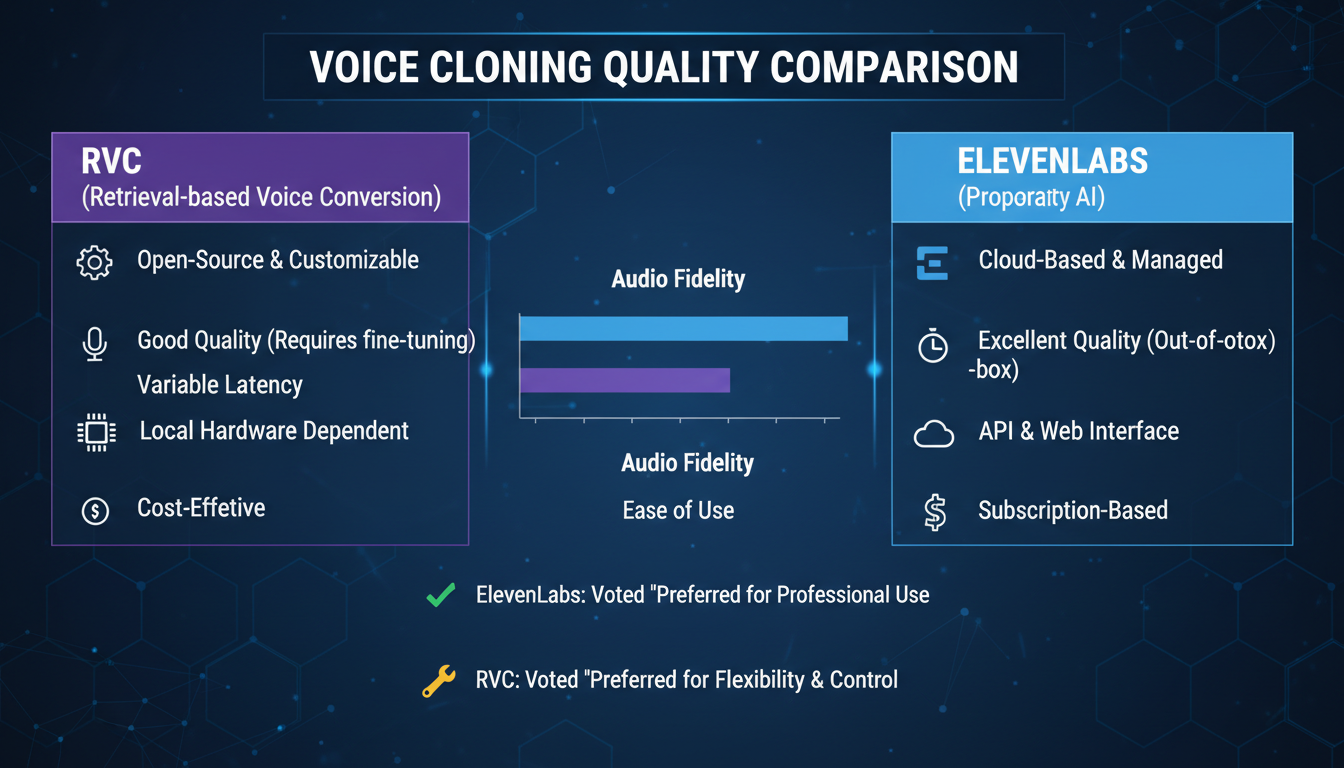
Voice Fidelity
How natural each sounds:
RVC voice quality:
- Dependent on model training quality
- Preserves source expression perfectly
- Some artifacts in difficult passages
- Excellent with well-trained models
ElevenLabs quality:
- Consistently high quality
- Natural-sounding speech
- Good expression generation
- Industry-leading TTS quality
Verdict: ElevenLabs more consistent, RVC can match or exceed with good models.
Emotion and Expression
Conveying feeling:
RVC:
- Transfers emotion from source
- Expression preserved from original
- Only as good as source performance
- Natural emotion transfer
ElevenLabs:
- Generates emotion from context
- Style settings affect output
- Good but not perfect expression
- Improving rapidly
Verdict: RVC preserves human emotion better; ElevenLabs generates reasonable emotion.
Singing Capability
Musical applications:
RVC:
- Excellent for singing
- Designed for vocal conversion
- Maintains pitch, vibrato, technique
- Best option for music
ElevenLabs:
- Limited singing capability
- Primarily speech-focused
- Some musical TTS emerging
- Not designed for singing
Verdict: RVC clearly superior for singing applications.
Cost Comparison
RVC Costs
Open source with hardware requirements:
Software cost: Free
Hardware requirements:
- GPU recommended (not required)
- 8GB VRAM comfortable
- CPU works but slower
Training costs:
- Time investment
- Electricity for training
- Data preparation effort
Ongoing costs: None (local processing)
Free ComfyUI Workflows
Find free, open-source ComfyUI workflows for techniques in this article. Open source is strong.
Total investment: Hardware only (may already have)
ElevenLabs Costs
Subscription-based service:
Pricing tiers:
- Free tier (limited characters)
- Starter: ~$5/month
- Creator: ~$22/month
- Pro: ~$99/month
- Enterprise: Custom pricing
Usage-based:
- Characters per month limits
- Overage charges
- Voice cloning limits vary
Ongoing costs: Monthly subscription
Total investment: Subscription fees accumulate
Cost Analysis
Comparing long-term costs:
High-volume use:
- RVC: One-time hardware cost
- ElevenLabs: Significant ongoing costs
Low-volume use:
- RVC: May not justify setup
- ElevenLabs: Free tier may suffice
Professional use:
- RVC: Unlimited use once set up
- ElevenLabs: Predictable, scalable
Use Case Comparison
Best for RVC
RVC excels when:
Voice acting:
- You record performance
- Convert to character voice
- Preserve acting nuance
- Create consistent characters
Music creation:
- Cover songs in different voices
- AI vocals for original music
- Voice replacement in recordings
- Character voice singing
Real-time applications:
- Live streaming voice change
- Voice chat modification
- VTuber voice conversion
- Live performance
Privacy-sensitive:
Want to skip the complexity? Apatero gives you professional AI results instantly with no technical setup required.
- Everything local
- No data leaving your system
- Complete control
Best for ElevenLabs
ElevenLabs excels when:
Content creation:
- Audiobook production
- Video voiceover
- Podcast content
- Documentary narration
Application development:
- Apps with voice interface
- Game dialogue generation
- IVR systems
- Accessibility features
Quick turnaround:
- No setup required
- Immediate results
- Scale easily
- Consistent output
Text-based source:
- Converting written content
- Scripts to audio
- Blog-to-audio conversion
- Localization
Technical Comparison
Setup Complexity
Getting started:
RVC:
- Download and install
- Python environment
- Model acquisition or training
- Audio routing for real-time
- Learning curve: Medium
ElevenLabs:
- Create account
- Use web interface or API
- Immediate use
- Learning curve: Low
Verdict: ElevenLabs much easier to start; RVC requires more setup.
Training Requirements
Creating custom voices:
RVC:
- Need audio samples
- Local training process
- Time investment (hours)
- Full control over results
ElevenLabs:
- Upload voice samples
- Cloud processing
- Minutes to complete
- Limited control
Verdict: ElevenLabs faster, RVC more control.
Integration Options
Using in workflows:
RVC:
Earn Up To $1,250+/Month Creating Content
Join our exclusive creator affiliate program. Get paid per viral video based on performance. Create content in your style with full creative freedom.
- Local processing
- Custom integration needed
- Real-time possible
- Flexible implementation
ElevenLabs:
- API available
- Easy integration
- Cloud-based
- Well-documented
Verdict: ElevenLabs easier to integrate; RVC more flexible.
Practical Workflow Examples
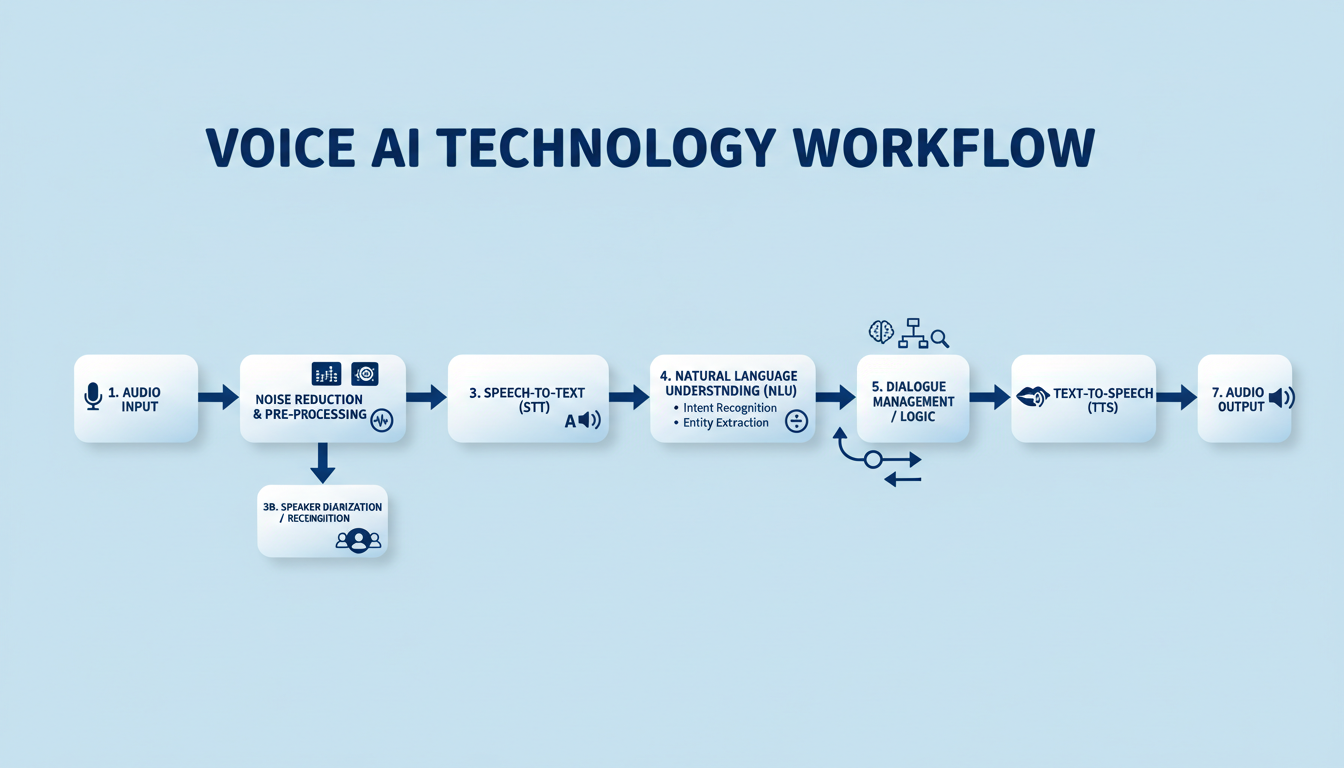
Cover Song Creation
RVC workflow:
- Record yourself singing
- Convert voice to target voice
- Mix with instrumental
- Final audio processing
ElevenLabs alternative: Not suitable for singing
Use RVC
Audiobook Creation
ElevenLabs workflow:
- Prepare text
- Generate audio
- Edit and combine
- Final mastering
RVC alternative: Requires reading and converting
Use ElevenLabs
Character Voice Acting
Could use either:
RVC approach:
- Record performance
- Convert to character voice
- Maintain your acting
ElevenLabs approach:
- Write dialogue
- Generate with character voice
- Direct expression through settings
Choice depends: Performance nuance vs. convenience
Real-Time Streaming
RVC workflow:
- Configure real-time processing
- Route audio through RVC
- Stream converted voice
ElevenLabs alternative: Not designed for real-time
Use RVC
Combining Both Tools
Complementary Usage
Using both together:
Workflow example:
- ElevenLabs generates base narration
- RVC converts to specific voice
- Best of both technologies
Use cases:
- Specific voice not available in ElevenLabs
- Adding singing to TTS content
- Custom character voices
When to Choose One
Decision framework:
Choose RVC when:
- You have audio to convert
- Singing is involved
- Real-time needed
- Cost sensitive at scale
- Privacy essential
Choose ElevenLabs when:
- Text is source material
- Quick turnaround needed
- No technical setup wanted
- Integration via API needed
- Consistent quality required
Frequently Asked Questions
Which has better quality?
Both excellent. ElevenLabs more consistent, RVC can excel with good models.
Can I use RVC for free?
Yes, completely free software. Hardware costs only.
Is ElevenLabs worth the subscription?
For text-to-speech use cases, often yes. Depends on volume and value of convenience.
Can I do real-time with ElevenLabs?
Limited real-time capability. RVC is better for real-time voice conversion.
Which is better for singing?
RVC, clearly. ElevenLabs is not designed for singing.
Can I combine them?
Yes, generate with ElevenLabs, convert with RVC for specific voices.
Which is easier to learn?
ElevenLabs is immediately usable. RVC has more setup and learning.
What about privacy?
RVC is completely local. ElevenLabs processes in cloud.
Conclusion
RVC and ElevenLabs serve different purposes despite both being "voice AI." RVC converts existing audio to different voices, excelling at performance transfer, singing, and real-time applications. ElevenLabs generates speech from text, excelling at content creation, narration, and application integration.
Choose based on your source material (audio vs text), your needs (singing vs speech), and your priorities (cost vs convenience). Many creators benefit from access to both tools for different projects.
For RVC setup and training, see our RVC training guide. For real-time RVC usage, check our streaming guide.
Generate the voice in your browser
Text to speech and voices for your videos, no model to install. Your first generation is free.
Related Articles
Adobe Firefly vs Midjourney vs Ideogram 2026: Which Wins
Brand-safe licensing, scroll-stopping aesthetics, or text rendering. Three tools optimized for three different jobs, tested against real briefs.
AI Architecture Rendering 2026: Veras vs Paintit vs Midjourney
44 percent of architects use AI in 2026. Veras, Paintit, ArchiVinci, and Midjourney tested on five real architectural briefs from a working studio.
AI Art Market Statistics 2025: Industry Size, Trends, and Growth Projections
Comprehensive AI art market statistics including market size, creator earnings, platform data, and growth projections with 75+ data points.