Best Prompts for Children's Book Illustrations
Create whimsical children's book illustrations with these AI prompts. Style guides for watercolor, cartoon, and storybook aesthetics with examples.
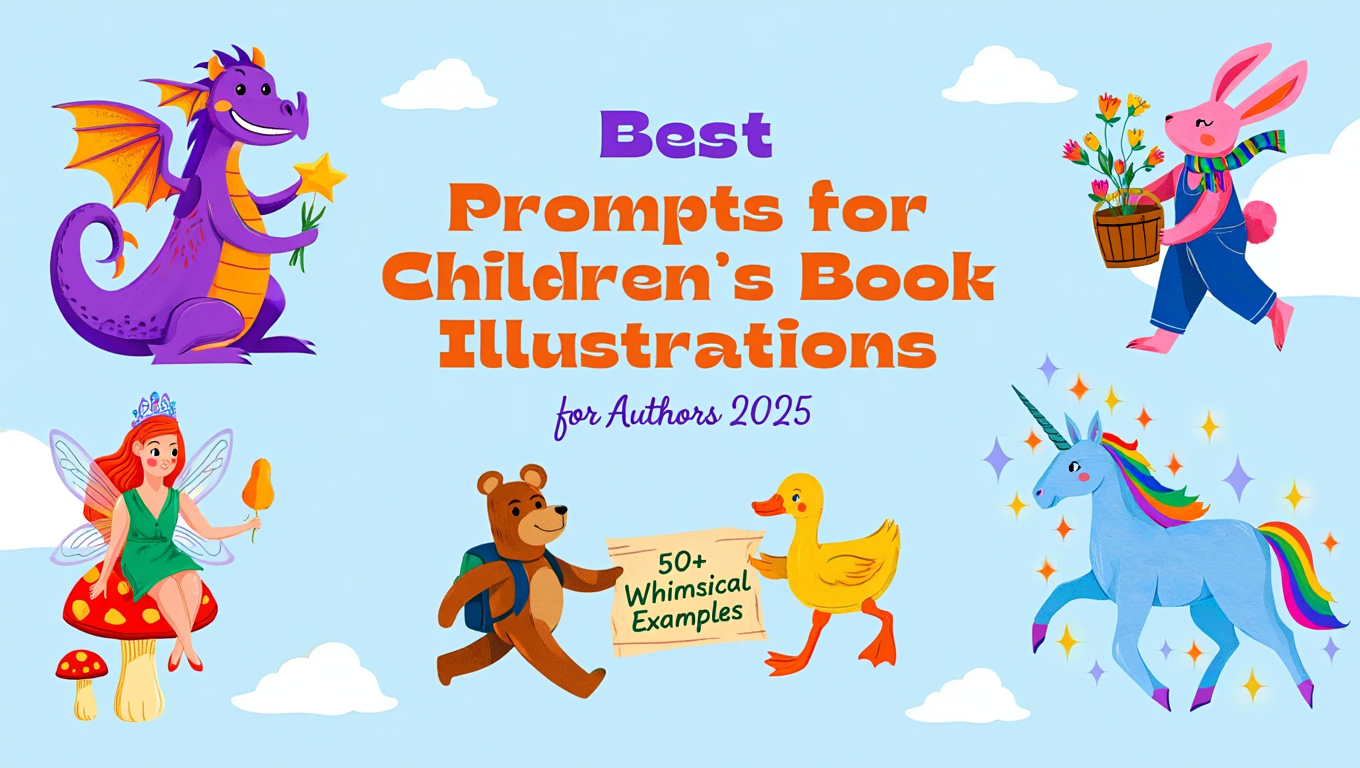
You've written a wonderful children's story but need illustrations that capture the magic and innocence of your narrative. Traditional illustrators charge thousands of dollars and take weeks or months to deliver. You've tried generating images with AI but get results that look too photorealistic, dark, creepy, or completely wrong for children's books. Finding the right childrens book prompts can transform your AI-generated illustrations from amateur to professional quality.
The challenge isn't the technology. It's knowing exactly which childrens book prompts create age-appropriate aesthetics, how to structure prompts for consistent character designs across multiple pages, which art style descriptors match traditional children's book publishing standards, and how to avoid the uncanny valley that makes AI-generated children look unsettling. Mastering childrens book prompts is essential for any author or illustrator working with AI tools.
Quick Answer: The best childrens book prompts combine age-appropriate style modifiers (watercolor, storybook illustration, children's book art), character design keywords (friendly face, big expressive eyes, simple features), emotional tone descriptors (whimsical, cheerful, gentle), color palette guidance (bright colors, pastel tones, bold but soft), scene composition elements (simple background, full page illustration), and safety-focused negative prompts to avoid dark, scary, or inappropriate content. Different age groups require adjusted complexity and stylistic approaches. If you're new to AI image generation, start with our complete beginner's guide to understand the fundamentals before exploring specialized childrens book prompts.
- Age-appropriate style keywords are essential for creating illustrations suitable for toddlers, early readers, or middle grade audiences
- Character consistency across multiple pages requires extremely detailed descriptions and fixed seed values
- Traditional children's book art styles (watercolor, gouache, pen and ink) translate better than digital or photorealistic approaches
- Negative prompts must explicitly prevent scary, dark, creepy, or inappropriate content that standard AI often generates
- Publishing specifications require specific aspect ratios and composition considerations for full page spreads versus spot illustrations
What Makes Childrens Book Prompts Different?
Childrens book prompts require fundamentally different prompting strategies than general illustration or other art forms. The audience, publishing standards, and safety considerations create unique constraints that most AI image generation guides never address. Understanding how childrens book prompts differ from standard prompts is the first step toward creating professional illustrations. For consistent character design across your book pages, see our guide on maintaining character consistency in AI-generated images.
The Age Appropriateness Challenge
Generic illustration prompts produce content designed for adult audiences or general viewers. Children's content requires specific visual language that communicates safety, warmth, and age-appropriate complexity.
A "cute animal character" prompt might generate something appealing to adults but too detailed, too realistic, or subtly unsettling for young children. Effective children's book prompts explicitly include "simple features, friendly expression, non-threatening, cheerful" to guide the aesthetic toward child-appropriate design.
Different age groups require different complexity levels. Board books for toddlers need extremely simple, bold designs with minimal detail. Picture books for ages 4-8 allow more complexity but maintain simplified features. Middle grade chapter books can handle more detailed, sophisticated illustration while remaining age-appropriate.
The Character Consistency Problem
A children's book needs the same character to appear consistently across 20-30 pages or more. Generic AI generation creates variations that would confuse young readers who rely on visual consistency to follow the story.
Professional children's book illustration prompts include exhaustive character descriptions covering body proportions, facial features, clothing details, color schemes, and distinctive characteristics. "Small brown bear with round ears, black button nose, red scarf, white belly patch, standing upright" provides enough specificity for cross-page consistency.
The Safety and Tone Requirements
Children's content must be carefully controlled for emotional tone. AI models trained on general internet content default toward including elements inappropriate for children unless explicitly prevented through negative prompts.
Effective children's book prompting includes comprehensive negative prompts like "scary, frightening, dark, creepy, unsettling, horror, nightmare, sinister, threatening, dangerous, violent" to prevent the model from introducing inappropriate elements common in its training data.
While platforms like Apatero.com offer curated childrens book prompts templates with safety guardrails built in, understanding child-appropriate prompting helps you maintain creative control and adapt to your specific story needs. For technical implementation, reference our ComfyUI essential nodes guide to set up image generation workflows for your childrens book prompts.
How Do You Structure Childrens Book Prompts for Different Age Groups?
Age-appropriate illustration requires adjusted complexity, style, and content considerations at each developmental stage. The structure of your childrens book prompts should match the target reader's developmental level.
Board Books and Toddler Content (Ages 0-3)
Toddler illustrations need maximum simplicity. Start prompts with "simple shapes, bold outlines, minimal detail, very simple illustration, toddler board book style, chunky shapes, high contrast colors"
Use extremely limited color palettes. "Primary colors only" or "three color maximum" keeps designs from overwhelming young visual systems.
Character features should be minimal. "Simple circular face, two dots for eyes, curved line smile, no detail" works better than complex facial features.
Example toddler prompt would be "simple children's book illustration, chunky baby elephant, round body, large ears, minimal detail, solid colors, white background, board book style, cheerful, friendly, toddler-appropriate, simple shapes"
Picture Books for Early Readers (Ages 4-8)
This age group allows more complexity while maintaining child-friendly aesthetics. "Detailed storybook illustration, watercolor style, whimsical, cheerful, age-appropriate for young children, picture book quality"
Include richer environments. "Detailed background, forest setting with trees and flowers, blue sky, grass" provides context while remaining appropriate.
Character expressions can show more emotion. "Excited expression with wide eyes and big smile" or "surprised look with raised eyebrows" work at this age.
Example early reader prompt uses "children's picture book illustration, friendly fox character wearing blue vest, standing in meadow with wildflowers, soft watercolor style, warm colors, gentle lighting, whimsical atmosphere, storybook art, suitable for ages 4-8"
Chapter Books for Middle Grade (Ages 8-12)
Middle grade illustrations can handle increased sophistication. "Detailed pen and ink illustration, chapter book style, more realistic proportions, sophisticated composition, middle grade appropriate"
These readers appreciate visual humor and detail. Include elements that reward closer inspection without overwhelming the page.
Emotional range expands. Characters can show contemplation, determination, worry, or complex emotions beyond simple happy/sad dichotomies.
Example middle grade prompt goes "detailed chapter book illustration, adventurous girl character with backpack exploring ancient ruins, pen and ink with watercolor wash, detailed background, atmospheric perspective, storybook realism, age-appropriate for middle grade readers"
- Toddler (0-3) simple shapes, bold outlines, chunky, minimal detail, board book style, high contrast, primary colors
- Early Reader (4-8) watercolor, storybook illustration, whimsical, detailed but friendly, picture book art, soft colors
- Middle Grade (8-12) pen and ink, chapter book style, sophisticated composition, detailed illustration, realistic proportions
- Universal age-appropriate, child-friendly, non-threatening, cheerful, safe for children, wholesome
What Are the Best Prompts for Animal Characters?
Animal characters dominate children's literature, requiring specific approaches for different species and characterization levels.
Anthropomorphic Animals (Clothed, Walking Upright)
For humanized animals, try "children's book illustration, friendly bear character standing upright, wearing checkered shirt and overalls, expressive face with big eyes, gentle smile, watercolor style, soft colors, full body view, simple background, storybook art, whimsical, cheerful"
Specify clothing clearly. "Blue sailor outfit with white collar" or "red polka dot dress with white apron" helps establish character personality.
Maintain animal characteristics while anthropomorphizing. "Rabbit character with long ears, fluffy tail, standing on two legs, wearing gardening clothes, holding watering can, friendly expression"
Realistic But Cute Animals
For animals that remain animal-like but stylized, use "cute animal illustration, realistic bunny with soft fur, big friendly eyes, sitting in garden, children's book style, watercolor painting, gentle expression, detailed but not photorealistic, warm lighting, picture book quality"
Balance realism with child-friendly aesthetics. "Soft textures, gentle features, approachable, non-threatening, cute but not overly simplified"
Baby Animals
Young animals require special attention to cuteness factors. "Baby animal illustration, tiny duckling with fluffy yellow down feathers, oversized head and eyes, small wings, standing in puddle, adorable, children's book watercolor, soft pastel colors, innocent expression, heartwarming"
Emphasize proportions that trigger nurturing responses. "Large head relative to body, big eyes, small features, clumsy pose, endearing"
Fantasy Creatures for Children
Child-appropriate fantasy creatures use "friendly dragon character, small and cute, rounded features, big expressive eyes, colorful scales, small wings, playful pose, children's book illustration, whimsical fantasy, non-scary, magical but safe, watercolor style"
Avoid traditional threatening elements. Instead of "sharp teeth and claws," use "small horn nubs, tiny wings, rounded edges, gentle features"
Forest Animal Groups
For scenes with multiple animals, specify each clearly. "Children's book illustration showing woodland animals gathering, fox wearing vest, rabbit in dress, squirrel with acorn, hedgehog with tiny backpack, forest clearing background, friendly animals interacting, watercolor style, picture book art, cheerful scene"
Define spatial relationships. "Fox and rabbit sitting together on log, squirrel on branch above, hedgehog approaching from left"
What Prompts Work Best for Human Child Characters?
Human children in illustrations require careful prompting to avoid the uncanny valley that makes AI-generated children look unsettling.
Toddler and Baby Characters
For very young children, use "children's book illustration, toddler character with chubby cheeks, large eyes, button nose, simple features, wearing colorful outfit, cheerful expression, simplified proportions, watercolor style, gentle, cute, age-appropriate, non-photorealistic"
Emphasize simplified, stylized features. "Cartoon-like proportions, simplified anatomy, rounded shapes, cute style illustration" prevents creepy realism.
Elementary Age Children
For school-age characters, try "friendly child character, elementary school age, simple facial features, big expressive eyes, cheerful smile, casual clothing, dynamic pose, children's book illustration style, watercolor painting, wholesome, age-appropriate, picture book quality"
Specify activities and context. "Child reading book under tree" or "child playing with toy boat in stream" provides narrative context.
Diverse Representation
Include representation explicitly. "Children's book illustration, diverse group of children, various skin tones and hair types, different cultural backgrounds, playing together, inclusive, friendly, cheerful, picture book style, watercolor, harmonious composition"
Specify details that matter. "Child with curly black hair and brown skin wearing yellow shirt" or "child with glasses and red braided hair" provides clarity.
Emotional Expression for Children
Child characters need clear, readable emotions. "Excited child with arms raised, big smile, sparkling eyes, joyful expression, dynamic pose showing enthusiasm, children's book illustration, expressive, clear emotion"
Avoid subtle or complex expressions that young readers might not interpret correctly. Stick with clear, universal emotional displays.
Siblings and Family Groupings
For related characters, establish relationships visually. "Two siblings, older sister with long brown hair wearing green dress, younger brother with short brown hair wearing striped shirt, holding hands, similar facial features showing family resemblance, children's book illustration, warm scene"
For exploration of more character design techniques, reference our guide on creating consistent characters across multiple images. When working with complex childrens book prompts that require multiple illustrations of the same character, this consistency guide becomes essential for maintaining visual continuity throughout your book.
How Do Different Illustration Styles Affect Children's Books?
Traditional children's book art styles each serve different purposes and audiences.
Watercolor Style (Most Common in Picture Books)
Watercolor dominates modern picture books. Use prompts like "soft watercolor illustration, flowing colors, gentle brushstrokes, translucent layers, textured paper effect, traditional children's book style, warm and inviting, painterly quality"
Add watercolor characteristics. "Color bleeding at edges, visible brush texture, light washes, delicate details, hand-painted feel"
Gouache and Opaque Paint Styles
For bolder, more graphic styles, try "gouache illustration, flat colors, opaque paint, bold shapes, clear outlines, modern children's book style, bold colors, matte finish appearance, graphic quality"
Pen and Ink with Wash
Classic chapter book style uses "detailed pen and ink illustration, fine linework, crosshatching for shading, watercolor wash for color, traditional book illustration, detailed but clear, classic storybook style"
Digital Flat Color Style
Modern digital approaches work with "digital illustration, flat colors, clean edges, vector-style artwork, contemporary children's book art, bold simple shapes, graphic design aesthetic, bright colors"
Classic Storybook Style
Traditional fairy tale aesthetics use "classic storybook illustration, vintage children's book style, detailed linework, muted colors, traditional illustration techniques, timeless quality, reminiscent of golden age children's books"
Collage and Mixed Media Style
For unique textures, try "mixed media children's book illustration, collage elements, textured paper, fabric textures, layered composition, creative materials, unique artistic style, tactile quality"
While Apatero.com provides pre-configured style templates that automatically apply appropriate aesthetic parameters, understanding style variations helps you select or customize the approach that best matches your story's tone and target market.
What Prompts Work for Full Page Illustrations vs Spot Art?
Different illustration types serve different purposes in children's books.
Full Page Spread Illustrations
For full page or double-page spreads, use "full page children's book illustration, detailed scene, complete environment, character in setting, space orientation, picture book spread, comprehensive background, storybook art, suitable for full page publication"
Include composition guidance. "Character positioned on left third of image, open space on right for text, rule of thirds composition, balanced layout"
Specify aspect ratio considerations. "Wide horizontal composition for double page spread" or "vertical composition for single page"
Spot Illustrations (Small Decorative Elements)
For chapter headers or text breaks, try "small spot illustration, simple vignette, character portrait, minimal background, decorative element, chapter book style, black and white OR limited color, suitable for text integration"
Keep these simple. "Single character, white background, small size appropriate, decorative quality, works at small scale"
Character Development Sheets
For maintaining consistency, create reference sheets. "Character turnaround sheet, multiple views of same character, front view, side view, back view, consistent design, model sheet style, children's book character, reference illustration, clean white background"
Include expression sheets. "Character expression reference, same character showing happy, sad, surprised, worried, excited expressions, consistent design, expression sheet for animation or illustration"
Environmental Establishing Shots
Set the scene with "establishing shot illustration, overview of story setting, detailed environment, cozy cottage in forest OR classroom interior OR magical garden, comprehensive background illustration, picture book environment, no characters, setting illustration"
Action and Movement Scenes
For dynamic moments, use "action illustration for children's book, character in motion, running OR jumping OR flying, speed lines suggesting movement, dynamic composition, energetic, clear action, storybook style, exciting moment"
How Do You Handle Color Palettes for Children?
Color choice dramatically impacts age appropriateness and emotional tone.
Bright and bold Palettes (Toddlers and Young Children)
Use "bright cheerful colors, high saturation, primary and secondary colors, rainbow palette, energetic color scheme, appealing to young children, bold color choices"
For very young audiences. "High contrast colors, simple color palette, primary colors only, clear color separation"
Soft and Pastel Palettes (Gentle Stories)
For calm, gentle narratives, try "soft pastel colors, gentle color palette, muted tones, calming colors, peaceful atmosphere, delicate color choices, soothing color scheme"
Warm Earth Tones (Natural and Cozy Stories)
Earthy stories benefit from "warm earth tones, browns and greens, natural color palette, organic colors, cozy warm atmosphere, autumn colors OR spring colors, harmonious natural tones"
Limited Color Palettes (Artistic or Budget-Conscious)
For distinctive style or practical printing, use "limited color palette, three color illustration, restricted color scheme, red yellow and blue only OR two color plus black, intentionally limited colors, artistic choice"
Seasonal Color Schemes
Match seasons explicitly. "Winter color palette with whites, blues, silvers, cool tones" or "Summer colors with bright yellows, greens, sky blues, warm sunny palette"
What Scene Types Are Essential for Children's Books?
Common scene types require specific prompting approaches.
Character Introduction Scenes
Establish characters with "character introduction illustration, main character in typical setting, showing personality through pose and expression, clear view of character design, children's book illustration, welcoming, first appearance"
Emotional Moment Scenes
Convey feelings through "emotional scene illustration, character showing clear emotion, supportive environment, feelings visible through expression and body language, empathetic illustration, children's book style, age-appropriate emotional content"
Adventure and Discovery Scenes
Excitement works with "adventure scene, character discovering something wonderful, sense of excitement and wonder, exploration moment, magical discovery, children's book illustration, inspiring, adventurous atmosphere"
Friendship and Social Scenes
Relationships shine in "friendship illustration, characters interacting positively, cooperation OR sharing OR helping, social-emotional learning scene, positive relationship depiction, children's book style, warm interaction"
Problem-Solving Scenes
Show characters overcoming challenges with "character solving problem, thinking or working through challenge, determination visible, problem-solving moment, enabling illustration, children's book style, encouraging"
Bedtime and Calm Scenes
Soothing images use "peaceful bedtime scene, calm atmosphere, soft lighting, cozy setting, sleepy character, gentle colors, tranquil mood, soothing illustration, children's book style"
For users creating complete books, Apatero.com offers sequence planning tools that help maintain visual consistency across scene types while ensuring appropriate pacing and variety throughout your book. For technical workflow setup, explore our ComfyUI essential nodes guide. If you need to optimize your childrens book prompts for systems with limited memory, check our VRAM optimization guide.
How Do You Create Educational Book Illustrations?
Educational content requires balancing appeal with clarity.
Alphabet and Letter Learning
For alphabet books, use "educational children's book illustration, letter A prominently displayed, apple object representing letter, clear simple design, learning book style, bright colors, educational but fun"
Number and Counting Books
Counting illustrations need "educational illustration, number 5 shown clearly, five ducks arranged for counting, clear visual counting aid, children's educational book style, engaging and colorful"
Science and Nature Educational Content
Scientific accuracy matters. "Educational nature illustration for children, butterfly life cycle shown clearly, scientifically accurate but simplified, labeled diagram elements, children's science book style, clear educational purpose, engaging illustration"
Social-Emotional Learning Illustrations
Feelings and behavior books use "social-emotional learning illustration, child character showing sharing behavior, clear demonstration of positive social skill, educational children's book, modeling good behavior, age-appropriate"
Cultural and Diversity Education
Representation books need "culturally accurate illustration, traditional clothing OR cultural celebration shown respectfully, educational about diversity, children's book style, authentic representation, positive and respectful"
What Technical Specifications Matter for Publishing?
Professional children's book illustration requires publishing-appropriate specifications.
Resolution and Size
Include "high resolution, 300 DPI quality, publication ready, professional illustration quality, suitable for print production, crisp details"
Aspect Ratios for Different Book Formats
Specify format. "Square format illustration (1:1 ratio) for square picture book" or "space orientation (16:9 OR 4:3 ratio) for horizontal picture book" or "portrait orientation (4:5 ratio) for vertical format"
Bleed and Safe Zones
For professional production, reference "composition with safe zone for text, elements not too close to edges, allowing for bleed area, professional book layout considerations"
Series Consistency
For book series, use "consistent art style with previous book, same character design, matching color palette, series continuity, recognizable artistic approach"
Platforms like Apatero.com simplify technical specifications by automatically formatting illustrations to publishing standards, handling resolution requirements, aspect ratios, and format compatibility while you focus on creative direction
Frequently Asked Questions
What keywords are essential for age-appropriate childrens book prompts?
Essential age-appropriate keywords for childrens book prompts include "children's book illustration, storybook art, age-appropriate, non-threatening, friendly, cheerful, whimsical, safe for children" combined with style descriptors like "watercolor, soft colors, simple features, clear design." Always specify the target age range such as "suitable for ages 4-8" or "toddler board book style" to guide complexity and content. Include creative safety keywords and comprehensive negative prompts preventing scary, dark, or inappropriate content that AI models might default toward without guidance. The best childrens book prompts always incorporate these foundational elements.
How do I keep characters consistent across multiple book pages?
Maintain character consistency by creating exhaustive character descriptions including body proportions, facial features, distinctive markings, clothing details, and color schemes. Use fixed seed values rather than random generation. Create a character reference sheet first, then reference that detailed prompt for every subsequent illustration. Include unique identifying features like "small white patch on left ear" or "always wears red scarf with yellow stripes." Lock your generation settings and use the same model throughout the project for technical consistency.
What art styles work best for different children's age groups?
Toddlers (0-3) need simple, bold styles with minimal detail like "simple shapes, chunky illustration, board book style." Early readers (4-8) respond well to "soft watercolor, detailed storybook illustration, whimsical picture book art." Middle grade (8-12) can handle "pen and ink, detailed chapter book illustration, sophisticated composition." Watercolor remains most versatile across ages. Avoid photorealistic styles for all age groups as they create uncanny valley effects especially with human characters. Traditional illustration techniques translate better than digital hyperrealism.
Why do my AI-generated children look creepy or unsettling?
AI-generated children often fall into uncanny valley because models default toward photorealism trained on adult-oriented content. Prevent this by explicitly including "simplified features, cartoon-style, non-photorealistic, stylized illustration, children's book art style" in prompts. Add negative prompts like "photorealistic, realistic, uncanny valley, creepy, unsettling, too detailed." Emphasize "friendly face, simple features, big expressive eyes, rounded shapes" to push toward stylized rather than realistic rendering. Watercolor or illustrated styles work better than attempting realistic children.
What negative prompts are critical for children's book content?
Critical negative prompts for children's content include "scary, frightening, dark, creepy, horror, nightmare, sinister, threatening, violent, inappropriate, dangerous, disturbing, unsettling, grim, ominous, menacing." Add technical negatives like "photorealistic, uncanny valley, too realistic, hyperrealistic." Include "explicit, adult-only, weapons, blood, graphic" even for innocent scenes. Comprehensive negative prompting prevents AI from introducing dark elements common in training data but inappropriate for children. Safety-focused negatives are non-negotiable for this content category.
How do I create illustrations suitable for traditional publishing?
Traditional publishing requires professional specifications. Include "high resolution, 300 DPI, publication quality, print ready, professional illustration" in prompts. Specify appropriate aspect ratios matching standard book formats like "square format for 8x8 picture book" or "space orientation for horizontal storybook." Use traditional art style descriptors like "watercolor illustration, professional storybook art, publisher quality." Consider "composition with space for text placement" if illustrations will integrate with typography. Research target publisher's style preferences and match your prompts So.
Can I use AI illustrations commercially in children's books I sell?
Commercial use depends on your AI generation platform's terms of service. Most major platforms allow commercial use of generated images but require checking specific licensing terms. Some publishers may have concerns about AI-generated content or require disclosure. Watermarks, signatures, or attribution requirements vary by platform. For self-publishing, you generally have freedom to use AI illustrations. Traditional publishers may have stricter policies. Always verify commercial rights for your specific generation tool and intended distribution channel before committing to AI illustrations for commercial projects.
What prompt structure works best for childrens book prompts?
Optimal structure for childrens book prompts begins with content type and style ("children's book illustration, watercolor style"), then character or subject description (detailed features, clothing, expression), followed by setting and composition (background, environment, layout), then mood and atmosphere (cheerful, whimsical, gentle), technical specifications (high resolution, publication quality), and age-appropriateness markers (suitable for ages 4-8, age-appropriate). End with comprehensive negative prompts preventing inappropriate content. This hierarchy guides the model from broad style through specific content to technical requirements ensuring all critical elements receive appropriate emphasis. Following this structure consistently across all your childrens book prompts ensures professional results.
How many illustrations does a typical children's book need?
Board books for toddlers typically need 10-14 illustrations, one per page or spread. Picture books for ages 4-8 require 14-16 full page or double-page spread illustrations. Early chapter books need 5-10 spot illustrations or smaller pieces. Middle grade chapter books use 8-15 illustrations depending on length. Generate extra variations of key scenes for selection options. Plan for cover illustration separately with specific composition requirements. Consider creating character reference sheets before starting page illustrations to ensure consistency. Budget generation time and costs So for your book's format and length.
Should children's book illustrations include text or just images?
Generate illustrations without text unless creating specific lettering as part of the artistic design. Text overlay happens during layout and design phase after illustration generation. Including text in generation prompts often produces illegible, misspelled, or awkwardly placed lettering. Instead, compose illustrations with "space for text" or "text-safe composition" allowing room for professional typography addition. For educational books with integrated letter or number content, include those elements explicitly. Generally, separate illustration generation from typography design for professional results and maximum flexibility during layout process.
Conclusion
Creating children's book illustrations with AI requires understanding age-appropriate aesthetics, character consistency techniques, safety-focused prompting, and publishing specifications that generic illustration guides never address. The difference between amateur results and professional-quality children's book art comes from precise childrens book prompts with style keywords, comprehensive character descriptions, and safety-conscious negative prompting.
The 50+ example childrens book prompts provided cover essential use cases from toddler board books through middle grade chapter books, animal characters to human children, full page spreads to spot illustrations. Adapt these childrens book prompts templates by adjusting age-appropriateness markers, swapping character details, and modifying art style descriptors to match your specific story.
Implementation Strategy
Start with prompts matching your target age group and book format. Generate test illustrations to verify style consistency and appropriateness. Create detailed character reference sheets before illustrating story pages. Build a prompt library documenting successful character descriptions and scene types for your project.
Style Selection Considerations
Choose art styles appropriate for your audience and story tone. Watercolor works universally across age groups. Simpler styles suit younger audiences. More detailed approaches work for older readers. Traditional illustration aesthetics generally outperform digital or photorealistic approaches for children's content.
Character Development Priority
Invest time in detailed character descriptions before generating story illustrations. Exhaustive initial character development pays dividends in consistency across pages. Lock seeds, settings, and models once you achieve desired character designs.
Safety and Appropriateness
Never skip comprehensive negative prompts for children's content. Prevent dark, scary, or inappropriate elements explicitly. Review all generated images carefully before use in children's books. When in doubt, err toward simpler, friendlier, more explicitly child-appropriate approaches.
Publishing Pathway Considerations
Traditional publishing may require disclosure of AI-generated illustrations or have specific policies. Self-publishing offers more freedom but requires attention to professional specifications. Print-on-demand services need high-resolution files. Digital books allow more flexibility but still benefit from professional quality.
For authors prioritizing storytelling over technical prompt engineering, platforms like Apatero.com provide curated children's book illustration templates with built-in age-appropriateness safeguards, consistent character generation tools, and publishing-ready specifications, letting you focus on narrative craft rather than technical optimization of AI prompts.
The evolution of AI illustration technology continues improving quality and consistency, but fundamental principles of child-appropriate design, character development, and safety-focused prompting remain constant. Mastering these techniques provides skills that transfer across model generations, ensuring your ability to create professional children's book illustrations improves alongside advancing AI capabilities.
Children's literature represents one of the most rewarding applications of AI illustration technology, democratizing access to professional-quality book art for independent authors and small publishers. The 50+ prompts and techniques covered provide a foundation for creating whimsical, age-appropriate, publishable illustrations that bring your stories to life for young readers.
Write it once, get every panel drawn
Illustrated storybooks, comics and manga using saved character references, with each page reviewed for consistency. Check your welcome allowance and the displayed cost before generating.
Related Articles
5 Proven AI Influencer Niches That Actually Make Money in 2025
Discover the most profitable niches for AI influencers in 2025. Real data on monetization potential, audience engagement, and growth strategies for virtual content creators.

AI Background Replacement: Professional Guide 2025
Master AI background replacement for professional results. Learn rembg, BiRefNet, and ComfyUI workflows for smooth background removal and replacement.
AI Character Consistency: How to Maintain Virtual Persona Identity Across Content
Learn techniques for maintaining AI character consistency across hundreds of images. Master the art of creating recognizable virtual personas with consistent visual identity.