Can You Use Z-Image Base LoRAs with Z-Image Turbo?
Complete guide to LoRA compatibility between Z-Image Base and Z-Image Turbo. Learn what works, what doesn't, and best practices for cross-model LoRA usage.
Make AI images and video in your browser
Characters, video, photo packs. No GPU, no setup. Your first generation is free.
One of the most common questions in the Z-Image community is whether LoRAs trained on Z-Image Base can be used with Z-Image Turbo. The short answer is yes, but with important caveats. Understanding the compatibility details helps you maximize your LoRA investments and build efficient workflows that use both models' strengths.
The compatibility exists because both models share architectural foundations, even though Turbo's distillation process changes how it processes information.
Understanding the Architecture
To understand compatibility, we need to understand how these models relate.
Shared Foundation
Z-Image Base and Z-Image Turbo share:
- Core S3-DiT transformer architecture
- Same basic layer structure
- Compatible tensor shapes
- Shared text encoder approach
This architectural compatibility is why LoRAs can transfer at all.
Key Differences
What distillation changes:
- Internal weight distributions
- Attention patterns
- Feature space organization
- Step-dependent processing
These differences explain why transfer isn't perfect.
Why LoRAs Can Transfer
LoRAs work by adding small modifications to specific layers. Because Base and Turbo have the same layer structure, the modifications can be applied to both. The LoRA "knows" where to inject its changes.
Why Transfer Isn't Perfect
The distillation process reorganizes how information flows through the model. A LoRA trained to work with Base's information patterns may not perfectly match Turbo's reorganized patterns.
Compatibility Testing Results
Based on community testing and practical experience.
What Transfers Well
Style LoRAs: Generally transfer at 70-90% effectiveness. Broad stylistic changes apply similarly across both models.
Concept LoRAs: Objects, environments, and general concepts transfer reasonably well (65-85% effectiveness).
Quality LoRAs: Detail enhancement and quality improvement LoRAs often work well on both.
What Transfers Less Effectively
Character LoRAs: Face and identity preservation may be reduced. Expect 50-70% effectiveness for specific face likeness.
Fine Detail LoRAs: Very specific detail training may not transfer cleanly due to Turbo's compressed representation.
Technique LoRAs: LoRAs targeting specific generation techniques may behave differently in Turbo's 4-step process.
 Different LoRA types transfer with varying effectiveness
Effectiveness Summary
| LoRA Type | Base | Turbo | Transfer Rate |
|---|---|---|---|
| Style | 100% | 70-90% | Good |
| Concept | 100% | 65-85% | Good |
| Character | 100% | 50-70% | Moderate |
| Fine Detail | 100% | 40-60% | Variable |
| Technique | 100% | 30-60% | Poor |
Practical Usage Guide
How to actually use Base LoRAs with Turbo.
Weight Adjustment
When using Base LoRAs on Turbo, typically increase the weight:
Free ComfyUI Workflows
Find free, open-source ComfyUI workflows for techniques in this article. Open source is strong.
Base LoRA weight: 0.7-1.0 Turbo equivalent: 0.9-1.2 (or higher)
Start at 1.0x your normal Base weight and increase if effects are too subtle.
Testing Protocol
Before committing to a workflow:
- Generate test images on Base at normal weight
- Generate same prompts on Turbo at normal weight
- Increase Turbo weight until effect matches Base
- Note the effective weight multiplier
- Check for any quality issues or artifacts
Quality Considerations
Watch for these issues when transferring:
- Reduced sharpness of LoRA features
- Color drift from intended palette
- Character features becoming less distinct
- Style elements being interpreted differently
When to Use Each Model
Use Base for:
- Final high-quality renders with LoRA
- Testing and validating LoRA effects
- Character-critical work
- Maximum LoRA fidelity
Use Turbo for:
- Rapid iteration and exploration
- Draft generation
- When speed matters more than peak LoRA effect
- Batch generation workflows
Training Recommendations
Optimize your LoRAs for cross-model compatibility.
Train on Base
Always train LoRAs on Z-Image Base, not Turbo:
- Base has stable, undistilled representations
- Training characteristics are more predictable
- Results transfer to Turbo (not vice versa)
- Better concept encoding
Avoid Overtrain
Overtrained LoRAs transfer worse:
Want to skip the complexity? Apatero gives you professional AI results instantly with no technical setup required.
- Use appropriate step counts
- Monitor for overfitting
- Maintain concept generalization
- Test transfer during development
Validation Workflow
During LoRA development:
- Train on Base
- Validate on Base
- Test on Turbo
- Adjust training if transfer is poor
- Document effective weights for both models
Regularization Helps
LoRAs trained with regularization images often transfer better:
- Preserves general model behavior
- Reduces overspecialization
- Maintains flexibility across models
- Better generalization overall
 Proper training approach improves cross-model compatibility
Workflow Strategies
Build efficient workflows using both models.
Exploration → Production Workflow
- Explore with Turbo + LoRA: Rapid iteration at moderate quality
- Select promising directions: Identify what works
- Render finals with Base + LoRA: Maximum quality for keepers
This maximizes speed during exploration while preserving quality for finals.
Batch Processing Workflow
For large generation jobs:
- Use Turbo for initial batch generation
- Review and select best outputs
- Regenerate selections with Base for higher quality
- Or accept Turbo quality if sufficient
Character Consistency Workflow
For projects requiring character consistency:
- Train character LoRA on Base
- Generate key shots with Base + LoRA (highest fidelity)
- Generate variations with Turbo + LoRA (faster, acceptable quality)
- Composite final project from both sources
Common Issues and Solutions
Problems you might encounter and how to fix them.
LoRA Has No Effect on Turbo
Possible causes:
Earn Up To $1,250+/Month Creating Content
Join our exclusive creator affiliate program. Get paid per viral video based on performance. Create content in your style with full creative freedom.
- Weight too low
- LoRA incompatibility
- Trigger word not in prompt
Solutions:
- Increase weight to 1.2-1.5
- Verify LoRA is for Z-Image architecture
- Check trigger word usage
Quality Degradation
Possible causes:
- Weight too high causing artifacts
- LoRA conflicts with Turbo's patterns
- Turbo's compressed representation
Solutions:
- Reduce weight
- Test intermediate weights
- Accept some quality reduction as trade-off
Character Doesn't Look Right
Possible causes:
- Character LoRAs are sensitive to transfer
- Facial features encode differently
Solutions:
- Use higher weight
- Add character details in prompt
- Use Base for character-critical work
- Accept moderate fidelity for speed
Style Is Different
Possible causes:
- Style interpretation varies between models
- Color calibration differences
Solutions:
- Adjust prompt for style emphasis
- Post-process for color consistency
- Document style differences for each model
Key Takeaways
- Base LoRAs generally work on Turbo due to shared architecture
- Expect 60-80% effectiveness depending on LoRA type
- Increase weight by 20-50% when using Base LoRAs on Turbo
- Style and concept LoRAs transfer best, character LoRAs are more variable
- Always train on Base, never on Turbo
- Test both models during LoRA development
Frequently Asked Questions
Can I train LoRAs on Turbo instead?
Not recommended. Turbo's distilled nature makes training less stable and results won't transfer well to Base.
Do I need different trigger words?
No, use the same trigger words. The LoRA's concept encoding works the same way.
Will future Z-Image versions maintain compatibility?
Architecture changes could affect compatibility. Always test when models update.
Can I merge Base and Turbo LoRAs?
They're trained on different model states, so merging isn't recommended.
How do I know if my LoRA transfers well?
Test it. Generate comparison images and evaluate whether the concept appears as intended.
Should I create separate LoRAs for each model?
Usually unnecessary. Training on Base and adjusting weight for Turbo is more efficient.
Do all layers transfer equally?
Some layers may transfer better than others. Full LoRA testing is the only way to know for your specific case.
Can I use multiple LoRAs on Turbo?
Yes, but combined effects may be different than on Base. Test combinations.
What about Z-Image Omni Base?
Omni Base should maintain similar compatibility since it builds on the Base architecture.
Is there a weight formula for conversion?
No exact formula. Start at 1.2x Base weight and adjust based on results.
LoRA compatibility between Z-Image Base and Turbo enables flexible workflows that balance quality and speed. Understanding the nuances of this compatibility helps you get the most from your trained models across different generation scenarios.
For users wanting to train and use LoRAs without managing multiple local models, Apatero Pro plans include LoRA training with deployment across multiple model variants.
Make AI images and video in your browser
Characters, video, photo packs. No GPU, no setup. Your first generation is free.
Related Articles
Adobe Firefly vs Midjourney vs Ideogram 2026: Which Wins
Brand-safe licensing, scroll-stopping aesthetics, or text rendering. Three tools optimized for three different jobs, tested against real briefs.
AI Architecture Rendering 2026: Veras vs Paintit vs Midjourney
44 percent of architects use AI in 2026. Veras, Paintit, ArchiVinci, and Midjourney tested on five real architectural briefs from a working studio.
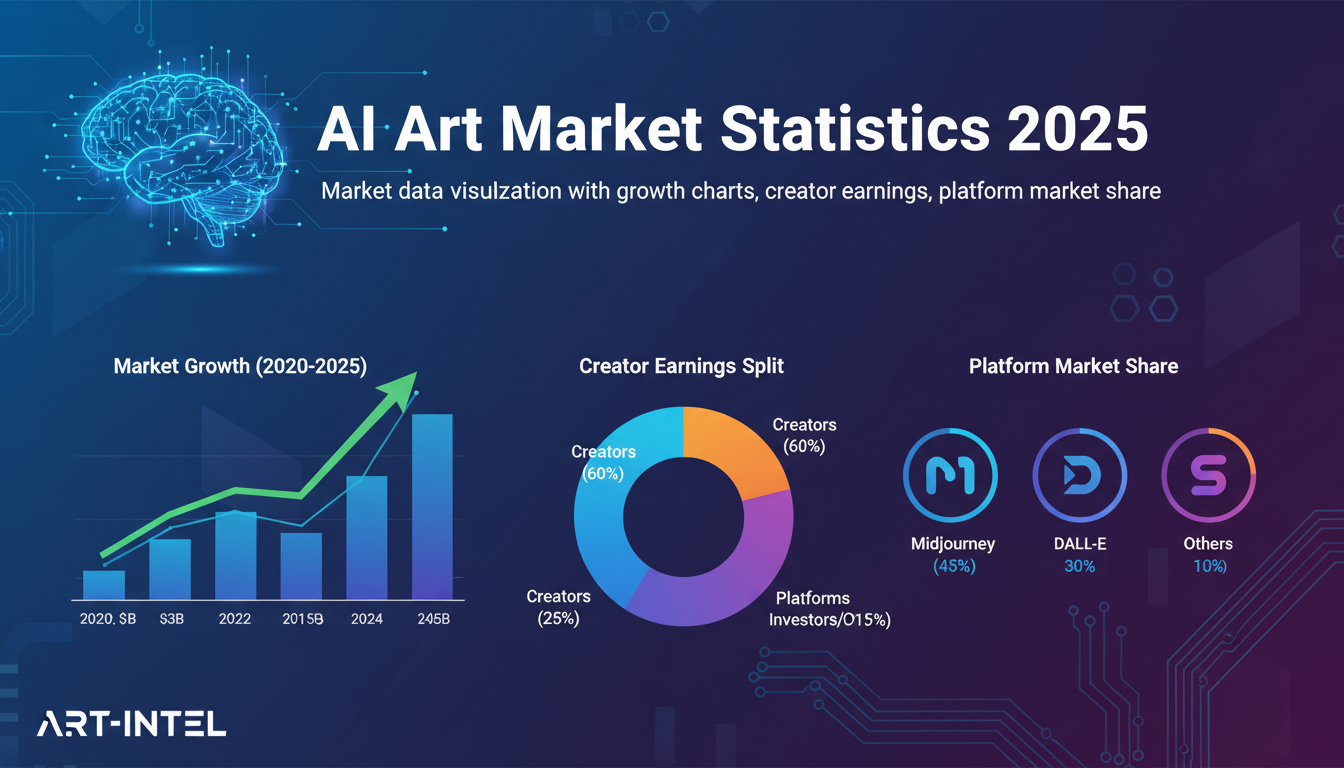
AI Art Market Statistics 2025: Industry Size, Trends, and Growth Projections
Comprehensive AI art market statistics including market size, creator earnings, platform data, and growth projections with 75+ data points.