ComfyUI Manager 2025 Troubleshooting Guide - Fix All Common Issues
Fix all common ComfyUI Manager issues including installation failures, update errors, node conflicts, and database problems
ComfyUI Manager transforms the experience of working with ComfyUI by providing a graphical interface for installing custom nodes, managing updates, and discovering new capabilities. However, when ComfyUI Manager troubleshooting becomes necessary, it can completely block your ability to install the nodes you need, update existing components, or even launch the Manager interface at all. These issues are particularly frustrating because they sit between you and the actual creative work you want to accomplish.
The good news is that ComfyUI Manager troubleshooting almost always leads to resolution through systematic approaches. Most problems stem from a small set of root causes: git configuration issues, network connectivity problems, file permission conflicts, or database corruption. Understanding these categories and their symptoms allows you to quickly diagnose and fix whatever is blocking your workflow through effective ComfyUI Manager troubleshooting.
This ComfyUI Manager troubleshooting guide covers every common issue with detailed explanations of why each problem occurs and step-by-step solutions to resolve them. Whether Manager won't install, won't open, can't install nodes, or shows incorrect information, you'll find the fix in this ComfyUI Manager troubleshooting guide.
:::tip[Key Takeaways]
- Follow the step-by-step process for best results with comfyui manager 2025 troubleshooting guide - fix all common issues
- Start with the basics before attempting advanced techniques
- Common mistakes are easy to avoid with proper setup
- Practice improves results significantly over time :::
Understanding ComfyUI Manager Architecture
Before exploring troubleshooting, understanding how Manager works helps you diagnose problems more effectively.
How Manager Operates
ComfyUI Manager is itself a custom node that runs within ComfyUI. When you access the Manager interface through the browser, you're interacting with a web UI served by Python code running in ComfyUI's process. This UI communicates with backend functions that perform the actual operations.
For node installation and updates, Manager relies heavily on git. Each custom node is a git repository cloned into ComfyUI's custom_nodes directory. When you install a node, Manager runs git clone. When you update, it runs git pull. This git dependency means that git must be properly installed and accessible from the command line.
Manager also maintains a database that tracks installed nodes, their versions, and available updates. This database can become out of sync with the actual filesystem, causing display errors and tracking problems.
The Node Installation Process
When you click "Install" on a node in Manager:
- Manager retrieves the node's git repository URL from its registry
- Manager executes
git clone <url>in the custom_nodes directory - If a requirements.txt exists, Manager runs
pip install -r requirements.txt - Manager updates its database to record the installation
- ComfyUI requires a restart to load the new node
Each of these steps can fail for different reasons, and the symptoms vary depending on which step encounters the problem.
ComfyUI Manager Troubleshooting: Installation Issues
If you're having trouble installing ComfyUI Manager itself, start here with these ComfyUI Manager troubleshooting steps.

Git Not Found Error
Symptoms: Error message "git is not recognized as an internal or external command" or "git: command not found"
Cause: Git isn't installed on your system, or it's installed but not added to your system's PATH environment variable. Manager requires git for all its operations since it clones and updates repositories.
Solution:
- First, verify whether git is installed by opening a terminal/command prompt and running:
git --version
If this returns a version number, git is installed but may not be in PATH for the context where ComfyUI runs.
- If git isn't installed, download and install it:
Windows: Download from https://git-scm.com/download/win. During installation, ensure you select "Add Git to PATH" when prompted.
macOS: Install via Homebrew with brew install git, or it may already be available through Xcode Command Line Tools.
Linux: Use your package manager:
## Ubuntu/Debian
sudo apt install git

## Fedora
sudo dnf install git

## Arch
sudo pacman -S git
After installation, close and reopen your terminal/command prompt to reload the PATH.
Verify git is accessible:
git --version
- Restart ComfyUI completely.
Important Windows Note: If you're running ComfyUI from a GUI launcher or Anaconda, ensure git is in the system PATH, not just a user PATH or Anaconda PATH. The embedded Python environment may not see user-specific PATH additions.
Clone Failure During Installation
Symptoms: Manager installation fails with network-related errors during the git clone operation.
Cause: Network issues preventing connection to GitHub, or GitHub being blocked by firewall/network configuration.
Solution:
- Test direct connectivity to GitHub:
git clone https://github.com/ltdrdata/ComfyUI-Manager
If this fails, the issue is network connectivity, not Manager-specific.
Check if GitHub is accessible in your browser. If not, you may be behind a firewall or proxy that blocks GitHub.
For proxy configurations, set git proxy settings:
git config --global http.proxy http://proxy.example.com:8080
git config --global https.proxy https://proxy.example.com:8080
- For SSL certificate issues (common on corporate networks):
## Not recommended for security reasons, but may be necessary
git config --global http.sslVerify false
- If GitHub is blocked entirely, you may need to request access from your network administrator or use a different network.
Permission Denied Errors
Symptoms: Installation fails with "Permission denied" or "Access denied" errors when trying to write to the custom_nodes folder.
Cause: Your user account doesn't have write permissions to the ComfyUI directory, or another process has files locked.
Solution:
Windows:
- Close all ComfyUI processes
- Run your terminal as Administrator (right-click > Run as administrator)
- Navigate to ComfyUI folder and fix permissions:
icacls "C:\path\to\ComfyUI" /grant Users:F /T
- Alternatively, move ComfyUI to a location with full user permissions (like Documents folder) rather than Program Files.
macOS/Linux:
- Check ownership of the ComfyUI directory:
ls -la /path/to/ComfyUI
- Fix ownership if needed:
sudo chown -R $USER:$USER /path/to/ComfyUI
- Ensure write permissions:
chmod -R u+w /path/to/ComfyUI
Python Environment Issues
Symptoms: Manager installs but fails to import, or installations complete but nodes don't work due to missing packages.
Cause: ComfyUI is running with a different Python environment than expected, so pip installs packages to the wrong location.
Solution:
- Identify which Python ComfyUI is using:
## In ComfyUI's startup log, look for the Python path
## Or add this to a test workflow node to print it:
import sys
print(sys.executable)
- Ensure you're using that same Python when installing packages manually:
/path/to/correct/python -m pip install package_name
- If using a virtual environment, ensure it's activated before running ComfyUI:
source /path/to/venv/bin/activate  # Linux/macOS
## or
C:\path\to\venv\Scripts\activate  # Windows

python main.py
- For Anaconda installations, ensure the correct conda environment is active:
conda activate comfyui
python main.py
ComfyUI Manager Troubleshooting: Node Installation Issues
Once Manager is installed, you may encounter problems installing specific custom nodes. These ComfyUI Manager troubleshooting techniques address common node installation failures.
Installation Appears Stuck
Symptoms: Progress bar stops moving and installation never completes.
Cause: Either a large repository is slowly downloading, the network connection was interrupted, or a dependency installation is hanging.
Solution:
Check ComfyUI console output for activity. Large nodes with many files or big model downloads take time.
Look for specific error messages in the console. The UI may appear stuck while an error is displayed in the terminal.
If truly stuck, you may need to:
- Stop ComfyUI (Ctrl+C in terminal)
- Remove the partial installation from custom_nodes folder
- Restart and try again
For consistently slow downloads, consider cloning the repository manually:
cd ComfyUI/custom_nodes
git clone https://github.com/author/NodePackName
cd NodePackName
pip install -r requirements.txt  # if exists
Dependency Conflicts
Symptoms: Installation fails with pip errors about incompatible package versions.
Cause: The node requires a package version that conflicts with another installed package.
Solution:
Read the full error message to identify the conflicting packages.
Common conflicts involve:
- torch/torchvision: Multiple nodes may require different versions
- transformers: Rapidly evolving library with breaking changes
- opencv: Different nodes may need opencv-python vs opencv-python-headless
Try installing without dependencies first, then add them manually:
pip install --no-deps other-package
- Use pip's dependency resolver to find compatible versions:
pip install "package>=1.0,<2.0"
- As a last resort, create a separate Python environment for incompatible nodes, though this prevents using them together.
Node Missing After Installation
Symptoms: Manager shows node as installed, but nodes don't appear in ComfyUI's node menu.
Cause: Either ComfyUI wasn't restarted, the node has import errors, or the node files are structured incorrectly.
Solution:
Restart ComfyUI completely (not just refresh the browser).
Check the ComfyUI console during startup for import errors. The console will show if a node fails to load and why:
Import failed for custom node /path/to/custom_nodes/NodeName
ModuleNotFoundError: No module named 'missing_package'
- Install any missing packages manually:
pip install missing_package
Check that the node has proper structure. It should have either:
__init__.pywith NODE_CLASS_MAPPINGS- Or
nodes.pyor similar with the required exports
Look for nodes that only work with certain Python versions or operating systems.
Partial Installation / Corrupted State
Symptoms: Node folder exists but installation incomplete, or Manager shows conflicting status.
Cause: Installation interrupted partway through, leaving incomplete files.
Solution:
- Completely remove the node folder:
rm -rf ComfyUI/custom_nodes/NodeName  # Linux/macOS
rmdir /s /q ComfyUI\custom_nodes\NodeName  # Windows
Clear Manager's database cache (see Database Issues section below).
Restart ComfyUI and reinstall the node through Manager.
ComfyUI Manager Troubleshooting: Update Issues
ComfyUI Manager troubleshooting for problems with updating nodes or Manager itself requires specific approaches.
Updates Not Showing
Symptoms: Manager doesn't show available updates even though you know they exist.
Cause: Manager's update cache is stale or network fetch failed silently.
Solution:
Force refresh the update list:
- In Manager interface, look for "Fetch Updates" or "Refresh" button
- Or wait for the automatic refresh period (usually 24 hours)
Check network connectivity to GitHub as described earlier.
Manually check if updates exist:
cd ComfyUI/custom_nodes/NodeName
git fetch origin
git status
If git shows "Your branch is behind," an update exists but Manager isn't displaying it.
- Clear Manager's cache files (typically in ComfyUI/custom_nodes/ComfyUI-Manager/):
rm -rf custom-node-list.json
rm -rf github-stats.json
Restart ComfyUI to regenerate cache.
Update Fails Mid-Process
Symptoms: Update starts but errors out, leaving node in unknown state.
Cause: Network interruption, merge conflicts, or file permission issues during git pull.
Solution:
Check the specific error in console output.
Try manual update:
cd ComfyUI/custom_nodes/NodeName
git pull origin main  # or master, depending on repo
pip install -r requirements.txt  # if exists
- If there are merge conflicts (you modified files), resolve them or reset:
git reset --hard origin/main
Warning: This discards any local changes.
- If permissions prevent the update, fix them as described in Permission Denied section.
Node Broken After Update
Symptoms: Node worked before update but now causes errors or doesn't load.
Cause: The update contains breaking changes, new dependencies, or bugs.
Solution:
Check the node's GitHub for release notes or issues reporting the same problem.
Roll back to the previous version:
cd ComfyUI/custom_nodes/NodeName
git log --oneline  # Find previous commit hash
git checkout abc123  # Replace with commit hash
- To stay on old version while waiting for fix, prevent updates:
## Create a branch to hold your position
git checkout -b stable
- If the update requires new dependencies, install them:
pip install -r requirements.txt
Manager Won't Update Itself
Symptoms: Can't update ComfyUI-Manager through its own interface.
Cause: The update process can't modify files while they're in use, or there are git issues in the Manager repo.
Solution:
Stop ComfyUI completely.
Update Manager manually:
cd ComfyUI/custom_nodes/ComfyUI-Manager
git pull origin main
pip install -r requirements.txt
- If git pull fails, check the status:
git status
- If there are local modifications preventing pull:
git stash  # Save local changes
git pull origin main
git stash pop  # Restore local changes
- For severe corruption, delete and reinstall Manager:
cd ComfyUI/custom_nodes
rm -rf ComfyUI-Manager
git clone https://github.com/ltdrdata/ComfyUI-Manager
Fixing Database and Tracking Issues
Manager maintains a database of installed nodes that can become corrupted or out of sync.
Installed Nodes Show as Not Installed
Symptoms: Manager displays "Install" button for nodes that are already in custom_nodes folder.
Cause: Manager's database doesn't match the actual filesystem contents.
Solution:
Use Manager's rebuild function:
- Open Manager settings
- Look for "Rebuild Database" or "Rescan Nodes" option
- Execute and restart ComfyUI
If no rebuild option exists, manually remove database files:
rm ComfyUI/custom_nodes/ComfyUI-Manager/*.json
## Or specific database file if you know which one
- Restart ComfyUI. Manager will rebuild tracking on startup.
Version Numbers Incorrect
Symptoms: Manager shows wrong version numbers for installed nodes.
Cause: Cache staleness or database not updated after manual changes.
Solution:
- The actual version is determined by git. Check it directly:
cd ComfyUI/custom_nodes/NodeName
git describe --tags  # Shows version tag if available
git rev-parse HEAD  # Shows commit hash
Clear Manager cache files and restart.
For accurate versions, let Manager handle all updates rather than using git directly.
Duplicate Node Entries
Symptoms: Same node appears multiple times in Manager listing.
Cause: Database corruption, usually from interrupted operations or manual filesystem changes.
Solution:
Complete database rebuild (see above).
Check for actually duplicate folders:
ls ComfyUI/custom_nodes/ | sort | uniq -d
If duplicates exist (like NodeName and NodeName-1), remove the extras.
Fixing Network Issues
Network problems affect Manager more than most ComfyUI components due to its reliance on GitHub.
Cannot Reach GitHub
Symptoms: All git operations fail with connection errors.
Cause: Network configuration blocking GitHub, DNS issues, or GitHub outage.
Solution:
- Test basic connectivity:
ping github.com
curl https://github.com
- Check if DNS resolution works:
nslookup github.com
- Try different DNS servers:
## Edit /etc/resolv.conf on Linux or network settings on Windows/macOS
## Try Google DNS: 8.8.8.8
## Or Cloudflare: 1.1.1.1
Check GitHub status at https://githubstatus.com for outages.
For corporate networks, you may need to configure proxy settings as described earlier.
SSL Certificate Errors
Symptoms: Errors mentioning SSL, TLS, or certificates during git operations.
Cause: System certificates outdated, or corporate network performing SSL inspection.
Solution:
- Update system certificates:
## Ubuntu/Debian
sudo apt-get update && sudo apt-get install ca-certificates

## macOS
brew install ca-certificates

## Windows: Update through Windows Update

- If your network performs SSL inspection, you may need to add corporate certificates:
## Get certificate from network admin, then:
git config --global http.sslCAInfo /path/to/corporate-cert.pem
- As last resort (not recommended):
git config --global http.sslVerify false
Proxy Configuration
Symptoms: Git works outside corporate network but fails inside.
Cause: Corporate proxy not configured for git.
Solution:
Get proxy details from your network administrator.
Configure git to use the proxy:
git config --global http.proxy http://proxy.example.com:8080
git config --global https.proxy http://proxy.example.com:8080

## If proxy requires authentication:
git config --global http.proxy http://username:password@proxy.example.com:8080
- For pip installations, also configure pip:
pip config set global.proxy http://proxy.example.com:8080
- Test with a simple clone:
git clone https://github.com/octocat/Hello-World
Advanced Troubleshooting
For persistent issues that basic troubleshooting doesn't resolve.
Complete Manager Reset
When all else fails, a complete reset provides a clean slate:
## Stop ComfyUI

## Remove Manager completely
cd ComfyUI/custom_nodes
rm -rf ComfyUI-Manager

## Fresh install
git clone https://github.com/ltdrdata/ComfyUI-Manager
cd ComfyUI-Manager
pip install -r requirements.txt

## Restart ComfyUI
Note: This loses Manager's database of what's installed. Your nodes remain in custom_nodes but Manager will need to rediscover them.
Examining Manager Logs
Manager's console output provides detailed information:
Run ComfyUI from terminal (not a GUI launcher) to see all output.
Look for lines starting with
[ComfyUI-Manager]for Manager-specific messages.Enable verbose mode if available in Manager settings.
Check for Python tracebacks that indicate the exact failure point.
Manual Node Management
If Manager consistently fails, you can manage nodes manually:
Installing nodes:
cd ComfyUI/custom_nodes
git clone https://github.com/author/NodeName
cd NodeName
pip install -r requirements.txt  # if exists
## Restart ComfyUI
Updating nodes:
cd ComfyUI/custom_nodes/NodeName
git pull
pip install -r requirements.txt
## Restart ComfyUI
Removing nodes:
rm -rf ComfyUI/custom_nodes/NodeName
## Restart ComfyUI
Manual management works but loses Manager's convenience features like discovering new nodes and dependency resolution.
Reporting Bugs
If you've identified a genuine Manager bug:
Check existing issues at https://github.com/ltdrdata/ComfyUI-Manager/issues
If new, create an issue including:
- ComfyUI version
- Manager version
- Operating system
- Full error traceback
- Steps to reproduce
- What you've already tried
Preventive Maintenance
Avoid future Manager issues with these practices.
Keep Manager Updated
Manager updates often fix bugs and improve compatibility:
- Check for updates weekly
- Read release notes for breaking changes
- Update when no active projects depend on specific behavior
Regular Cache Clearing
Periodic cache clearing prevents staleness issues:
## Monthly cache cleanup
cd ComfyUI/custom_nodes/ComfyUI-Manager
rm -f *.json
## Restart ComfyUI to rebuild
Backup Before Major Changes
Before updating many nodes or Manager itself:
- Note your current working versions
- Copy custom_nodes to a backup location
- Document any custom configurations
Use Consistent Installation Methods
Mixing Manager installations with manual git operations causes tracking issues:
- If using Manager, use it for all installs/updates
- If preferring manual git, don't use Manager's install buttons
Frequently Asked Questions
How do I install ComfyUI Manager?
Clone the repository into your ComfyUI/custom_nodes folder and restart ComfyUI. The Manager menu will appear in the interface.
Why is ComfyUI Manager not showing up?
Common causes include incorrect installation path, Python environment issues, or conflicts with other custom nodes. Reinstalling usually fixes it.
Can ComfyUI Manager break my installation?
While rare, node conflicts can occur. Always backup your workflows before major updates. The Manager includes rollback features.
How do I update all nodes at once?
Use the "Update All" button in ComfyUI Manager. Review the update list first to check for potential breaking changes.
What should I do if a node fails to install?
Check the console for error messages. Common fixes include installing missing dependencies or using a compatible Python version.
Conclusion
ComfyUI Manager troubleshooting almost always traces issues back to git configuration, network connectivity, file permissions, or database synchronization. By understanding these root causes through systematic ComfyUI Manager troubleshooting, you can quickly diagnose problems and apply the appropriate fix.
Most issues resolve with basic ComfyUI Manager troubleshooting steps: ensuring git is installed and in PATH, verifying network access to GitHub, fixing folder permissions, and clearing Manager's cache. For stubborn problems requiring advanced ComfyUI Manager troubleshooting, a complete Manager reinstall provides a fresh start without affecting your existing nodes.
Keep Manager updated, clear caches periodically, and use consistent installation methods to minimize future ComfyUI Manager troubleshooting needs. When problems do occur, check the console output for specific error messages that point to the exact cause.
With a working Manager, you'll have access to the constantly growing ecosystem of ComfyUI custom nodes, making it well worth the effort to follow this ComfyUI Manager troubleshooting guide for any issues that arise.
Advanced Diagnostic Techniques
For persistent issues that require deeper investigation, these advanced techniques help identify root causes.
Environment Verification
Systematically verify your environment is correctly configured:
Python Environment Check:
## Verify correct Python is being used
which python  # Linux/macOS
where python  # Windows

## Check installed packages
pip list | grep -i comfy

## Verify torch installation
python -c "import torch; print(torch.__version__)"
Git Configuration Check:
## Verify git is functional
git --version
git config --global --list

## Test repository access
git ls-remote https://github.com/ltdrdata/ComfyUI-Manager
File System Check:
## Verify permissions on custom_nodes
ls -la ComfyUI/custom_nodes/

## Check disk space
df -h ComfyUI/
Detailed Logging
Enable comprehensive logging for troubleshooting:
ComfyUI Verbose Mode: Run ComfyUI with increased verbosity to see more detail about what Manager is doing:
python main.py --verbose
Network Debugging: For network issues, enable git tracing:
GIT_TRACE=1 GIT_CURL_VERBOSE=1 git clone https://github.com/ltdrdata/ComfyUI-Manager
Python Import Tracing: To see what's failing during import:
python -v -c "import comfyui_manager"
Systematic Isolation
Isolate problems by testing components individually:
Test Git Independently:
cd /tmp
git clone https://github.com/ltdrdata/ComfyUI-Manager
If this works but Manager installation fails, the issue is specific to your ComfyUI setup.
Test Pip Independently:
pip install --target=/tmp/test_dir some_package
If this fails, there are pip or network issues independent of Manager.
Test Manager Without Custom Nodes: Temporarily rename your custom_nodes folder and reinstall Manager alone. If it works, another node is conflicting.
Integration with ComfyUI Workflows
Manager issues can affect specific workflows. Understanding these interactions helps troubleshoot workflow-specific problems.
Workflow Loading Issues
When workflows fail to load nodes:
Symptoms:
- "Node not found" errors
- Workflow loads but nodes are red
- Missing node connections
Diagnostic Steps:
- Check if node is actually installed in custom_nodes folder
- Verify Manager shows node as installed
- Look for import errors in console during startup
- Check if workflow was created with different node version
Solutions:
- Install missing nodes through Manager
- Update nodes to versions workflow expects
- Check workflow comments for version requirements
For workflows with ControlNet combinations, ensure all related nodes are installed together.
Model Download Issues
Some nodes require model downloads that Manager enables:
Common Problems:
- Downloads stall or fail
- Models download to wrong location
- Insufficient disk space
Solutions:
- Check available disk space before large downloads
- Verify download URLs are accessible
- Manual download to correct models folder if automated fails
- Check node documentation for required model locations
Performance Impact
Manager can affect ComfyUI performance:
Startup Overhead:
- Manager scans all custom_nodes on startup
- Large node collections increase startup time
- Database operations add overhead
Optimization:
- Remove unused nodes
- Keep Manager updated for performance improvements
- Disable update checking if not needed
For general ComfyUI performance optimization, a lean node collection helps.
Cross-Platform Considerations
Manager behavior varies by operating system. Understanding these differences helps troubleshoot platform-specific issues.
Windows-Specific Issues
Path Length Limitations: Windows has 260 character path limits. Long node names or deep nesting can cause problems:
## Enable long paths (Windows 10+)
Set-ItemProperty -Path "HKLM:\SYSTEM\CurrentControlSet\Control\FileSystem" -Name "LongPathsEnabled" -Value 1
Antivirus Interference: Windows Defender and other antivirus can block git operations or quarantine downloaded files:
- Add ComfyUI folder to antivirus exclusions
- Temporarily disable real-time scanning during installation
Line Ending Issues: Windows uses different line endings that can cause script failures:
git config --global core.autocrlf input
macOS-Specific Issues
Gatekeeper Blocking: macOS security may block unsigned executables:
- Allow execution in System Preferences > Security
- Or run:
xattr -cr ComfyUI/
Homebrew Python Conflicts: Multiple Python installations can cause confusion:
## Verify which Python is active
which python3
python3 --version
Linux-Specific Issues
Package Manager Conflicts: System Python packages can conflict with pip:
- Use virtual environments to isolate
- Or use
--userflag for pip installs
SELinux/AppArmor: Security modules may restrict operations:
## Check for denials
ausearch -m avc -ts recent
Building Reliable Production Environments
For production use, build environments designed for reliability.
Environment Isolation
Create isolated environments that don't affect other work:
Virtual Environment Setup:
## Create isolated environment
python -m venv comfyui_env
source comfyui_env/bin/activate  # Linux/macOS
## or
comfyui_env\Scripts\activate  # Windows

## Install ComfyUI in this environment
pip install -r requirements.txt
Docker Containers: For maximum isolation, run ComfyUI in Docker:
- Consistent environment across systems
- Easy backup and restoration
- No conflicts with host system
Version Pinning
Pin versions for reproducibility:
Record Working Versions:
## Save current state
pip freeze > requirements-lock.txt
cd custom_nodes
for dir in */; do
    echo "$dir: $(cd $dir && git rev-parse HEAD)"
done > node-versions.txt
Restore to Known State:
pip install -r requirements-lock.txt
## Checkout specific node versions from node-versions.txt
Automated Testing
Test your setup automatically:
Health Check Script:
#!/bin/bash
## health-check.sh

## Test ComfyUI starts
timeout 30 python main.py --dont-print-server &
sleep 10
kill %1

## Test Manager presence
ls custom_nodes/ComfyUI-Manager || exit 1

## Test key nodes
for node in essential_node_1 essential_node_2; do
    ls custom_nodes/$node || exit 1
done

echo "Health check passed"
Run this after updates to verify nothing broke.
Resources for Continued Learning
After resolving Manager issues, continue building your ComfyUI expertise.
Official Resources
ComfyUI Manager Repository: https://github.com/ltdrdata/ComfyUI-Manager
ComfyUI Documentation: https://github.com/comfyanonymous/ComfyUI
Community Support
Discord: ComfyUI Discord has active troubleshooting channels where community members help resolve issues.
Reddit: r/comfyui often discusses Manager issues with community solutions.
GitHub Issues: Search existing issues before reporting new ones - your problem may already be solved.
Related Guides
Build on this troubleshooting knowledge:
- Essential nodes guide - Foundation for all workflows
- Video generation with Wan 2.2 - Advanced workflows requiring many nodes
- Inpainting mask techniques - Specific node usage examples
Some models you cannot download at any VRAM
Veo, Kling and Nano Banana have closed weights. There is no local build, no quantization, no 24GB workaround. Run them in the browser instead. Check current model access and generation costs in the app.
Related Articles

25 ComfyUI Workflow Tips: Settings and Review
Explore ComfyUI workflow organization, settings and output review, with a blank worksheet for comparing performance on your own setup.
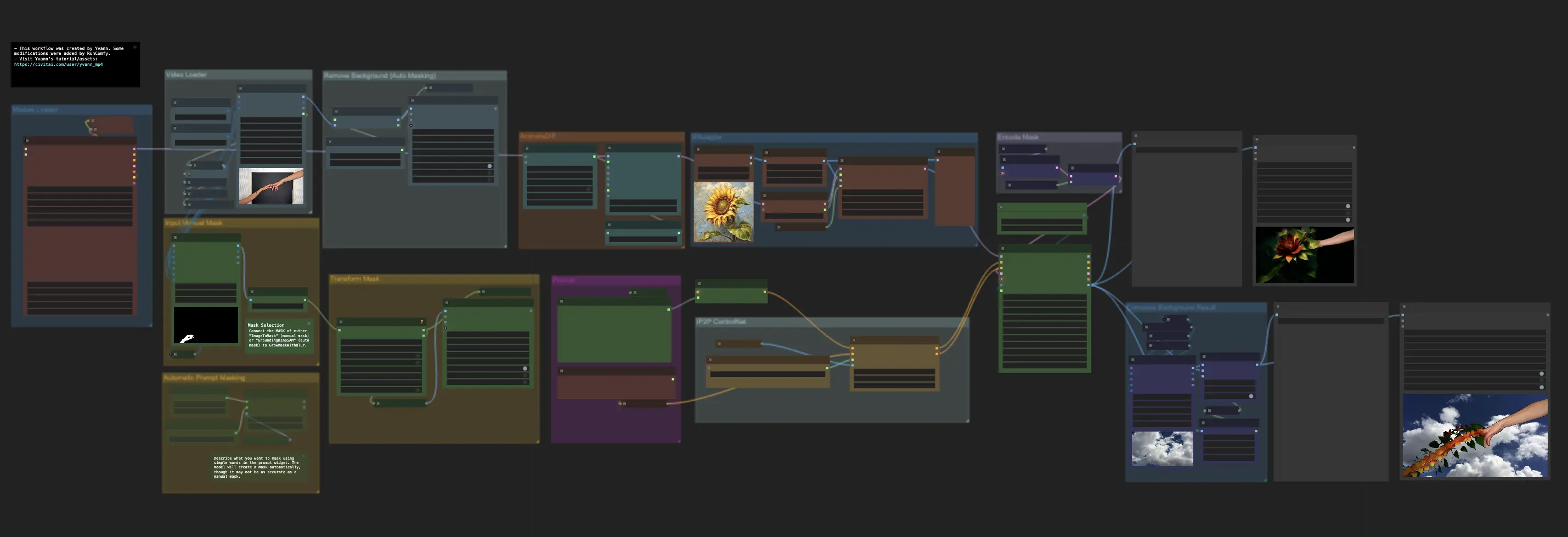
7 ComfyUI Custom Nodes That Should Be Built-In (And How to Get Them)
Essential ComfyUI custom nodes every user needs in 2025. Complete installation guide for WAS Node Suite, Impact Pack, IPAdapter Plus, and more...

ADetailer Single Character Focus - How to Target Specific Faces in Multi-Character Images 2025
Master ADetailer and FaceDetailer to focus on single characters in multi-person images. Complete guide to targeting specific faces with different prompts in ComfyUI.