Z-Image Omni Base: Alibaba's Unified Generation and Editing Model
Discover Z-Image Omni Base, the unified model combining generation and editing capabilities. Learn about the architectural changes, new features, and what this means for AI creators.

Make AI images and video in your browser
Characters, video, photo packs. No GPU, no setup. Your first generation is free.
Alibaba has been consolidating its Z-Image model lineup, and the biggest change is the emergence of Z-Image Omni Base. This isn't just a rebrand of Z-Image Base; it represents a fundamental shift toward unified models that handle both generation and editing within a single architecture. Understanding this evolution helps you plan your workflows and anticipate where AI image tools are heading.
This unification represents an industry trend toward more capable, consolidated models rather than specialized tools for each task.
The Evolution from Base to Omni Base
Understanding why this change happened helps contextualize what Omni Base offers.
The Fragmentation Problem
Previously, Alibaba's Z-Image family had distinct models for different tasks:
- Z-Image Base - Text-to-image generation
- Z-Image Edit - Image editing and transformation
- Z-Image Turbo - Fast generation
- Z-Image Ultra - Enhanced quality
This fragmentation created workflow challenges. Users needed multiple models, each with different weights, different behaviors, and different optimal settings. Switching between generation and editing meant loading entirely different model files.
The Unified Solution
Z-Image Omni Base addresses this by consolidating generation and editing into a single model:
- Same weights for all tasks
- Consistent behavior across operations
- Single model file to manage
- Unified prompt understanding
- Smooth workflow transitions
This doesn't mean specialized models disappear. Z-Image Turbo remains for speed-focused use. But for comprehensive workflows, Omni Base becomes the default choice.
Architecture Detailed look
Omni Base builds on the S3-DiT foundation while adding new capabilities.
Foundation: S3-DiT
The core architecture remains the S3-DiT (Scalable Self-attention with Sliding-window Transformer) system:
- 6B parameters total
- Sliding window attention for efficiency
- Scalable self-attention mechanisms
- Strong prompt understanding
These fundamentals carry over directly from Z-Image Base, ensuring that existing generation quality is maintained.
Addition: Edit Pathways
The key innovation in Omni Base is the addition of editing-specific conditioning:
Source Image Encoding: The model includes pathways to encode source images not just as noise initialization (standard img2img) but as semantic conditioning. This means the model "understands" the source image rather than just using it as a starting point.
Targeted Attention: New attention mechanisms allow the model to focus modifications on specific regions while preserving others. This enables more precise editing than traditional img2img approaches.
Instruction Understanding: Enhanced text encoding handles editing instructions like "change the background to sunset" differently from generation prompts like "sunset landscape." The model learns the difference between creating and modifying.
 Unified architecture handles both generation and editing tasks
Capabilities Overview
Omni Base brings together multiple functionalities that previously required different tools.
Text-to-Image Generation
Standard generation works exactly like Z-Image Base:
- Prompt-driven image creation
- Full quality at 20-50 steps
- Strong prompt adherence
- Excellent detail rendering
Existing Z-Image Base prompts and settings transfer directly.
Free ComfyUI Workflows
Find free, open-source ComfyUI workflows for techniques in this article. Open source is strong.
Image-to-Image Transformation
Enhanced img2img goes beyond simple denoise-based transformation:
- Style transfer with better source preservation
- Content-aware modifications
- Aspect ratio changes with intelligent cropping/extending
- Resolution changes with quality maintenance
Targeted Editing
New capabilities for precise modifications:
- Background replacement while preserving subjects
- Object addition or removal
- Attribute changes (clothing, colors, features)
- Lighting and atmosphere adjustments
Instruction-Based Editing
Natural language editing commands:
- "Make the sky more dramatic"
- "Add a reflection in the water"
- "Change the person's outfit to formal wear"
- "Remove the distracting element in the corner"
Migration from Z-Image Base
For existing Z-Image Base users, migration is straightforward but has considerations.
What Transfers Directly
- Basic generation prompts and settings
- CFG recommendations (around 7)
- Step counts (20-50 for quality)
- Resolution preferences
- Most LoRAs (with some exceptions)
What Changes
- Model file location and naming
- Some workflow node configurations in ComfyUI
- Optimal settings for editing operations
- Memory usage during editing tasks
LoRA Compatibility
Most LoRAs trained on Z-Image Base work on Omni Base:
- Style LoRAs typically transfer well
- Character LoRAs may need testing
- Some specialized LoRAs may behave differently
- New LoRAs should be trained on Omni Base for best results
Practical Usage
Let's look at how to actually use Omni Base for common tasks.
Generation Mode
For standard text-to-image:
Task: Generation
Prompt: [your creative prompt]
Steps: 30
CFG: 7
Resolution: 1024x1024
This works identically to Z-Image Base.
Want to skip the complexity? Apatero gives you professional AI results instantly with no technical setup required.
Edit Mode
For modifying existing images:
Task: Edit
Source: [input image]
Instruction: "Change the background to a beach at sunset"
Steps: 20
Strength: 0.7
The edit-specific settings control how much the source is modified.
Hybrid Workflows
The real power comes from combining modes:
- Generate initial concept with text-to-image
- Refine with targeted edits
- Adjust specific elements
- Final polish with subtle edits
All within the same model, same workflow, same session.
 Easy workflows combine generation and editing
Performance Considerations
Unified models have performance implications worth understanding.
VRAM Usage
- Generation mode: Similar to Z-Image Base (~12GB minimum)
- Edit mode: Slightly higher due to source encoding (~14GB recommended)
- Combined workflows: Peak usage during mode transitions
Speed
- Generation: Identical to Z-Image Base
- Editing: Typically faster than regeneration approaches
- Workflow efficiency: Improved due to no model switching
Quality Trade-offs
- Generation quality: Maintained from Base
- Edit quality: Generally better than Z-Image Edit standalone
- Edge cases: Some specific editing tasks may perform differently
ComfyUI Integration
Using Omni Base in ComfyUI requires updated workflows.
Earn Up To $1,250+/Month Creating Content
Join our exclusive creator affiliate program. Get paid per viral video based on performance. Create content in your style with full creative freedom.
Required Nodes
- Updated model loader for Omni Base
- Conditional nodes for mode selection
- Edit instruction encoding nodes
- Source image processing nodes
Workflow Structure
[Model Loader: Omni Base]
    → [Mode Selector]
        → Generation Path: [Text Encode] → [KSampler] → [Decode]
        → Edit Path: [Source + Instruction] → [KSampler] → [Decode]
Community workflow packages are available that handle this complexity automatically.
Future Implications
The Omni Base approach signals broader industry trends.
Consolidation Trend
Multiple AI companies are moving toward unified models:
- Black Forest Labs with Flux Kontext
- Stability with specialized SDXL variants
- OpenAI with DALL-E's editing features
Expect more consolidation as models become capable of handling multiple tasks.
Training Implications
Unified models may change how custom training works:
- LoRAs might need to specify which capabilities they target
- Training pipelines may need updates
- Some specialized training may become simpler
Ecosystem Evolution
Tool chains will adapt:
- UIs will add mode-aware interfaces
- Workflows will become more integrated
- Fewer models to download and manage
Key Takeaways
- Omni Base unifies generation and editing in a single model
- Core architecture remains S3-DiT with 6B parameters
- Editing capabilities are enhanced beyond simple img2img
- Migration from Z-Image Base is smooth for most workflows
- Most LoRAs transfer though testing is recommended
- Industry trend toward unification makes this approach future-proof
Frequently Asked Questions
Is Omni Base just a rebranded Z-Image Base?
No, it includes additional architecture for editing capabilities. Generation remains the same, but editing is significantly enhanced.
Do I need to re-download models?
Yes, Omni Base is a different checkpoint than Z-Image Base. They're related but not identical.
Will my Z-Image Base LoRAs work?
Most will work for generation tasks. Test editing-focused LoRAs individually.
Is Omni Base larger than Base?
Slightly, due to additional editing pathways. Expect ~15-20% larger file size.
Can I still use Z-Image Base?
Yes, Z-Image Base remains available. Omni Base is an addition, not a replacement.
How does this compare to Flux Kontext?
Similar unified approach. Omni Base builds on Alibaba's architecture while Kontext builds on Flux.
Is Omni Base faster for editing than using separate models?
Yes, no model switching overhead and integrated pipelines are more efficient.
What about Z-Image Ultra?
Z-Image Ultra focuses on quality enhancement. Omni Base handles generation/editing, Ultra handles quality boosting.
When should I use Omni Base vs Turbo?
Omni Base for quality and editing workflows. Turbo for speed when editing isn't needed.
Is commercial use allowed?
Check the specific license on HuggingFace. Alibaba's licenses vary by model.
Z-Image Omni Base represents the future direction of AI image tools: capable, unified models that handle multiple tasks without requiring users to juggle different files and workflows. For creators who regularly move between generation and editing, this consolidation simplifies work significantly.
For instant access to Z-Image models including the latest variants, Apatero offers hosted generation alongside 50+ other models, with LoRA training available on Pro plans.
Make AI images and video in your browser
Characters, video, photo packs. No GPU, no setup. Your first generation is free.
Related Articles
Adobe Firefly vs Midjourney vs Ideogram 2026: Which Wins
Brand-safe licensing, scroll-stopping aesthetics, or text rendering. Three tools optimized for three different jobs, tested against real briefs.
AI Architecture Rendering 2026: Veras vs Paintit vs Midjourney
44 percent of architects use AI in 2026. Veras, Paintit, ArchiVinci, and Midjourney tested on five real architectural briefs from a working studio.
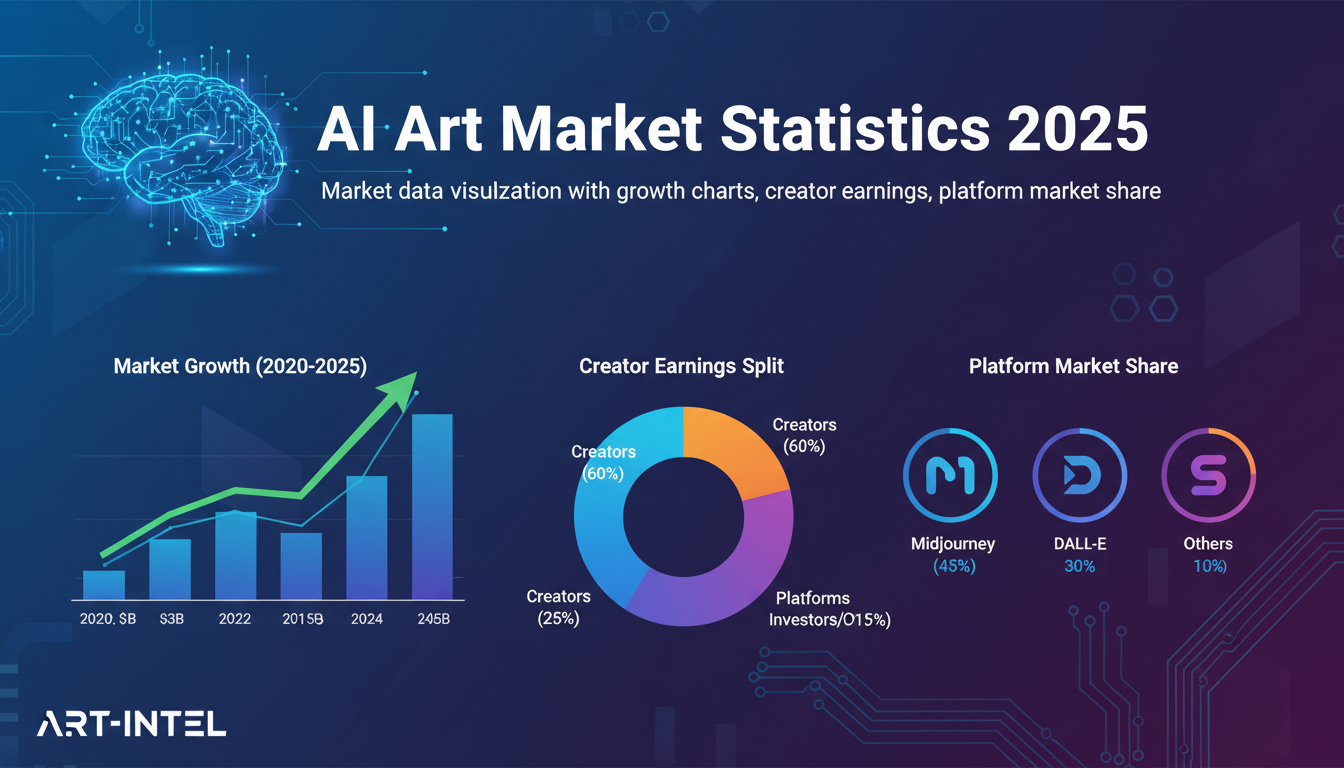
AI Art Market Statistics 2025: Industry Size, Trends, and Growth Projections
Comprehensive AI art market statistics including market size, creator earnings, platform data, and growth projections with 75+ data points.