Z-Image Base vs Z-Image Turbo: Which Model Should You Choose?
Detailed comparison of Z-Image Base and Z-Image Turbo. Understand the differences in speed, quality, training capability, and use cases to pick the right model.
Make AI images and video in your browser
Characters, video, photo packs. No GPU, no setup. Your first generation is free.
Choosing between Z-Image Base and Z-Image Turbo is one of the most common decisions facing users of Alibaba's AI image generation models. Both are excellent tools, but they're optimized for fundamentally different workflows. Understanding these differences will save you time and help you achieve better results with less frustration.
The decision isn't about which model is "better" but rather which model matches your specific needs and constraints.
The Fundamental Difference: Distillation
The core difference between these models comes down to a technique called knowledge distillation. Understanding this helps explain all the downstream differences in behavior and capability.
What is Distillation?
Distillation is a process where a large, slow "teacher" model trains a smaller, faster "student" model to mimic its outputs. The student learns to produce similar results in fewer steps by internalizing patterns that the teacher discovered through longer inference.
Z-Image Turbo was created by distilling Z-Image Base. The process involved:
- Training Turbo to match Base's outputs
- Optimizing for 4-step generation
- Preserving as much quality as possible while dramatically reducing inference time
The result is a model that's much faster but has fundamentally different internal characteristics.
Trade-offs of Distillation
Distillation is not free. Every distilled model makes trade-offs:
Speed gains:
- Turbo generates in 4 steps vs Base's 20-50 steps
- Roughly 5-10x faster generation in practice
- Lower total compute per image
Quality costs:
- Some fine detail is lost
- Slight reduction in prompt adherence at extremes
- Less consistent results at the edges of capability
- Reduced receptiveness to LoRA training
For many users and use cases, these trade-offs are excellent. For others, they're deal-breakers.
Speed Comparison
The speed difference between these models is dramatic and immediately noticeable in practical use.
Generation Times
On typical hardware (RTX 4070 Super):
| Model | Steps | Time per Image |
|---|---|---|
| Z-Image Base | 20 | ~12 seconds |
| Z-Image Base | 30 | ~18 seconds |
| Z-Image Base | 50 | ~30 seconds |
| Z-Image Turbo | 4 | ~2.5 seconds |
This 5-10x speed improvement with Turbo enables entirely different workflows.
Workflow Implications
With Z-Image Base:
- Craft prompts carefully before generating
- Generate fewer variations
- Focus on quality over quantity
- Batch generate during off-time
With Z-Image Turbo:
- Rapid prompt iteration
- Generate many variations quickly
- Near real-time creative exploration
- Interactive workflows become practical
 Generation speed dramatically affects creative workflow possibilities
Quality Comparison
Quality differences between the models are real but more nuanced than speed differences.
Where Base Excels
Z-Image Base produces noticeably better results in:
Fine Details:
- Hair strands and textures
- Fabric weaves and patterns
- Skin pores and subtle features
- Background complexity
Edge Cases:
- Unusual compositions
- Complex lighting scenarios
- Specific artistic styles
- Detailed text rendering
Consistency:
Free ComfyUI Workflows
Find free, open-source ComfyUI workflows for techniques in this article. Open source is strong.
- More predictable outputs
- Better seed reproducibility
- Stable quality across prompt types
Where Turbo Holds Up
Z-Image Turbo matches or comes close to Base in:
General Composition:
- Scene layout and structure
- Major subject placement
- Overall color and mood
Standard Subjects:
- Common portrait types
- Landscape basics
- Product imagery fundamentals
Rapid Iteration:
- When exploring concepts
- Draft generation
- Thumbnail creation
Side-by-Side Testing
In controlled comparisons using identical prompts and seeds:
- 70-80% of outputs are difficult to distinguish at web resolution
- Fine detail differences become apparent at full resolution
- Complex prompts show more divergence
- Simple prompts show minimal difference
For social media or web use, Turbo is often sufficient. For print, professional work, or archival quality, Base is preferred.
Training Capability
This is where the models diverge most significantly and where the choice often becomes clear.
LoRA Training on Base
Z-Image Base is excellent for LoRA training:
Training Characteristics:
- Stable gradients throughout training
- Consistent convergence behavior
- Good concept separation
- Predictable quality curves
Results:
Want to skip the complexity? Apatero gives you professional AI results instantly with no technical setup required.
- LoRAs transfer intended concepts effectively
- Lower risk of overfitting
- Better generalization to new prompts
- More consistent inference behavior
LoRA Training on Turbo
Z-Image Turbo can technically accept LoRAs, but:
Training Challenges:
- Compressed representation space makes training harder
- Gradients can be unstable
- Concept encoding is less distinct
- Requires more careful hyperparameter tuning
Results:
- LoRAs often have less impact
- Higher overfitting risk
- Less predictable generalization
- May produce artifacts more frequently
Community Consensus
The AI art community has largely settled on using Base models for training while using Turbo models for inference with pre-trained LoRAs. This hybrid approach captures benefits of both:
- Train on Base for quality embeddings
- Test with Base to validate
- Deploy with Turbo if speed matters more than maximum fidelity
 Different training requirements for Base vs Turbo models
Hardware Requirements
Both models have similar baseline requirements, but practical usage differs.
Z-Image Base
Minimum:
- 12GB VRAM
- 32GB system RAM
- Modern GPU (RTX 30/40 series or equivalent)
Recommended:
- 16-24GB VRAM
- 64GB RAM for training
- RTX 4070 or better
Z-Image Turbo
Minimum:
Earn Up To $1,250+/Month Creating Content
Join our exclusive creator affiliate program. Get paid per viral video based on performance. Create content in your style with full creative freedom.
- 8GB VRAM (with optimization)
- 16GB system RAM
- Mid-range GPU acceptable
Recommended:
- 12GB VRAM
- 32GB RAM
- RTX 3060 or better
Turbo's lower step count reduces peak memory usage and allows generation on less capable hardware.
Use Case Recommendations
Based on the above differences, here's guidance for specific scenarios.
Choose Z-Image Base When:
- Training custom LoRAs - Non-negotiable for quality training
- Professional print work - Maximum detail matters
- Archival quality - Long-term preservation of work
- Complex artistic styles - Subtle style elements need preservation
- Text rendering - Better typography handling
- Hardware is capable - 16GB+ VRAM available
Choose Z-Image Turbo When:
- Rapid prototyping - Speed of iteration matters most
- Social media content - Web resolution is sufficient
- Interactive applications - Near real-time response needed
- Limited hardware - 8-12GB VRAM systems
- High volume generation - Cost and time per image matters
- Draft exploration - Finding concepts before final rendering
Hybrid Approach
Many professional workflows use both:
- Explore with Turbo - Quickly find promising directions
- Refine with Base - Generate final versions with full quality
- Train on Base - Custom LoRAs for specific needs
- Deploy flexibly - Use whichever fits the moment
Practical Workflow Examples
Concept Artist Workflow
A concept artist exploring character designs might:
- Use Turbo to generate 50 quick variations
- Select 5 promising directions
- Regenerate those 5 with Base at higher quality
- Refine in external tools using Base outputs as foundation
Total time: ~5 minutes for exploration + ~2 minutes for finals
LoRA Developer Workflow
Someone creating a custom character LoRA:
- Prepare training data
- Train exclusively on Z-Image Base
- Validate with Base inference
- Test compatibility with Turbo
- Release with guidance for both models
Training time: Same regardless, but results are better on Base
Production Pipeline
A content production team might:
- Initial concepts: Turbo for speed
- Client presentations: Base for quality
- Final deliverables: Base with careful settings
- Social media crops: Turbo is sufficient
Key Takeaways
- Speed difference is 5-10x - Turbo generates in ~2.5s vs Base's ~12-30s
- Quality difference is subtle but real - Fine details and edge cases favor Base
- Training strongly favors Base - Distilled models don't train as effectively
- Hardware requirements overlap - Turbo needs less but both run on similar setups
- Hybrid workflows are common - Use each model where it excels
- Use case determines choice - Neither is universally "better"
Frequently Asked Questions
Can I use the same LoRAs on both models?
LoRAs trained on Base often work on Turbo with reduced effectiveness. LoRAs trained on Turbo may not transfer well. Train on Base for maximum compatibility.
Is the quality difference visible in final outputs?
At web resolution, often not. At full resolution or in print, Base's advantages become apparent in fine details.
Which model uses less VRAM?
Turbo uses less peak VRAM due to fewer steps, making it more accessible for 8-10GB cards.
Can I convert a Base workflow to Turbo?
Yes, but adjust your expectations. Reduce steps to 4, keep other settings similar, and accept some quality variation.
Why not always use Base?
Speed matters. For many workflows, generating 10 images with Turbo in the time of 1 Base image is more valuable than marginal quality improvements.
Does Turbo support all Base features?
Most features work, but some advanced techniques like certain ControlNet implementations may behave differently.
Which model is better for print-quality output?
Base is the clear choice. Its superior fine-detail handling and cleaner high-resolution output make it the better pick anywhere the image will be viewed larger than web size.
Can I switch between them mid-project?
Yes, though maintaining visual consistency may require regenerating some assets.
Is there a middle ground?
Some users run Base with fewer steps (15-20) as a compromise, getting better quality than Turbo with reasonable speed.
How do I decide for my specific use?
Test both with your typical prompts and workflows. The right choice depends on your priorities, hardware, and use case.
The Z-Image Base vs Turbo decision ultimately comes down to your priorities. Speed-focused creators benefit from Turbo's rapid generation. Quality-focused creators and those training custom models should invest in Base workflows.
For users who want access to both without managing local setups, Apatero offers multiple Z-Image variants alongside 50+ other models, with LoRA training available on Pro plans.
Make AI images and video in your browser
Characters, video, photo packs. No GPU, no setup. Your first generation is free.
Related Articles
Adobe Firefly vs Midjourney vs Ideogram 2026: Which Wins
Brand-safe licensing, scroll-stopping aesthetics, or text rendering. Three tools optimized for three different jobs, tested against real briefs.
AI Architecture Rendering 2026: Veras vs Paintit vs Midjourney
44 percent of architects use AI in 2026. Veras, Paintit, ArchiVinci, and Midjourney tested on five real architectural briefs from a working studio.
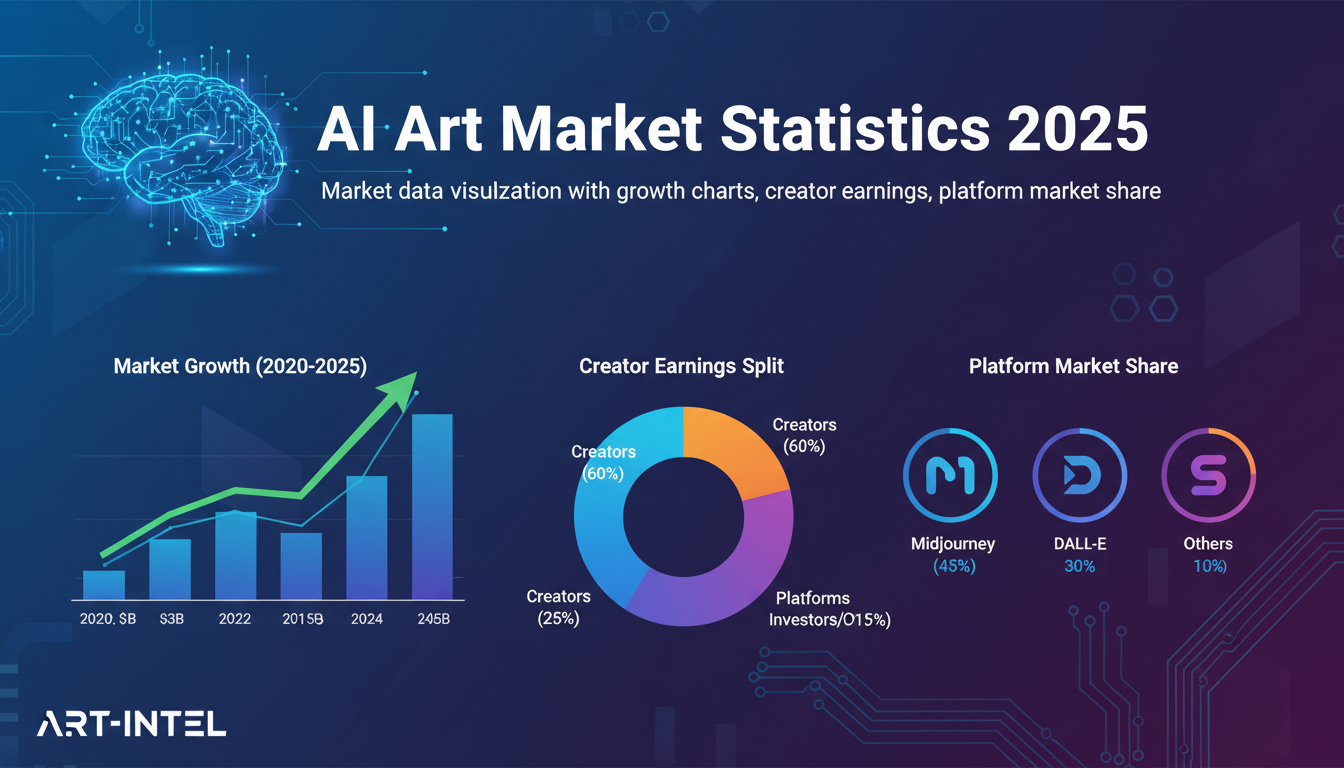
AI Art Market Statistics 2025: Industry Size, Trends, and Growth Projections
Comprehensive AI art market statistics including market size, creator earnings, platform data, and growth projections with 75+ data points.