Flux 2 Klein vs Z-Image Turbo: Battle of the Speed Models
Comprehensive comparison of Flux 2 Klein and Z-Image Turbo for fast AI image generation. Speed, quality, features, and which model wins for different use cases.
Make AI images and video in your browser
Characters, video, photo packs. No GPU, no setup. Your first generation is free.
When you need fast AI image generation, two models consistently come up: Flux 2 Klein from Black Forest Labs and Z-Image Turbo from Alibaba. Both are designed for speed without completely sacrificing quality, but they take different approaches and excel in different areas. This comparison helps you choose the right tool for your speed-focused workflows.
Both models represent the latest of fast image generation, and either can serve speed-critical workflows well.
Model Overview
Let's establish what each model brings to the table.
Flux 2 Klein
Origin: Black Forest Labs Parameters: 4B (with 9B available separately) Release: January 2026 Architecture: Flux-based transformer License: Apache 2.0 (4B version)
Design Philosophy: Klein is a distilled version of larger Flux models, optimized for rapid generation while maintaining the Flux family's quality characteristics.
Z-Image Turbo
Origin: Alibaba Parameters: Distilled from 6B Z-Image Base Architecture: S3-DiT (distilled) License: Open license (check specific terms)
Design Philosophy: Turbo compresses Z-Image Base's capabilities into a 4-step generation model, prioritizing speed for iterative workflows.
Speed Comparison
The primary reason to use these models is speed. Let's compare.
Generation Times
Testing on RTX 4070 Super at 1024x1024:
| Model | Steps | Time | Images/Minute |
|---|---|---|---|
| Flux 2 Klein 4B | 4 | ~1.2s | ~50 |
| Z-Image Turbo | 4 | ~2.5s | ~24 |
| Klein (optimized) | 4 | ~0.9s | ~66 |
| Turbo (optimized) | 4 | ~2.0s | ~30 |
Winner: Flux 2 Klein - roughly 2x faster in direct comparison.
Throughput at Scale
For batch generation:
| Scenario | Klein | Turbo |
|---|---|---|
| 100 images | ~2 min | ~4.5 min |
| 1000 images | ~20 min | ~45 min |
| Real-time preview | Excellent | Good |
Klein's speed advantage compounds at scale.
Hardware Efficiency
Both models run on similar hardware:
- Klein: 8GB VRAM minimum (fp16)
- Turbo: 8GB VRAM minimum (fp16)
Klein achieves faster generation with similar resource usage.
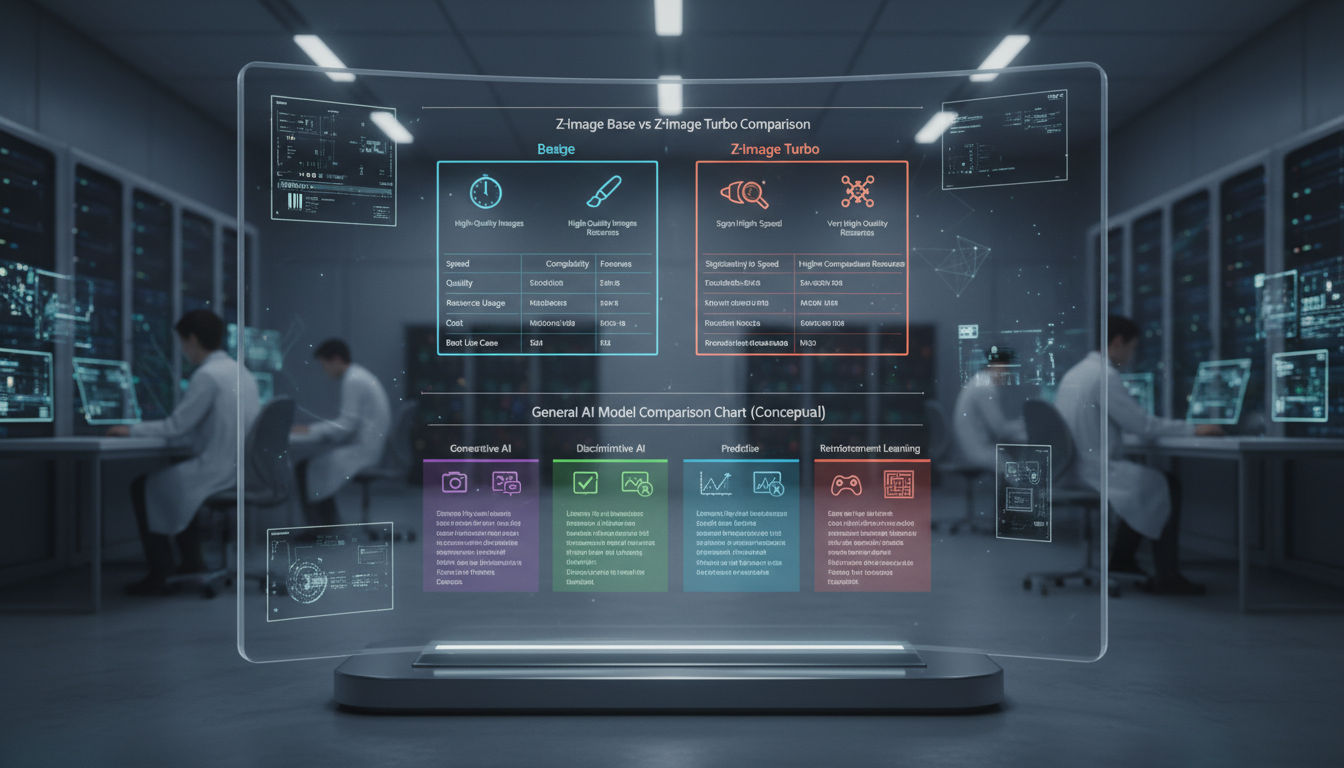 Klein consistently outperforms Turbo in generation speed
Quality Comparison
Speed means nothing if quality suffers. How do they compare?
Overall Quality
Both models produce good results for distilled models, but with different characteristics:
Flux 2 Klein strengths:
- Excellent prompt adherence
- Good text rendering
- Strong composition
- Consistent output quality
Z-Image Turbo strengths:
- Slightly better fine detail
- Good anatomical consistency
- Strong color accuracy
- Smooth gradients
Detailed Assessment
| Aspect | Klein | Turbo | Winner |
|---|---|---|---|
| Prompt adherence | 9/10 | 8/10 | Klein |
| Fine detail | 8/10 | 9/10 | Turbo |
| Text rendering | 8/10 | 7/10 | Klein |
| Anatomy | 8/10 | 8/10 | Tie |
| Color accuracy | 8/10 | 9/10 | Turbo |
| Consistency | 9/10 | 8/10 | Klein |
Overall: Close, with Klein winning on prompt adherence and consistency, Turbo winning on detail and color.
Style Handling
Both models handle various styles:
| Style | Klein | Turbo |
|---|---|---|
| Photorealistic | Good | Good |
| Anime/Illustration | Good | Excellent |
| Abstract | Good | Good |
| Artistic | Good | Good |
Turbo has slight advantage for anime-style content due to Z-Image's training data.
Feature Comparison
Beyond speed and quality, other features matter.
Licensing
Flux 2 Klein 4B: Apache 2.0
Free ComfyUI Workflows
Find free, open-source ComfyUI workflows for techniques in this article. Open source is strong.
- Full commercial use
- No royalties
- Modification allowed
- Distribution allowed
Z-Image Turbo: Check specific terms
- Generally permissive
- Some commercial restrictions may apply
- Read license carefully
Winner: Klein - Apache 2.0 is clearer and more permissive.
LoRA Ecosystem
Klein:
- Growing LoRA ecosystem
- Compatible with Klein-specific training
- Community actively developing
Turbo:
- Can use Z-Image Base LoRAs (with reduced effectiveness)
- Established ecosystem via Base compatibility
- More existing LoRAs available
Winner: Turbo - Base compatibility provides access to more existing LoRAs.
ComfyUI Integration
Both integrate well with ComfyUI:
- Custom nodes available
- Standard workflow compatibility
- Active community support
Tie - Both well-supported.
Text Rendering
Text generation capability:
Klein: Good text rendering for a speed model. Short words usually correct.
Turbo: Moderate text rendering. May struggle with accuracy.
Winner: Klein - Better typography handling.
Want to skip the complexity? Apatero gives you professional AI results instantly with no technical setup required.
 Different strengths serve different use cases
Use Case Recommendations
Based on the comparison, here's where each model excels.
Choose Flux 2 Klein When:
Speed is paramount:
- Real-time applications
- Interactive tools
- High-volume generation
- Preview workflows
Commercial use:
- Products and services
- Client work
- SaaS applications
- Apache 2.0 simplifies licensing
Text is important:
- Signage and labels
- Marketing content
- UI mockups
Prompt precision matters:
- Specific compositions needed
- Complex prompt requirements
- Reliable output consistency
Choose Z-Image Turbo When:
Using existing LoRAs:
- Z-Image Base LoRAs available
- Character consistency needed
- Established training investments
Fine detail priority:
- When quality slightly outweighs speed
- Detailed textures needed
- Color accuracy matters
Anime/illustration focus:
- Style preference for Z-Image aesthetic
- Anime-style content creation
- Illustration workflows
Z-Image ecosystem:
Earn Up To $1,250+/Month Creating Content
Join our exclusive creator affiliate program. Get paid per viral video based on performance. Create content in your style with full creative freedom.
- Already using Z-Image Base
- Workflow compatibility important
- Familiar with Z-Image prompting
Prompt Approach Differences
The models respond differently to prompts.
Klein Prompting
Klein prefers natural language:
"A young woman with red hair sitting in a cozy library, warm afternoon light streaming through windows, photorealistic, professional photography"
Skip quality tags - Klein doesn't need them.
Turbo Prompting
Turbo works similarly but may benefit from slight emphasis:
"A young woman with red hair sitting in a cozy library, warm afternoon light streaming through windows, high quality, detailed, photorealistic"
Some quality terms may help Turbo's output.
CFG Settings
Klein: Low CFG (1.5-2.0 optimal) Turbo: Standard CFG (5-7 range)
Different optimal settings reflect different training approaches.
Integration Scenarios
How these models fit into larger workflows.
Rapid Prototyping
Recommendation: Klein
- Fastest iteration
- Try more concepts quickly
- Better for exploration
Production Pipeline
Recommendation: Depends
- Klein for speed-critical stages
- Consider Base models for finals
- Turbo if using Z-Image ecosystem
Real-Time Applications
Recommendation: Klein
- Sub-second generation
- Better for interactive use
- More responsive feel
Batch Content Creation
Recommendation: Klein
- Higher throughput
- Lower time cost
- Better resource efficiency
Key Takeaways
- Klein is ~2x faster than Turbo in direct comparison
- Quality is comparable with slight differences in characteristics
- Klein has better licensing (Apache 2.0)
- Turbo has better LoRA ecosystem via Base compatibility
- Klein excels at text rendering and prompt adherence
- Turbo has edge in fine detail and anime-style content
Frequently Asked Questions
Which model produces higher quality?
Very close. Turbo has slightly better fine detail, Klein has better consistency and prompt adherence.
Can I use both in the same workflow?
Yes, though managing different prompting approaches adds complexity.
Is Klein really twice as fast?
In our testing, yes. ~1.2s vs ~2.5s at standard settings.
Do they use similar VRAM?
Yes, both work well with 8-12GB VRAM.
Which has better anime results?
Turbo has a slight edge for anime-style content.
Can I train LoRAs for Klein?
Yes, Klein supports LoRA training for the 4B model.
Is Turbo's LoRA compatibility worth the speed trade-off?
Depends on your LoRA investments. If you have valuable Z-Image Base LoRAs, Turbo's compatibility is valuable.
Which is better for commercial products?
Klein's Apache 2.0 license is clearer for commercial use.
Do they have different aesthetic styles?
Slight differences. Klein leans toward Flux aesthetic, Turbo toward Z-Image aesthetic.
Can I switch between them easily?
Yes, with some prompting adjustment. They're compatible with similar workflows.
Both Flux 2 Klein and Z-Image Turbo represent excellent options for fast AI image generation. Klein wins on raw speed and licensing clarity, while Turbo offers LoRA ecosystem advantages and slightly different quality characteristics.
For access to both models plus 50+ others without managing local installations, Apatero offers hosted generation with additional features like video and LoRA training on Pro plans.
Make AI images and video in your browser
Characters, video, photo packs. No GPU, no setup. Your first generation is free.
Related Articles
Adobe Firefly vs Midjourney vs Ideogram 2026: Which Wins
Brand-safe licensing, scroll-stopping aesthetics, or text rendering. Three tools optimized for three different jobs, tested against real briefs.
AI Architecture Rendering 2026: Veras vs Paintit vs Midjourney
44 percent of architects use AI in 2026. Veras, Paintit, ArchiVinci, and Midjourney tested on five real architectural briefs from a working studio.
AI Art Market Statistics 2025: Industry Size, Trends, and Growth Projections
Comprehensive AI art market statistics including market size, creator earnings, platform data, and growth projections with 75+ data points.