Flux 2 Klein 4B vs 9B: Which Model Should You Use?
Comprehensive comparison of Flux 2 Klein 4B and 9B models. Learn the differences in quality, speed, VRAM requirements, and licensing to choose the right version for your needs.
Some models you cannot download at any VRAM
Veo, Kling and Nano Banana have closed weights. There is no local build, no quantization, no 24GB workaround. Run them in the browser instead. First generation free.
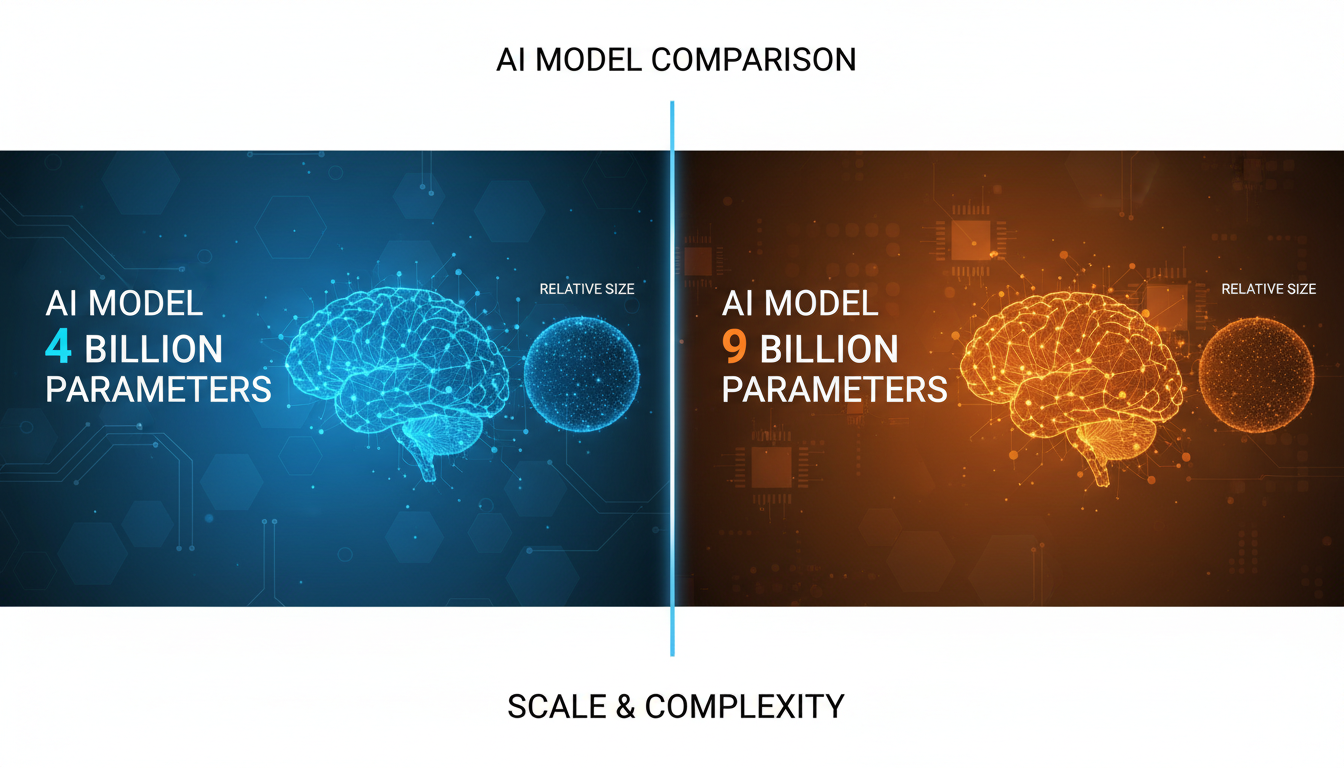
Black Forest Labs released Flux 2 Klein in two distinct versions: the 4B (4 billion parameter) and 9B (9 billion parameter) models. While they share the same family name and core architecture, choosing between them isn't straightforward. Each version has its own strengths, limitations, and ideal use cases that could significantly impact your workflow.
I've spent considerable time testing both versions across various prompts and hardware configurations. The differences matter more than you might expect, and the "right" choice depends entirely on your specific situation. Let me break down everything you need to know to make an informed decision.
The Fundamental Differences
Before exploring benchmarks and use cases, let's establish what actually separates these two models at a technical level.
The 4B model contains 4 billion parameters, while the 9B contains 9 billion. Parameters are essentially the model's "knowledge" encoded as numbers. More parameters generally means more capacity to learn and reproduce complex patterns, but it also means more computational requirements and memory usage.
Both models use the same distilled architecture derived from larger Flux models, but the 9B version retains more of that original capability. Think of it like this: if the full Flux model is a detailed encyclopedia, the 9B is an abridged version that keeps most important entries, while the 4B is a pocket reference guide that covers the essentials.
The licensing difference is equally significant. The 4B model ships under Apache 2.0, a permissive open-source license that allows commercial use without restrictions. The 9B uses the FLUX Non-Commercial License, which permits research and personal projects but requires separate agreements for any commercial application.
Speed Comparison
Let's talk numbers. Speed testing was conducted on common consumer GPUs to give you realistic expectations.
RTX 4090 (24GB VRAM)
| Model | Resolution | Generation Time | Steps |
|---|---|---|---|
| Klein 4B | 1024x1024 | ~1.2 seconds | 4 |
| Klein 9B | 1024x1024 | ~1.8 seconds | 4 |
| Klein 4B | 1536x1536 | ~2.8 seconds | 4 |
| Klein 9B | 1536x1536 | ~4.2 seconds | 4 |
RTX 3090 (24GB VRAM)
| Model | Resolution | Generation Time | Steps |
|---|---|---|---|
| Klein 4B | 1024x1024 | ~2.1 seconds | 4 |
| Klein 9B | 1024x1024 | ~3.4 seconds | 4 |
RTX 4070 Ti (16GB VRAM)
| Model | Resolution | Generation Time | Steps |
|---|---|---|---|
| Klein 4B | 1024x1024 | ~3.2 seconds | 4 |
| Klein 9B | 1024x1024 | Requires optimization | 4 |
The 4B model is consistently 30-50% faster than the 9B across all tested configurations. For workflows involving rapid iteration, batch generation, or real-time applications, this difference adds up quickly. If you're generating hundreds of images, those seconds become hours.
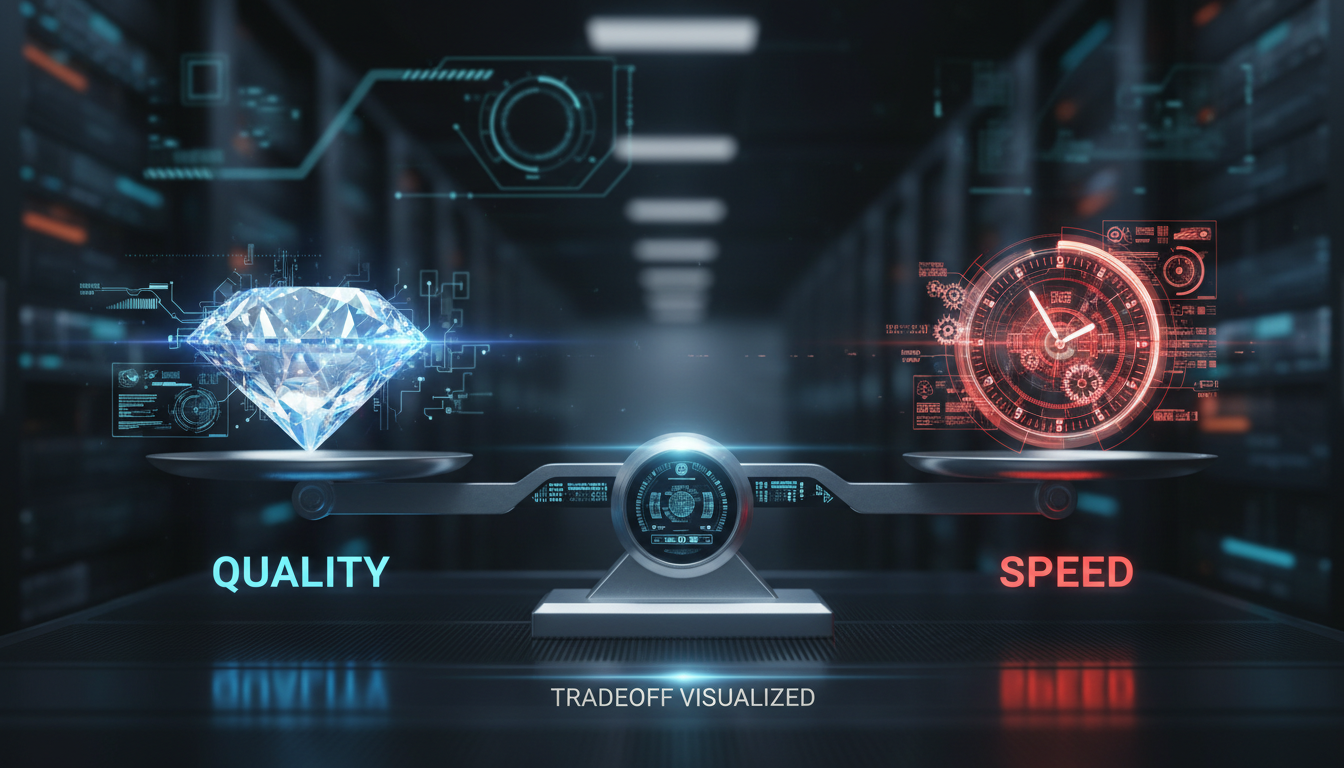 The eternal balance: Flux 2 Klein 4B prioritizes speed while 9B leans toward quality
Quality Analysis
Speed means nothing if the output quality doesn't meet your needs. This is where the comparison gets nuanced, because "quality" means different things to different users.
Photorealism
Both models handle photorealistic images well, but the 9B version shows noticeably better performance in challenging scenarios. Fine details like skin texture, hair strands, and fabric weave come through more clearly with the 9B. For portrait work specifically, the difference is visible when you zoom in.
That said, the 4B is far from bad. At typical viewing distances and social media resolutions, most people wouldn't notice the difference. The gap only becomes apparent in detailed examination or large-format output.
Text Rendering
Surprisingly, text rendering quality is nearly identical between both versions. This is a strong point of the entire Flux family, and the distillation process preserved this capability well in both the 4B and 9B. If readable text in images is your primary concern, the 4B will serve you just as well.
Complex Compositions
Multi-element scenes with specific spatial relationships favor the 9B model. When prompting for precise arrangements of multiple subjects, backgrounds, and objects, the 9B shows better coherence. The 4B occasionally struggles with complex scenes, sometimes merging elements or misplacing subjects.
Artistic Styles
Style adherence is roughly comparable between the two. Both models respond well to style keywords and artistic direction in prompts. LoRA compatibility is also similar, with community-created style adapters working on both versions with appropriate adjustments.
My Testing Verdict
For 80% of common use cases, the quality difference won't impact your work meaningfully. The 9B shines in edge cases: highly detailed portraits, complex multi-subject scenes, or situations where you need every last bit of fidelity. The 4B handles everyday generation tasks admirably.
Free ComfyUI Workflows
Find free, open-source ComfyUI workflows for techniques in this article. Open source is strong.
VRAM Requirements
Hardware accessibility is a major factor for most users, and this is where the models diverge significantly.
Flux 2 Klein 4B
- Optimal: 16GB+ VRAM
- Minimum: 13GB VRAM (RTX 3090, RTX 4070 Ti 16GB)
- With optimizations: Can run on 12GB with reduced quality
The 4B model's memory footprint makes it accessible to a wide range of consumer GPUs. If you own anything from the RTX 30-series or 40-series with 12GB or more VRAM, you can likely run this model with reasonable performance.
Flux 2 Klein 9B
- Optimal: 24GB+ VRAM
- Minimum: 20GB VRAM
- With FP8 quantization: 16GB possible with quality tradeoff
The 9B model's VRAM requirements push it beyond many consumer GPUs. Realistically, you need an RTX 3090, RTX 4090, or professional-grade hardware to run it comfortably. The quantized versions that fit in less VRAM sacrifice some of the quality advantages that make the 9B compelling in the first place.
Licensing Detailed look
The licensing difference deserves careful consideration, especially if you're building products or services.
 Apache 2.0 licensing on the 4B model opens doors for commercial applications
Flux 2 Klein 4B - Apache 2.0
The Apache 2.0 license is one of the most permissive open-source licenses available. With the 4B model, you can:
- Use it in commercial products without paying royalties
- Modify the model weights for your specific needs
- Distribute the model or derivatives
- Build SaaS products around it
- Create and sell services using the model
There are minimal restrictions. You must include the license text and copyright notice in distributions, and you can't use Black Forest Labs' trademarks without permission. That's essentially it.
Want to skip the complexity? Apatero gives you professional AI results instantly with no technical setup required.
Flux 2 Klein 9B - FLUX Non-Commercial License
The 9B's license is more restrictive:
- Free for research, academic work, and personal projects
- Commercial use requires a separate licensing agreement with Black Forest Labs
- You cannot redistribute the model commercially
- Derivative works for commercial purposes are prohibited without permission
If you're a hobbyist or researcher, this is perfectly fine. If you're building a product, you'll need to contact Black Forest Labs and negotiate terms. This could range from reasonable to expensive depending on your use case and their current policies.
Use Case Recommendations
Based on my testing and the specifications, here's when to choose each model:
Choose Flux 2 Klein 4B When:
- Building commercial products - The Apache 2.0 license is invaluable
- Running on limited hardware - 12-16GB VRAM GPUs can handle it
- Speed is critical - 30-50% faster generation times
- Batch processing - The speed advantage compounds with volume
- General-purpose generation - Quality is sufficient for most needs
- Budget constraints - No licensing fees, runs on cheaper hardware
Choose Flux 2 Klein 9B When:
- Maximum quality matters - Fine detail and complex scenes
- Non-commercial use only - Research, personal projects, learning
- You have capable hardware - 20GB+ VRAM available
- Professional portfolio work - When every detail counts
- Complex multi-subject scenes - Better spatial coherence
- You can wait for generation - Speed isn't the priority
When Neither is Ideal
If you need the 9B's quality but for commercial purposes, you have a few options:
- Contact Black Forest Labs for commercial licensing
- Use the 4B and accept the quality difference
- Consider Flux Dev with longer generation times
- Use hosted API services that handle licensing
Practical Workflow Considerations
Beyond raw specs, consider how each model fits into your actual workflow.
Iteration Speed
Creative work involves iteration. You write a prompt, see the result, adjust, and repeat. With the 4B generating images in ~1 second versus ~2 seconds for the 9B, you complete more iteration cycles in the same time. Over a session, this compounds into significant productivity differences.
Earn Up To $1,250+/Month Creating Content
Join our exclusive creator affiliate program. Get paid per viral video based on performance. Create content in your style with full creative freedom.
Batch Generation
If you're generating large batches, say, 100 variations for a project, the time difference matters:
- 4B at 1.2s each: ~2 minutes total
- 9B at 1.8s each: ~3 minutes total
For larger batches or production workflows, this gap widens further.
LoRA Compatibility
Both models support LoRA adapters, but the community has produced more LoRAs trained specifically for the 4B due to its accessibility and commercial-friendly license. If you rely heavily on community LoRAs, check availability for your target model.
Future Updates
Black Forest Labs has indicated ongoing development for the Flux family. The 4B's open license means community improvements can be freely shared, while 9B enhancements may remain more controlled. Consider which ecosystem trajectory aligns with your needs.
Key Takeaways
- 4B is 30-50% faster with 1.2 second generation vs 1.8 seconds for 9B
- VRAM requirements differ significantly: 13GB for 4B vs 20GB for 9B
- Quality gap is real but situational - noticeable in complex scenes and fine details
- Licensing is the biggest differentiator - Apache 2.0 (4B) vs Non-Commercial (9B)
- For most users, 4B offers better value through speed, accessibility, and commercial rights
- 9B excels for quality-critical non-commercial work where hardware isn't a constraint
Frequently Asked Questions
Which Flux 2 Klein model is better for beginners?
The 4B model is better for beginners due to lower hardware requirements (13GB vs 20GB VRAM), faster generation times for experimentation, and no licensing concerns to worry about.
Can I use Flux 2 Klein 9B for commercial projects?
Not directly. The 9B uses a non-commercial license. You'll need to contact Black Forest Labs to negotiate commercial licensing terms before using it in any commercial context.
Is the quality difference between 4B and 9B noticeable?
In complex scenes with fine details, yes. For general-purpose generation, portraits at normal viewing sizes, and most social media content, the difference is minimal. The 9B shows advantages mainly in edge cases.
What GPU do I need for each model?
For 4B: Minimum RTX 3060 12GB, recommended RTX 3090 or RTX 4070 Ti 16GB. For 9B: Minimum RTX 3090 20GB+ or RTX 4090, with some quantized versions possible on 16GB.
Can I train LoRAs on both models?
Yes, both models support LoRA training. The 4B has more community LoRAs available due to its accessible license and lower hardware requirements.
How do I choose between 4B and 9B for my project?
Consider three factors: 1) Commercial use needed? Choose 4B. 2) Have 20GB+ VRAM? 9B is viable. 3) Need maximum quality and have time? 9B. For most cases, 4B provides the best overall value.
Is the 9B worth the extra VRAM and slower speed?
Only if you need non-commercial maximum quality work and have the hardware. For commercial projects or limited hardware, the 4B's combination of speed, accessibility, and licensing makes more practical sense.
Do both models handle text rendering equally well?
Yes, text rendering quality is nearly identical. Both inherit Flux's strong text generation capabilities and produce legible typography consistently.
Which model should I use for batch generation and production pipelines?
The 4B is the clear winner here. Its 4-5x speed advantage compounds significantly over hundreds or thousands of images, and the Apache 2.0 license removes any commercial licensing friction. Reserve the 9B for hero shots or final-quality passes where throughput isn't the priority. For hassle-free access to both models without managing hardware, platforms like Apatero offer pre-configured options.
Will Black Forest Labs release more Klein variants?
The company has indicated Flux 2 Klein is part of a broader model family with more releases planned for 2026. Additional sizes or specialized variants are possible.
The choice between Flux 2 Klein 4B and 9B ultimately comes down to your specific needs. The 4B offers remarkable value with its speed, accessibility, and open license. The 9B targets quality-focused non-commercial work where hardware and time aren't constraints. Neither is universally "better," they're tools optimized for different jobs.
For most users, especially those building products or working with limited hardware, the 4B is the practical choice. Reserve the 9B for specialized quality-critical work where its advantages can actually shine.
Some models you cannot download at any VRAM
Veo, Kling and Nano Banana have closed weights. There is no local build, no quantization, no 24GB workaround. Run them in the browser instead. First generation free.
Related Articles
Adobe Firefly vs Midjourney vs Ideogram 2026: Which Wins
Brand-safe licensing, scroll-stopping aesthetics, or text rendering. Three tools optimized for three different jobs, tested against real briefs.
AI Architecture Rendering 2026: Veras vs Paintit vs Midjourney
44 percent of architects use AI in 2026. Veras, Paintit, ArchiVinci, and Midjourney tested on five real architectural briefs from a working studio.

AI Art Market Statistics 2025: Industry Size, Trends, and Growth Projections
Comprehensive AI art market statistics including market size, creator earnings, platform data, and growth projections with 75+ data points.