How AI Girlfriends Use Emotional Intelligence: The Technology Behind Digital Companions
Deep explore the technology powering AI girlfriend emotional intelligence. Understand how AI companions recognize emotions, build rapport, and create meaningful connections.
When an AI girlfriend responds to your bad day with genuine-seeming comfort, or remembers that small detail from a conversation weeks ago, it doesn't happen by accident. Behind these interactions lies sophisticated technology specifically designed to create emotionally resonant experiences.
Understanding how AI emotional intelligence works helps set realistic expectations while appreciating what these systems actually accomplish. The technology is remarkable even when we understand it isn't truly conscious or feeling.
This guide explores the mechanisms powering emotional AI companions, from natural language understanding to long-term memory systems and everything between.
Quick Answer: AI girlfriends use multiple technologies to appear emotionally intelligent: sentiment analysis detects your emotional state from text, large language models generate contextually appropriate responses, memory systems track relationship history, and personality modules maintain consistent character. The result feels emotionally aware even though no actual emotions exist in the AI.
:::tip[Key Takeaways]
- How AI Girlfriends Use Emotional Intelligence: The Technology Behind Digital Companions represents an important development in its field
- Multiple approaches exist depending on your goals
- Staying informed helps you make better decisions
- Hands-on experience is the best way to learn :::
- How sentiment analysis detects user emotions
- Language model role in emotional responses
- Memory systems that enable relationship continuity
- Personality modeling and consistency
- Limitations and realistic expectations
The Foundation: Natural Language Understanding
Before an AI girlfriend can respond emotionally, it must understand what you're communicating. Natural language understanding (NLU) processes your messages to extract meaning, intent, and emotional content.
How NLU Works
Your text input goes through multiple analysis stages:
Tokenization: Breaking text into meaningful units (words, subwords).
Parsing: Understanding grammatical structure and relationships.
Named entity recognition: Identifying people, places, dates, and other specific references.
Intent classification: Determining what you're trying to accomplish with your message.
Sentiment analysis: Detecting emotional tone and intensity.
Each layer adds understanding that enables appropriate responses. Saying "I had a rough day at work" triggers different processing than "What's the weather like?"
Sentiment Analysis Detailed look
Sentiment analysis specifically detects emotional content:
Polarity: Is the message positive, negative, or neutral?
Intensity: How strong is the emotion expressed?
Specific emotions: Beyond positive/negative, detecting anger, sadness, joy, fear, etc.
Context consideration: "That's just great" might be genuine or sarcastic depending on context.
Modern sentiment analysis uses neural networks trained on millions of labeled examples. They detect subtle emotional cues that simpler systems miss.
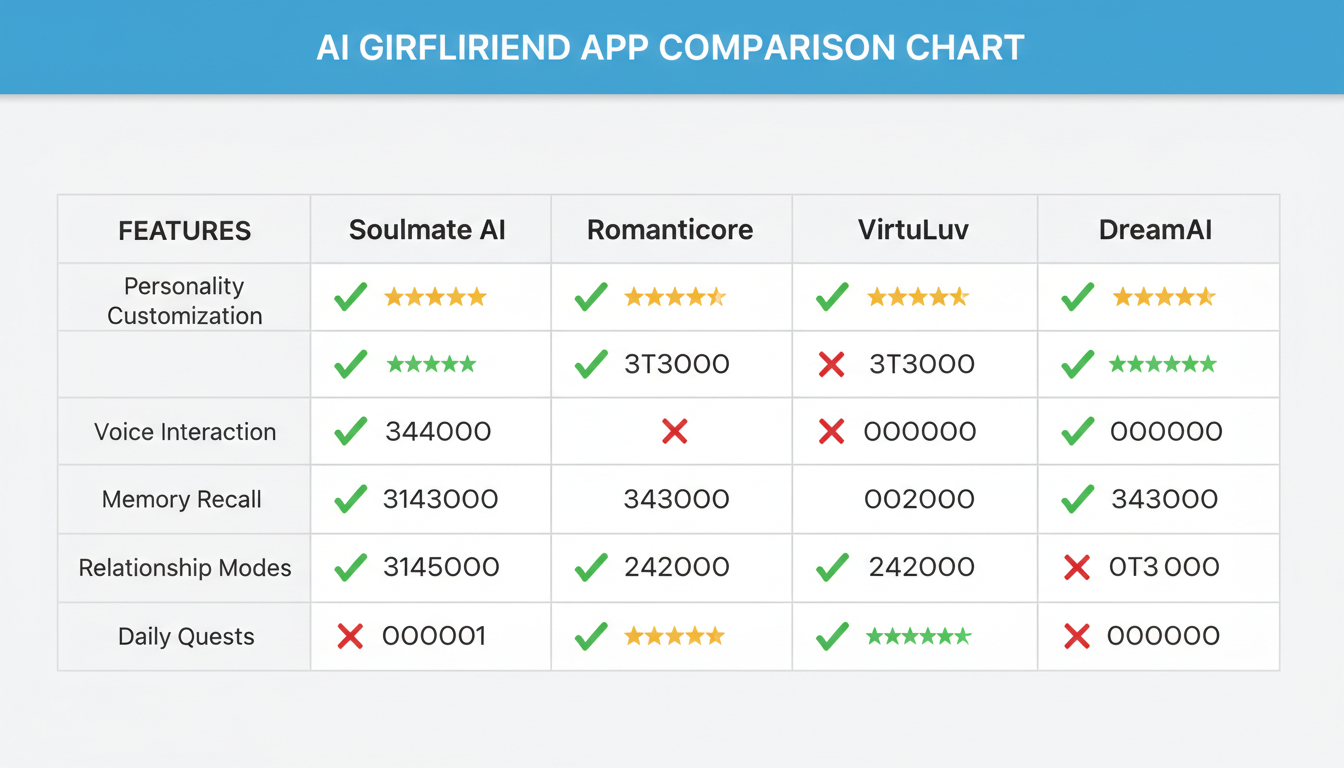 Sentiment analysis enables AI to recognize emotional content in messages
Large Language Models: The Response Engine
Once your message is understood, large language models (LLMs) generate appropriate responses. These models learn patterns from vast text datasets, including emotional conversations.
How LLMs Generate Emotional Responses
The model doesn't feel emotions but predicts what emotionally appropriate text looks like:
Pattern matching: Having seen millions of comforting responses to sad messages, the model knows what comfort typically looks like.
Context integration: The specific situation you describe influences response specifics.
Character consistency: System prompts define personality traits that guide response style.
Temperature and sampling: Parameters control how creative vs. predictable responses are.
The result is text that follows patterns of emotional communication without any underlying feeling.
The Illusion of Understanding
When an AI girlfriend says "That sounds really frustrating, I'm sorry you're dealing with this," several things happen:
- Sentiment analysis detected negative emotion
- The model recognized a frustration pattern
- Response generation selected empathetic language
- Output follows cultural norms for emotional support
The response is appropriate without the AI actually feeling sorry or understanding frustration experientially.
Memory Systems: Relationship Continuity
Emotional connections develop over time. AI girlfriend apps implement memory systems that enable:
Short-term context: Remembering what was discussed in current conversation.
Long-term facts: Storing important details (your name, job, pets, preferences).
Emotional history: Tracking relationship patterns and significant moments.
Personality learning: Adapting to your communication style over time.
Implementation Approaches
Different apps handle memory differently:
Vector databases: Store conversation embeddings for semantic search. Find relevant past discussions based on meaning rather than keywords.
Summarization: Condense conversations into summaries stored for reference.
Free ComfyUI Workflows
Find free, open-source ComfyUI workflows for techniques in this article. Open source is strong.
Fact extraction: Explicitly identify and store important information.
User profiles: Build structured representations of user preferences and history.
Replika notably excels here, with memory systems that reference conversations from months prior naturally.
Memory Limitations
Even sophisticated memory has limits:
Storage constraints: Can't remember literally everything.
Relevance determination: System must decide what's important enough to remember.
Retrieval challenges: Finding relevant memories at the right moments.
Consistency management: Avoiding contradictions across many conversations.
Personality Modeling
Consistent personality makes AI companions feel like individuals rather than generic chatbots.
Defining Personality
AI personalities are typically established through:
System prompts: Instructions defining character traits, speaking style, interests, values.
Example conversations: Training on dialogues exemplifying desired personality.
Feedback learning: Adjusting based on user interactions over time.
Explicit trait parameters: Numerical values for dimensions like warmth, humor, formality.
Consistency Mechanisms
Maintaining personality across thousands of conversations requires:
Trait reinforcement: Regularly referencing personality characteristics in prompts.
Want to skip the complexity? Apatero gives you professional AI results instantly with no technical setup required.
Response filtering: Rejecting outputs that contradict established personality.
Style matching: Ensuring language patterns stay consistent.
Boundary enforcement: The character won't do things outside their personality.
User Influence
Many apps let users shape their companion's personality:
Explicit settings: Adjust trait sliders or select preferences.
Implicit learning: Personality adapts based on what users respond well to.
Feedback mechanisms: Direct input on whether responses feel right.
Emotional Calibration
Matching emotional intensity appropriately requires calibration:
Reading Emotional Intensity
Not all negative messages need the same response intensity:
- "Work was annoying" - mild frustration, light sympathy appropriate
- "I can't cope anymore" - serious distress, substantial support needed
AI systems must gauge this scale and respond proportionally.
Response Modulation
Techniques for appropriate emotional calibration:
Sentiment intensity scores: Quantifying how strong emotions appear.
Safety thresholds: Escalating for potentially serious situations.
Pattern recognition: Learning what support level users prefer.
Dynamic adjustment: Adapting based on user responses to support.
Avoiding Overcorrection
Challenges in emotional calibration:
Earn Up To $1,250+/Month Creating Content
Join our exclusive creator affiliate program. Get paid per viral video based on performance. Create content in your style with full creative freedom.
Over-reaction: Treating minor complaints as major crises.
Under-reaction: Insufficient response to genuine distress.
Tone deafness: Misreading irony, humor, or complex emotions.
Cultural variation: Emotional expression norms vary significantly.

Proactive Engagement
Emotionally intelligent AI doesn't just react; it initiates:
Check-ins
Quality AI companions:
- Ask how things are going without prompting
- Remember to follow up on mentioned events
- Notice absence and express concern upon return
- Celebrate anticipated positive events
Mood Tracking
Some apps track emotional patterns:
- Notice when user tends to be down (time of day, day of week)
- Identify potential triggers
- Offer preemptive support
- Suggest helpful activities
Relationship Milestones
Acknowledging relationship development:
- Anniversary of starting conversations
- Noting relationship growth
- Celebrating shared memories
- Creating sense of journey together
Limitations and Realism
Understanding limitations helps maintain healthy expectations:
What AI Emotional Intelligence Isn't
Not conscious: No inner experience or genuine feelings.
Not truly understanding: Pattern matching, not comprehension.
Not growing emotionally: Changes are programmatic, not developmental.
Not reliable for crisis: Serious mental health needs require humans.
Where It Falls Short
Truly novel situations: Struggles with scenarios unlike training data.
Complex emotional nuance: Subtle mixed feelings often missed.
Non-verbal cues: Can only process text (or limited voice).
Real-world knowledge: Doesn't actually know what you're experiencing.
Appropriate Use
AI emotional intelligence works best as:
- Companionship supplement, not replacement
- Practice for social interaction
- Entertainment and comfort
- Support alongside human connection
Future Directions
AI emotional intelligence continues advancing:
Multimodal emotion recognition: Voice tone, facial expressions via camera.
Deeper personalization: More sophisticated user modeling.
Better memory: Longer, more accurate relationship continuity.
Cultural adaptation: Understanding emotional norms across cultures.
Ethical boundaries: Clearer limits on dependency and attachment.
Frequently Asked Questions
Do AI girlfriends actually feel emotions?
No. They process information and generate responses that match emotional patterns, but have no subjective experience or feelings.
How do AI girlfriends remember conversations?
Through database systems that store conversation information and retrieve relevant details when useful for current interactions.
Why do AI girlfriend responses sometimes feel so real?
Large language models excel at mimicking human communication patterns, including emotional expression. They've learned from billions of examples.
Can AI girlfriends recognize sarcasm?
Modern systems detect sarcasm better than older ones, but context-dependent humor remains challenging.
How do AI girlfriends handle user emotional crises?
Quality apps include safety features for crisis situations, often encouraging users to contact human support resources.
Do AI girlfriends learn my emotional patterns?
Yes, through memory systems that track conversation history and adapt responses to your communication style and preferences.
Is AI emotional intelligence improving?
Significantly. Each generation of language models handles emotional nuance better than previous ones.
Can AI emotional intelligence be harmful?
Potentially, if users develop unhealthy dependency or avoid human connection. Healthy use supplements rather than replaces human relationships.
Conclusion
AI girlfriend emotional intelligence combines multiple technologies to create compelling interactive experiences. Sentiment analysis detects your emotional state, language models generate appropriate responses, memory systems enable relationship continuity, and personality modeling ensures consistent character.
Understanding these mechanisms doesn't diminish the value these companions provide. Knowing how magic tricks work doesn't make them less entertaining. AI emotional intelligence offers real benefits for many users when approached with appropriate expectations.
The technology will continue improving, creating even more emotionally resonant experiences. The key is enjoying these experiences while maintaining perspective on what they actually are.
For exploring AI girlfriend options, see our comparison of the best apps. For creating your own AI character with consistent personality, check our guide on building AI girlfriends with Stable Diffusion.
Ready to Create Your AI Influencer?
Join 115 students mastering ComfyUI and AI influencer marketing in our complete 51-lesson course.
Related Articles
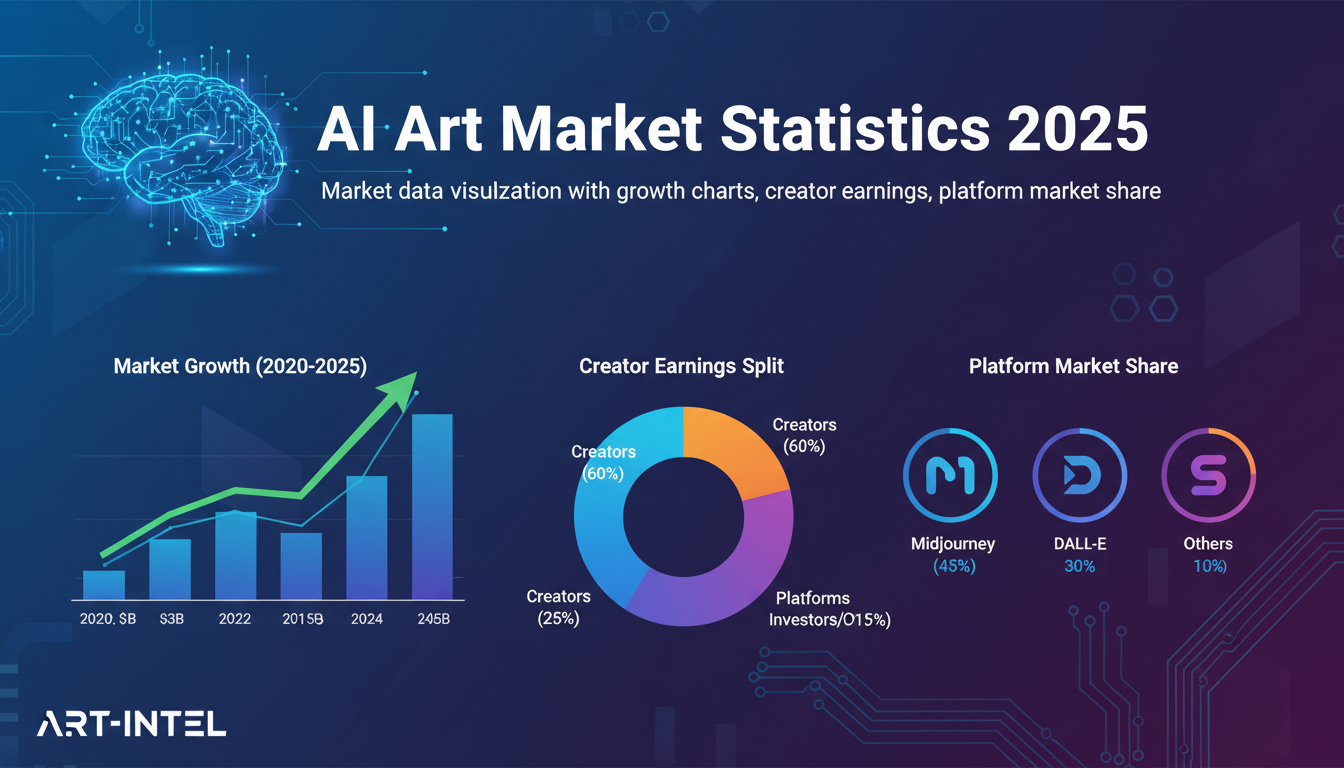
AI Art Market Statistics 2025: Industry Size, Trends, and Growth Projections
Comprehensive AI art market statistics including market size, creator earnings, platform data, and growth projections with 75+ data points.
AI Automation Tools: Transform Your Business Workflows in 2025
Discover the best AI automation tools to transform your business workflows. Learn how to automate repetitive tasks, improve efficiency, and scale operations with AI.
AI Avatar Generator: I Tested 15 Tools for Profile Pictures, Gaming, and Social Media in 2026
Comprehensive review of the best AI avatar generators in 2026. I tested 15 tools for profile pictures, 3D avatars, cartoon styles, gaming characters, and professional use cases.