How to Handle Negative Comments on Your AI Influencer Account: Complete Guide
Learn proven strategies for dealing with haters, trolls, and criticism on your AI influencer account. Turn negative engagement into growth opportunities while protecting your mental health.

Your first hate comment feels personal. Even when you logically know it's directed at a virtual character you created, the criticism stings. Someone calling your AI influencer fake, creepy, or a scam feels like an attack on your work, your creativity, your business.
I still remember the first truly nasty comment on one of my AI influencer accounts. "This is disgusting. AI faces are ruining everything. Delete this account." It made me question whether the entire project was a mistake. That feeling lasted about 24 hours before I realized something important: the comment had actually boosted my engagement metrics.
That paradox is your first lesson in handling negativity. The algorithm doesn't distinguish between positive and negative engagement. Comments are comments. But how you respond determines whether criticism damages your community or strengthens it.
Quick Answer: Negative comments on AI influencer accounts typically fall into three categories: philosophical objections to AI content, quality criticism, and generic trolling. Handle philosophical objections with confident, non-defensive responses. Address quality criticism constructively. Ignore or delete pure trolling. Never argue, never get defensive, and use comment moderation tools proactively. Most importantly, remember that negative comments often boost visibility while rarely affecting follower decisions.
:::tip[Key Takeaways]
- Follow the step-by-step process for best results with handle negative comments on your ai influencer account
- Start with the basics before attempting advanced techniques
- Common mistakes are easy to avoid with proper setup
- Practice improves results significantly over time :::
- The different types of negative comments AI influencers receive
- Response strategies for each type of criticism
- How to use negativity for algorithmic advantage
- Setting up effective comment moderation
- Protecting your mental health while managing criticism
Understanding Why AI Influencers Attract Criticism
AI influencers receive a specific type of criticism that traditional influencers don't encounter. Understanding where this criticism comes from helps you respond appropriately.
Some people have genuine philosophical objections to AI-generated content. They worry about job displacement for real creators, deceptive marketing practices, or the general advance of AI in society. These concerns aren't unreasonable, even if they target your specific account unfairly.
Other critics don't object to AI itself but to perceived quality issues. "The hands look weird." "Her eyes are different in every photo." "This is obviously fake." These are often technically accurate observations, even if harshly delivered.
Then there are generic trolls who attack anything that gains attention. These people would criticize you whether you were an AI influencer, a human creator, or a puppy rescue account. They seek reactions, not dialogue.
Recognizing which category a comment falls into shapes your response strategy completely.
The Three Types of Negative Comments
Let's break down each type in detail because your response approach differs significantly.
Type 1: Philosophical Objections
These comments question the ethics or existence of AI influencers generally:
"AI influencers are killing real creators" "This is so dystopian" "Fake people promoting products is everything wrong with social media" "You're deceiving people" "This shouldn't be allowed"
The commenter isn't attacking your specific content quality. They're objecting to what you represent. These people have thought about their position and believe it genuinely.
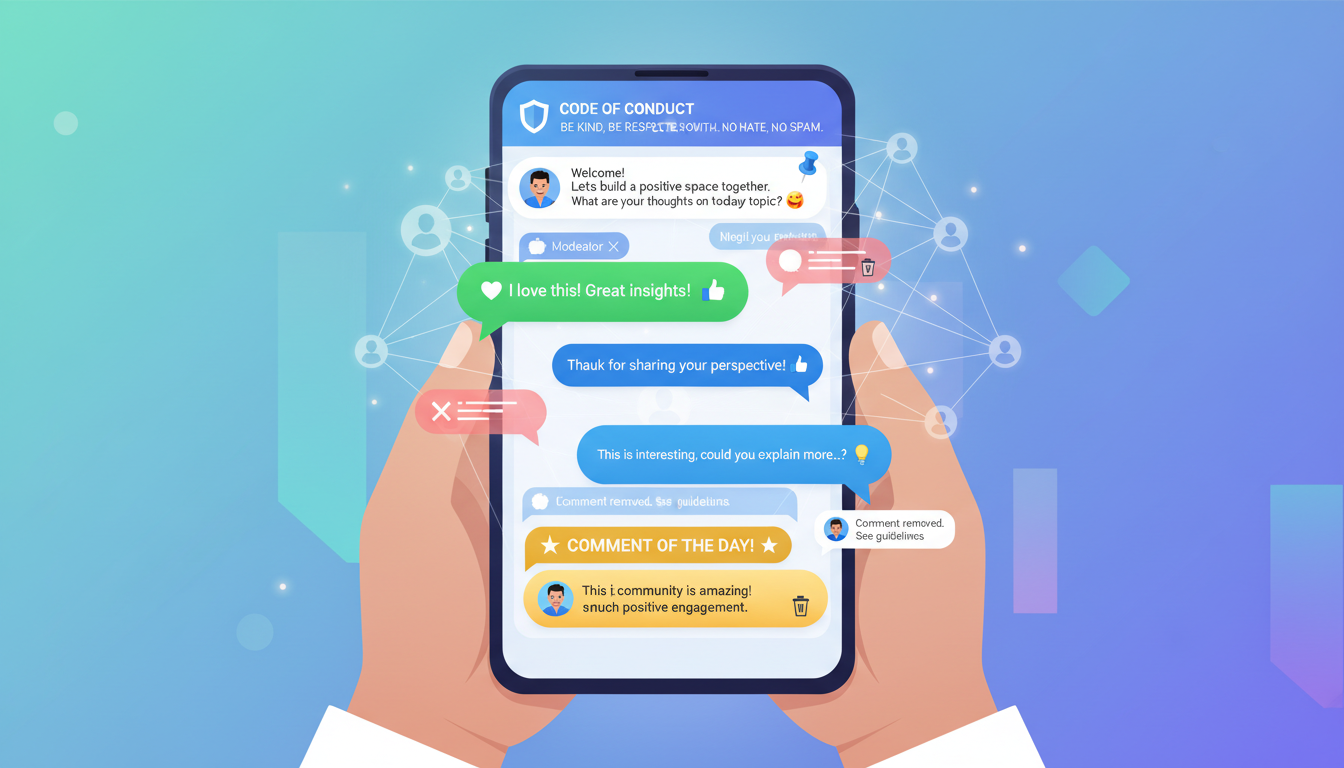 Building a positive community requires understanding different types of criticism.
Type 2: Quality Criticism
These comments address specific aspects of your content:
"Her face looks different in every post" "Those hands are horrifying" "You can tell this is AI from a mile away" "The background doesn't make sense" "This is lazy content"
Quality criticism contains actionable information even when delivered rudely. The commenter noticed something that genuinely affects content perception.
Type 3: Pure Trolling
These comments exist solely to provoke:
"Delete your account" "This is trash" "Who even follows this garbage" "L ratio" "You'll never make it"
Trolls don't offer reasoning or specific complaints. They want reaction. They often post identical comments across many accounts.
Response Strategies by Comment Type
Each type requires a different approach. Responding incorrectly amplifies damage while responding correctly often converts critics into advantages.
Responding to Philosophical Objections
The key here is confident, non-defensive acknowledgment. You're not going to change their mind about AI, and you shouldn't try. But you can demonstrate thoughtfulness that impresses neutral observers.
Ineffective responses:
- Arguing about AI ethics
- Getting defensive about your choices
- Dismissing their concerns as invalid
- Ignoring completely (misses engagement opportunity)
Effective responses:
"I understand the concerns about AI content. I create this as art and entertainment, always focusing on quality and value for my audience. I respect that it's not for everyone."
"Valid perspective! The AI space is evolving quickly and these conversations matter. I try to be thoughtful about the content I create."
"Appreciate you sharing your thoughts. I believe AI can coexist with human creators, each offering something unique. But I understand not everyone agrees."
Notice the pattern: acknowledge validity, state your position calmly, express respect for disagreement, move on. No argument. No defensiveness. No essay-length explanation.
Responding to Quality Criticism
Quality criticism deserves different treatment because it often contains useful information. Even rude delivery can point to real issues.
When the criticism is accurate:
If someone points out legitimate quality problems, acknowledge briefly and privately note the feedback. Don't apologize excessively or validate harsh delivery, but don't pretend the issue doesn't exist.
"Thanks for the feedback, working on improving that!"
"Good eye. Something to focus on in future content."
Then actually address the issue in your generation process. Use Apatero to generate higher-quality content addressing the specific criticism. Better results over time silence quality critics.
When the criticism is exaggerated:
Sometimes critics claim issues that aren't as severe as stated. They might claim AI content is "obviously fake" when most followers don't notice or care.
"Appreciate the perspective! Most of my followers seem to enjoy the content, but I'm always working to improve."
"I see it differently, but thanks for sharing your view."
Don't argue about whether AI content looks real. You won't win, and the argument itself draws attention to the artificial nature you'd rather downplay.
Responding to Pure Trolling
The correct response to pure trolling is usually no response at all. Trolls seek engagement. Denying it frustrates them and removes their incentive.
However, sometimes trolling provides engagement opportunity:
Humor responses work when they're genuinely funny without being mean: "Thanks for the engagement boost!" (casual acknowledgment that comments help you) "Your enthusiasm is noted" (deadpan non-response)
Delete and move on when comments are truly toxic, profane, or could affect other followers' experience.
Block without response for repeat offenders or particularly vicious attackers.
Never argue with trolls. Never explain yourself to trolls. Never show that trolling affects you. Emotional responses are exactly what they want.
The Engagement Paradox
Here's what many creators don't realize: negative comments often boost your content. The algorithm measures engagement, not sentiment. A post with 50 comments including 20 negative ones often outperforms a post with 30 purely positive comments.
Controversial content, including AI influencer content that sparks debate, triggers discussion. Discussion signals relevance to the algorithm. Relevance increases distribution. Distribution brings new followers.
Some successful AI influencer accounts actually benefit from haters. The criticism draws attention, sparks defense from fans, generates comment threads, and ultimately expands reach.
This doesn't mean you should court controversy or encourage hate. But it means you shouldn't fear it either. Negative comments are a sign that you're reaching people, not that you're failing.
 Engaged communities form around AI influencers who handle criticism gracefully.
Setting Up Comment Moderation
Proactive moderation prevents problems before they spiral. Every major platform offers moderation tools you should use.
Keyword Filtering
Set up keyword filters for terms you don't want appearing in comments:
- Profanity and slurs
- Specific attack terms used against AI content
- Competing account mentions or spam indicators
Instagram, TikTok, and YouTube all offer customizable keyword blocking. Use it.
Comment Management Strategy
Hide vs. delete: Most platforms let you hide comments without deleting them. Hidden comments remain visible to the commenter (so they don't know they're hidden) but invisible to everyone else. This often works better than deletion, which may prompt angry re-posting.
Restrict users: Problem users can be restricted so their comments only appear to themselves. They think they're engaging; no one else sees it.
Block sparingly: Blocking should be reserved for genuine harassment, not just criticism. Over-blocking makes you look thin-skinned and can become its own controversy.
Moderation Timing
Check comments within the first hour of posting. Early comment tone often sets the trajectory for discussion. A few positive responses early creates different dynamics than letting negative comments dominate initially.
Don't obsessively monitor comments all day. Check at posting, then 2-3 scheduled times. Constant checking increases stress without improving outcomes.
Building a Defensive Community
Your followers are your best defense against negativity. A strong community moderates itself.
Cultivating Defenders
When followers defend you against critics, they strengthen their own commitment to your account. This psychological principle means you benefit from criticism that prompts defense.
Encourage community through:
- Regularly engaging positively with supportive comments
- Creating content that invites community participation
- Acknowledging and appreciating loyal followers
- Building shared identity among your audience
When your community defends you, don't immediately intervene. Let the conversation play out. Step in only when things get toxic or personal against other followers.
Training Response Norms
Your followers learn from how you respond. Graceful, confident responses to criticism train your community to respond similarly. Defensive, argumentative responses normalize drama.
Model the behavior you want in your community. Stay calm, stay confident, stay kind but firm. Your community will mirror this energy.
Protecting Your Mental Health
Managing an AI influencer means managing human psychology, including your own. Criticism affects creators even when directed at virtual characters.
Separating Identity from Content
Your AI influencer isn't you. The criticism isn't about you personally. This seems obvious intellectually but can be difficult emotionally.
Create mental separation by:
- Using distinct language: "My character received criticism" vs "I was attacked"
- Managing the account through systems and schedules, not constant personal attention
- Remember that you're running a business, not seeking personal validation
Healthy Engagement Limits
Set boundaries around engagement:
- Specific times for checking and responding to comments
- Never reading comments immediately before sleep
- Avoiding comment sections on days you're already stressed
- Taking complete breaks from the account periodically
Successful AI influencer management is a marathon, not a sprint. Burning out over early criticism helps no one.
Perspective Maintenance
When criticism feels overwhelming:
Look at the numbers. A post with 100 comments where 10 are negative still has 90% positive engagement. Our brains focus on the negative; the numbers tell a different story.
Review your progress. Compare current growth to where you started. Criticism usually increases alongside success. More reach means more critics, but also more fans.
Remember your goals. Why did you start this? Are those goals still being served despite the criticism? Usually, yes.
Talk to other creators. Everyone managing AI influencers deals with similar criticism. Community support helps normalize the experience.
When to Take Criticism Seriously
Not all criticism should be dismissed. Some signals warrant genuine reflection:
Consistent feedback patterns: If multiple unrelated people make the same criticism, it's probably valid. Random trolls don't coordinate.
Quality degradation indicators: If criticism correlates with decreased engagement, the audience may be sending a real message.
Ethical boundary concerns: Some criticism might identify genuine problems with your content approach that deserve consideration.
Platform policy issues: Criticism suggesting you're violating platform rules should trigger policy review.
The skill is distinguishing actionable signal from noise. Most negativity is noise. The occasional signal matters.
Advanced Techniques
Once you've mastered basics, these approaches can turn criticism into advantage:
Strategic Engagement
Some creators deliberately engage with critics in ways that demonstrate authority and confidence:
"You're right, this is AI-generated content. And people love it! I'm proud of what I create."
This judo-move approach acknowledges truth, projects confidence, and often disarms critics who expected defensiveness.
Content From Criticism
Create content addressing common criticisms:
"People always comment about AI influencer hands, so let me explain why they look that way and how I'm improving..."
This content performs well because it addresses topics people are curious about while demonstrating transparency.
The Transparency Play
Some AI influencer accounts embrace their artificial nature openly. This preemptively defuses authenticity criticism:
"Yes, I'm an AI influencer. I'm also entertaining, valuable, and apparently worth following. Thanks for being here!"
This approach doesn't work for all positioning strategies but eliminates entire categories of criticism when it fits.
Creating Comment Policies
Consider posting creative community guidelines:
"This community welcomes genuine discussion and diverse perspectives. Constructive criticism helps me improve. Pure negativity without substance will be removed. Thanks for keeping this space positive!"
Clear policies give you justification for moderation and set expectations for followers.
Your Action Plan
Start implementing these strategies now:
Immediate: Review and set up keyword filters on all platforms. Create your moderation schedule.
This week: Audit recent negative comments and categorize them. Are they philosophical, quality, or trolling? Respond appropriately to any unanswered ones worth engaging.
Ongoing: Build community by engaging positively with supporters. Model the response behavior you want from followers.
Monthly: Review criticism patterns for actionable feedback. Adjust content quality where legitimate issues emerge.
Negative comments aren't a sign of failure. They're a sign that your AI influencer is reaching people, including people who don't immediately love what you're doing. Handle them with confidence, use them for algorithmic advantage, and keep building your audience. The haters won't matter once you're successful.
FAQ
Should I reveal that I'm running an AI influencer when criticized for being fake?
Depends on your positioning strategy. If you've been transparent, acknowledge confidently. If you haven't addressed it, you can respond without confirming or denying. What matters is not getting defensive.
How do I handle it when criticism goes viral?
Stay calm. Don't respond in the heat of the moment. Viral criticism often passes quickly and rarely damages accounts long-term if you don't amplify it yourself. If response seems necessary, be brief, confident, and non-defensive.
What if criticism is technically accurate about AI generation flaws?
Acknowledge briefly and privately improve your process. Don't argue about whether obvious flaws exist. Use Apatero to generate higher quality content going forward.
Should I turn off comments entirely?
No. Comments drive engagement which drives reach. Turning them off eliminates both negative AND positive engagement, hurting your growth. Better to moderate actively.
How do I stop criticism from affecting my motivation?
Develop systems for managing the account that don't require constant personal attention. Focus on metrics that matter (growth, engagement, revenue) rather than individual comments. Remember why you started and maintain perspective on progress.
What if someone threatens to "expose" my AI influencer?
This threat only has power if you've been deceptive. If you've been honest or simply not addressed the topic, there's nothing to expose. Respond calmly or not at all depending on the specifics.
Reuse a character reference
Save a character as a Soul and put them in any scene, image or video, without retraining anything. Check your welcome allowance and the displayed cost before generating.
Related Articles

5 Proven AI Influencer Niches That Actually Make Money in 2025
Discover the most profitable niches for AI influencers in 2025. Real data on monetization potential, audience engagement, and growth strategies for virtual content creators.

AI Background Replacement: Professional Guide 2025
Master AI background replacement for professional results. Learn rembg, BiRefNet, and ComfyUI workflows for smooth background removal and replacement.
AI Character Consistency: How to Maintain Virtual Persona Identity Across Content
Learn techniques for maintaining AI character consistency across hundreds of images. Master the art of creating recognizable virtual personas with consistent visual identity.