Z-Image Troubleshooting - Complete Guide to Fixing Common Issues 2025
Fix all common Z-Image Turbo problems including model loading, VRAM errors, quality issues, and workflow problems. Complete troubleshooting guide with solutions.
Z-Image Turbo delivers incredible results when everything works, but setup and configuration issues can derail your workflow. This comprehensive troubleshooting guide covers every common Z-Image problem with tested solutions to get you generating again quickly.
Quick Answer: Most Z-Image issues stem from incorrect file placement, outdated ComfyUI versions, VRAM limitations, or parameter misconfiguration. This guide covers model loading failures, memory errors, quality problems, and workflow issues with step-by-step solutions.
- Model loading issues usually mean wrong file locations or names
- VRAM errors require resolution reduction or memory optimization
- Quality problems often trace to incorrect parameters
- Negative prompts don't work - this is expected behavior
- Update ComfyUI if nodes aren't recognized
Model Loading Issues
The most common Z-Image problems involve getting the model to load correctly.
Issue: Model Not Found or Won't Load
Symptoms: ComfyUI shows "model not found" errors. Dropdown menus don't show Z-Image options. Workflow fails at model loading step.
Solutions:
Check File Locations:
Z-Image requires three specific files in specific directories.
| File | Correct Location |
|---|---|
| z_image_turbo_bf16.safetensors | ComfyUI/models/diffusion_models/ |
| qwen_3_4b.safetensors | ComfyUI/models/text_encoders/ |
| ae.safetensors | ComfyUI/models/vae/ |
Verify each file is in its correct folder. The diffusion_models folder may not exist by default - create it if needed.
Check File Names:
Ensure files are named exactly as expected. Some downloads add version numbers or suffixes. Rename to match expected names exactly.
Restart ComfyUI:
After placing files, fully restart ComfyUI. The application scans model directories at startup, not during runtime.
Issue: Text Encoder Loading Fails
Symptoms: Errors mentioning qwen or text encoder. Partial model loading with encoding failures.
Solutions:
The Qwen text encoder is a separate download from the main model. Verify qwen_3_4b.safetensors exists in text_encoders folder. Check file isn't corrupted by comparing file size to official specs. Re-download if size doesn't match.
Issue: VAE Errors
Symptoms: Generation completes but images are garbled. Color errors or noise patterns in output.
Solutions:
Verify ae.safetensors is in the vae folder. Ensure you're using Z-Image's specific VAE, not a generic one. Check VAE connection in your workflow nodes.
VRAM and Memory Issues
Z-Image requires adequate VRAM, and limitations cause predictable problems.
Issue: Out of Memory / CUDA Errors
Symptoms: CUDA out of memory errors. System crashes during generation. Extremely slow generation with disk thrashing.
Solutions:
Reduce Resolution:
| VRAM | Maximum Recommended Resolution |
|---|---|
| 8GB | 512x512 |
| 12GB | 768x768 |
| 16GB | 1024x1024 |
| 24GB+ | 1024x1024+ |
Enable Memory Optimizations:
In ComfyUI settings, enable "Use split cross attention" and "Use tiled VAE." These reduce peak VRAM usage at slight speed cost.
Close Other Applications:
GPU memory shared with other apps reduces available VRAM. Close browsers, games, and other GPU-using applications.
Use GGUF Version:
For systems with limited VRAM, use the GGUF quantized version of Z-Image. Quality remains high while memory requirements drop significantly.
Issue: Generation Very Slow
Symptoms: Minutes per image instead of seconds. System becomes unresponsive during generation.
Solutions:
Slow generation often indicates VRAM swapping. Try lower resolution. Enable memory optimizations. Consider that first generation is always slower due to model loading.
For users with persistent VRAM limitations, Apatero.com provides cloud-based Z-Image access without local hardware constraints.
Quality and Output Issues
Generation completes but results aren't as expected.
Issue: Poor Image Quality
Symptoms: Blurry or low-detail outputs. Images don't match prompt well. Obvious artifacts or distortions.
Solutions:
Check Step Count:
Z-Image Turbo is optimized for 8 steps. More steps don't help and may hurt. Fewer steps produce incomplete results.
Check CFG Scale:
Use CFG 4-6 for Z-Image Turbo. Higher values cause artifacts. Lower values reduce prompt adherence.
Check Resolution:
Generate at 1024x1024 (native resolution) for best quality. Non-square aspect ratios should maintain similar total pixel count.
Issue: Negative Prompts Don't Work
Symptoms: Negative prompt content still appears in images. No difference with or without negative prompts.
This Is Expected Behavior:
Z-Image Turbo is a distilled model that doesn't support negative prompts. The distillation process removes the guidance mechanism that enables negative prompting.
Workaround:
Use detailed positive prompts describing exactly what you want. Avoid implying unwanted content. Use inpainting to fix specific elements after generation.
Issue: Text Rendering Problems
Symptoms: Text in images is garbled or wrong. Characters are malformed. Text appears artificial.
Solutions:
Z-Image's text rendering is generally good but not perfect. Specify exact text content in prompts. Keep text short and simple. Use inpainting to refine text areas. Consider post-processing text separately.
Issue: Color or Style Inconsistency
Symptoms: Colors vary between generations. Style doesn't match expectations. Inconsistent results from same prompt.
Solutions:
Use fixed seeds for reproducibility. Include detailed style descriptions in prompts. Consider that Z-Image interprets prompts with some variation - this is normal for generative models.
Workflow and Node Issues
Problems with ComfyUI workflow configuration.
Issue: Nodes Not Recognized
Symptoms: Red nodes in workflow. "Node type not found" errors. Workflow won't execute.
Solutions:
Update ComfyUI:
Z-Image support requires recent ComfyUI versions. Update to the latest release. Consider using Nightly builds for newest features.
Check Node Names:
Z-Image uses specific node types. Ensure workflow uses correct Z-Image nodes, not generic alternatives.
Issue: Workflow Connection Errors
Symptoms: Cannot connect certain nodes. Type mismatch errors. Workflow logic seems correct but fails.
Solutions:
Verify data type compatibility between connected nodes. Z-Image uses specific latent and conditioning formats. Use Z-Image-specific nodes throughout the workflow where applicable.
Issue: Batch Processing Fails
Symptoms: Single images work but batches fail. Memory errors during batch. Inconsistent batch results.
Solutions:
Reduce batch size - start with 2 and increase gradually. Enable memory optimizations for batch processing. Verify VRAM can handle batch_size multiplied by per-image requirement.
LoRA Integration Issues
Problems when using LoRAs with Z-Image.
Issue: LoRA Not Affecting Output
Symptoms: LoRA loaded but no visible effect. Output looks like base model only.
Solutions:
Use Z-Image-De-Turbo variant for LoRA compatibility. Increase LoRA strength (try 0.8-1.0). Verify LoRA was trained for Z-Image or compatible architecture.
Issue: LoRA Causes Artifacts
Symptoms: Strange artifacts when LoRA applied. Quality degradation with LoRA.
Solutions:
Reduce LoRA strength (try 0.5-0.7). Verify LoRA compatibility with Z-Image. Some LoRAs trained for other models may not work well.
Frequently Asked Questions
Why does Z-Image give different results than examples?
Seeds, prompts, and exact parameter values all affect results. Match all settings exactly to reproduce example outputs.
Can I use Z-Image with ControlNet?
Yes, Z-Image works with ControlNet for guided generation. Use compatible ControlNet models and appropriate preprocessing.
Why is my first generation always slow?
Model loading happens on first generation. Subsequent generations are faster as models remain in memory.
How do I update Z-Image when new versions release?
Download new model files and replace existing ones. Restart ComfyUI after replacing files.
Can I run Z-Image on CPU?
Technically possible but impractically slow. GPU acceleration is effectively required for usable generation times.
Why do some prompts work better than others?
Z-Image has specific training that responds to certain prompt styles better. Experiment and note what works for your use cases.
How do I report Z-Image bugs?
Check the official GitHub repository for issue reporting. Include ComfyUI version, model versions, and reproduction steps.
Does Z-Image work on Mac/AMD?
Support varies by platform. Check current compatibility documentation for your specific hardware configuration.
Conclusion
Most Z-Image issues have straightforward solutions once you understand the common causes. Proper file placement, appropriate parameter settings, and adequate hardware resources resolve the majority of problems.
Quick Reference:
Model won't load - check file locations and names. Out of memory - reduce resolution, enable optimizations. Poor quality - verify steps (8) and CFG (4-6). Negative prompts ineffective - expected behavior, use positive prompting.
Still Stuck:
If issues persist after trying these solutions, check the official ComfyUI documentation and community forums. New issues and solutions emerge as the software evolves.
For users wanting Z-Image results without troubleshooting complexity, Apatero.com provides managed access to similar capabilities through optimized cloud infrastructure.
Getting past initial setup hurdles unlocks Z-Image's exceptional generation capabilities. The troubleshooting investment pays off in fast, high-quality photorealistic generation.
Some models you cannot download at any VRAM
Veo, Kling and Nano Banana have closed weights. There is no local build, no quantization, no 24GB workaround. Run them in the browser instead. Check current model access and generation costs in the app.
Related Articles
25 ComfyUI Workflow Tips: Settings and Review
Explore ComfyUI workflow organization, settings and output review, with a blank worksheet for comparing performance on your own setup.
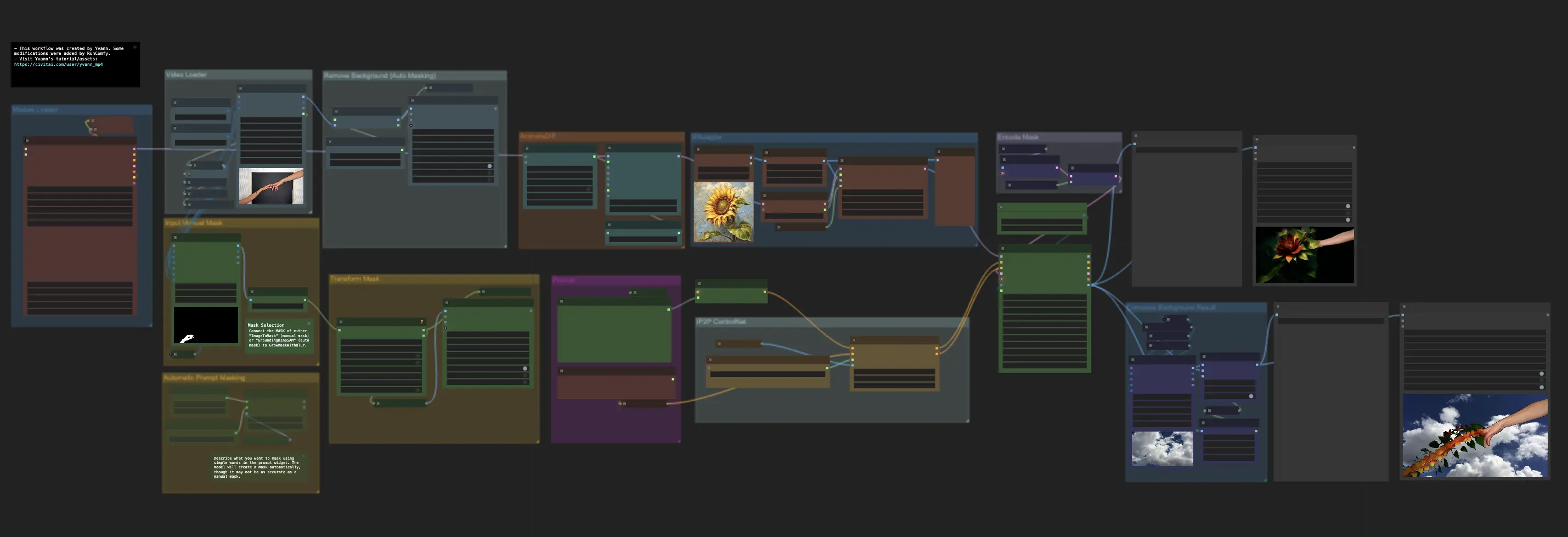
7 ComfyUI Custom Nodes That Should Be Built-In (And How to Get Them)
Essential ComfyUI custom nodes every user needs in 2025. Complete installation guide for WAS Node Suite, Impact Pack, IPAdapter Plus, and more...
ADetailer Single Character Focus - How to Target Specific Faces in Multi-Character Images 2025
Master ADetailer and FaceDetailer to focus on single characters in multi-person images. Complete guide to targeting specific faces with different prompts in ComfyUI.