Using Style LoRA with Z-Image for Consistent Video Generation
Learn how style LoRAs maintain visual consistency in Z-Image video generation creating cohesive aesthetics across frames and scenes
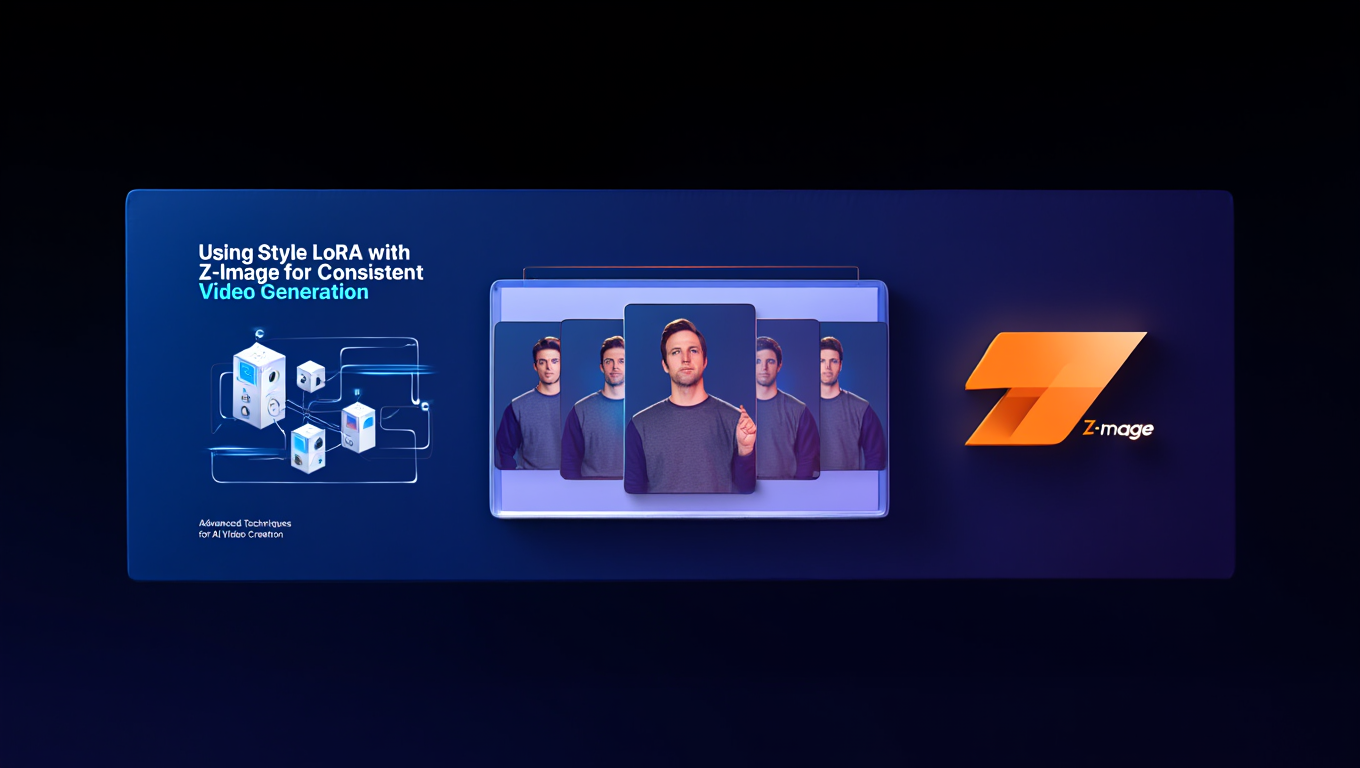
Visual consistency separates amateur AI video from professional content. When every frame looks like it belongs to the same world with the same aesthetic language, viewers engage with the content rather than getting distracted by jarring style shifts. Style LoRAs combined with Z-Image provide one of the most effective methods for achieving this consistency across video generation.
Quick Answer: Style LoRAs maintain visual consistency in Z-Image video generation by enforcing uniform color palettes, texture characteristics, and artistic treatments across all generated frames, creating cohesive video that looks professionally produced.
- Style LoRAs enforce consistent aesthetics across video frames
- Proper LoRA strength balancing prevents style from overwhelming content
- Color palette consistency improves dramatically with style LoRAs
- Texture and detail characteristics remain uniform throughout videos
- Multiple style LoRAs can combine for layered aesthetic control
The challenge with AI video generation isn't producing individual good-looking frames. It's making those frames look like they belong together. Without style enforcement, frame-to-frame variations in lighting interpretation, color rendering, and texture details create a flickering, inconsistent appearance that screams "AI generated." Style LoRAs solve this problem directly.
Why Does Style Consistency Matter in Video?
The Human Perception Factor
Human visual perception excels at detecting inconsistency. We evolved to notice when something doesn't quite fit its surroundings. This survival mechanism works against AI video that hasn't been properly consistency-managed. Viewers immediately sense something is wrong even when they can't articulate what.
Frame-to-frame style variation triggers this detection mechanism. A character's skin might render slightly more saturated in one frame. Lighting might interpret differently across a scene. Textures might shift between smooth and detailed. Each variation is small, but cumulative effect screams artificial.
Professional video maintains absolute consistency in these elements. Color grading applies uniformly. Lighting physics follow predictable rules. Material properties stay constant. Style LoRAs help AI generation achieve these same professional standards.
What Varies Without Style LoRAs
Understanding what goes wrong helps appreciate what style LoRAs fix. Without style enforcement, Z-Image generates each frame with slight interpretive freedom that creates problematic variation.
Color interpretation shifts between frames. The same "blue sky" prompt might render slightly greener in frame 100 than frame 1. These shifts accumulate into noticeable color instability across video duration.
Texture rendering varies in detail level. One frame might generate highly detailed skin texture while the next simplifies it. This creates an unsettling pulsing effect in video playback.
Lighting response changes how surfaces react to light sources. Specular highlights might be sharper in some frames than others. Shadows might vary in edge softness.
Artistic interpretation of the base prompt can drift. Even identical prompts produce slightly different aesthetic choices across frames without style enforcement.
How Style LoRAs Create Consistency
Style LoRAs work by adding trained aesthetic preferences to the generation process. The LoRA learned a specific way of rendering colors, textures, and artistic elements from its training data. When applied during generation, it enforces those learned preferences across all frames.
The key insight is that style LoRAs constrain variation. Normal generation allows the model to make independent aesthetic choices for each frame. Style LoRAs narrow the range of acceptable choices to those matching the trained style. This constraint is exactly what video consistency requires.
Because every frame passes through the same style LoRA influence, aesthetic choices remain uniform. The "fingerprint" of the style LoRA appears in every generated frame, creating the visual coherence that makes video look professionally produced.
How Do You Choose the Right Style LoRA?
Matching Style to Content
The most effective style LoRAs complement your content rather than fighting against it. A cinematic realism LoRA works great for live-action style content but might struggle with anime characters. Match your style LoRA to your content goals.
Consider your prompt language alongside style LoRA selection. If your prompts emphasize photorealism, choose style LoRAs trained on photorealistic content. Prompts describing anime aesthetics pair better with anime-trained style LoRAs.
Test style LoRAs with representative prompts before committing to video generation. Generate a few still images using your planned prompts with candidate style LoRAs. Evaluate whether the style enhances or conflicts with your content intentions.
Evaluating Style LoRA Quality
Not all style LoRAs work equally well for video consistency. Some introduce their own inconsistencies or interact poorly with Z-Image's video generation characteristics.
Strong style LoRAs show clear, recognizable style influence at multiple strength levels. They should produce their target aesthetic at 0.3 strength while maintaining that aesthetic coherently through 1.0 strength.
Video-friendly style LoRAs maintain consistency when applied across multiple generated frames. Test by generating several frames with identical prompts and seeds, then compare for style consistency.
Z-Image compatible style LoRAs work well with Z-Image's architecture specifically. Some style LoRAs trained on different architectures may produce unexpected results with Z-Image.
Popular Style LoRA Categories
Different style LoRA categories serve different consistency needs:
Cinematic style LoRAs provide film-look color grading, depth of field characteristics, and professional lighting interpretation. Excellent for realistic video content.
Anime style LoRAs enforce anime-specific rendering including cel shading, flat colors, and characteristic eye/face rendering. Essential for consistent anime video.
Artistic style LoRAs apply specific artist styles or artistic movement characteristics. Useful for stylized content with consistent artistic vision.
Technical style LoRAs focus on technical rendering characteristics like detail level, sharpness, and texture handling rather than artistic style.
What Settings Optimize Style LoRA Consistency?
LoRA Strength Calibration
Style LoRA strength directly affects consistency intensity. Higher strength produces more consistent style but may override prompt content. Lower strength allows more prompt flexibility but reduces consistency enforcement.
Start testing at 0.5 strength for new style LoRAs. This provides moderate style influence while maintaining prompt adherence. Increase toward 0.7-0.8 for stronger consistency. Decrease toward 0.3-0.4 if style overwhelms content.
Document optimal strength settings for each style LoRA you use regularly. Different style LoRAs behave differently at the same strength settings. Your cinematic LoRA might work best at 0.6 while your anime LoRA needs 0.75.
Combining Style LoRAs with Z-Image Turbo
When using both a style LoRA and Z-Image Turbo LoRA, load order and relative strengths matter. The interaction between LoRAs affects final output.
Standard practice loads Z-Image Turbo first, then style LoRAs. This applies speed optimization at the base level, then style on top. Reversed order can produce different results.
Reduce individual LoRA strengths when combining multiple LoRAs. Two LoRAs at 0.8 strength each may overwhelm the generation. Try 0.6 for Z-Image Turbo and 0.5 for your style LoRA as a starting point.
Monitor for quality degradation when stacking LoRAs. Some combinations work synergistically while others conflict. Test each combination before committing to production use.
CFG Scale Interaction
CFG scale affects how strongly prompts guide generation. This interacts with style LoRA influence in ways that affect consistency.
Higher CFG makes prompts more influential relative to style LoRA. If your style seems weak, try lowering CFG rather than increasing LoRA strength. This often produces more natural-looking results.
Lower CFG lets style LoRA exert more influence. This can strengthen consistency but may cause prompts to feel ignored. Balance CFG and LoRA strength together.
Typical video workflows use CFG 6-8 with style LoRAs. This provides reasonable prompt adherence while allowing style LoRA influence.
Prompt Strategies for Style Consistency
Prompts can reinforce or undermine style LoRA consistency. Strategic prompt writing amplifies style LoRA effectiveness.
Avoid conflicting style descriptions in prompts when using style LoRAs. If your style LoRA produces warm color grading, don't prompt for "cool blue tones." The conflict creates inconsistent results.
Reinforce style characteristics in prompts when possible. If using a cinematic LoRA, prompt language like "film lighting" or "cinematic composition" reinforces the LoRA's training.
Maintain consistent prompt structure across video frames. Dramatic changes in prompt language can introduce variation that fights against style consistency.
How Do Style LoRAs Affect Different Content Types?
Character-Focused Content
Characters benefit dramatically from style LoRA consistency. Skin rendering, facial features, and clothing textures maintain uniform appearance throughout video.
Without style LoRAs, character skin might render porcelain-smooth in one frame and textured in the next. Hair might shift between detailed strands and smooth masses. These variations disturb character believability.
Style LoRAs enforce consistent character rendering rules. Whatever approach the style LoRA learned for skin, hair, and features applies uniformly across all frames. Characters look like themselves throughout the video.
Environmental and Scenic Content
Environments need consistent atmospheric rendering that style LoRAs provide. Lighting, fog, depth haze, and material properties maintain their character throughout panning shots or scene development.
Sky rendering particularly benefits from style consistency. Cloud formation, sky color gradient, and atmospheric haze vary significantly without style enforcement. Style LoRAs maintain believable, consistent sky across environmental sequences.
Architectural and natural elements maintain material consistency. Stone looks like the same stone throughout. Water reflects and refracts consistently. Trees and foliage render with uniform detail level.
Action and Motion Content
Motion sequences demand consistency during the most challenging generation scenarios. Style LoRAs help maintain aesthetic unity even when motion introduces additional variation sources.
Motion blur rendering stays consistent with style LoRAs active. The characteristic way the style LoRA handles blur applies uniformly across fast-moving content.
Impact effects, particles, and other motion-related elements maintain style coherence. Explosions, water splashes, and debris follow consistent aesthetic rules.
Transition and Scene Change Content
Scene transitions present unique consistency challenges. Moving between different content while maintaining aesthetic unity requires strong style enforcement.
Style LoRAs bridge content changes with uniform aesthetic treatment. A daytime scene and nighttime scene look like they belong in the same production because the same style LoRA influences both.
Color grading consistency through transitions feels professional. Without style LoRAs, color character might shift dramatically between scenes. Style enforcement maintains unified color language.
What Challenges Arise with Style LoRA Consistency?
Style-Content Conflict
Some content naturally conflicts with chosen style LoRAs. The style might not include appropriate treatment for your specific subject matter.
Recognize when conflicts exist rather than forcing incompatible combinations. If your cinematic LoRA makes cartoon characters look uncanny, choose a different style approach rather than fighting the conflict.
Test edge cases in your content before production. If your video will include unusual elements, verify the style LoRA handles them acceptably.
Over-Consistency Problems
Very strong style enforcement can make all content look identical. Different scenes that should have distinct moods might render with the same aesthetic treatment.
Intentional variation requires careful style LoRA management. Reduce strength in scenes that need to feel different. Consider using different style LoRAs for sequences with intentionally different moods.
Balance consistency with appropriate variation. Complete uniformity might feel artificial in productions that span different locations or times.
Temporal Artifacts
Some style LoRAs introduce temporal artifacts in video that don't appear in still images. Flickering, pulsing, or oscillating elements might emerge during video generation.
Test style LoRAs with video output specifically, not just still frames. Generate short test clips before committing to full production.
If temporal artifacts appear, try different style LoRAs or adjust strength settings. Some artifacts disappear at different strength levels.
Combining Multiple Styles
Projects sometimes require different style treatments for different elements. Combining multiple style LoRAs creates complexity that requires careful management.
Prioritize which style matters most when LoRAs conflict. If your character LoRA and environmental LoRA suggest different aesthetic treatments, decide which takes precedence.
Consider separate generation passes for elements with different style needs. Generate characters and backgrounds with different style LoRAs, then composite in post-processing.
How Do You Build Effective Style LoRA Workflows?
Testing and Validation
Build testing into your workflow before production generation. Verify style LoRA compatibility and consistency with your specific content.
Generate test grids showing multiple prompts with the same style LoRA. Evaluate whether style remains consistent across varied content.
Create test videos covering representative scenes from your planned production. Identify any problem areas before committing to full generation.
Documentation and Reproducibility
Document style LoRA settings that produce good results. Record LoRA names, strengths, CFG values, and other parameters for successful configurations.
Save workflow templates with proven style LoRA configurations. Loading tested templates ensures consistency across production sessions.
Note any compatibility issues or special handling required for specific style LoRAs. This documentation saves time when returning to previously used styles.
Quality Control Integration
Build style consistency checks into your review process. Evaluate generated content specifically for style uniformity, not just general quality.
Compare frames from different parts of videos against each other. Style elements should match even when content differs.
For users who want consistent style without managing complex LoRA configurations, Apatero.com provides style-controlled generation through simplified interfaces. The platform handles style consistency internally while delivering professional results.
Frequently Asked Questions
Do style LoRAs work with all Z-Image versions?
Most style LoRAs work with current Z-Image versions, but compatibility varies. Test style LoRAs with your specific Z-Image version before production use. LoRAs trained on very different architectures may not work as expected.
How many style LoRAs can I combine?
Technically unlimited, but practically 2-3 style LoRAs represents a reasonable maximum. Each additional LoRA reduces individual influence and increases conflict potential. Start simple and add complexity only when needed.
Does style LoRA strength need to change across a video?
Constant strength throughout most videos produces best consistency. Only vary strength when you intentionally want style intensity to change, such as dream sequences or stylistic transitions.
Can I train my own style LoRA for consistency?
Yes, training custom style LoRAs provides maximum control over consistency characteristics. Tools like Musubi Tuner support style LoRA training specifically for video consistency use cases.
Do style LoRAs increase generation time?
LoRAs add minimal overhead to generation time. The consistency benefits far outweigh the small speed impact. Combining many LoRAs may accumulate noticeable slowdown.
How do style LoRAs interact with prompts?
Style LoRAs influence how prompts render visually without changing what the prompts request. A "red car" renders as a red car regardless of style LoRA, but the specific shade of red and rendering treatment comes from the style.
What if my style LoRA doesn't match my content type?
Choose a different style LoRA better matched to your content. Forcing mismatched style onto content produces poor results regardless of settings.
Can style LoRAs fix inconsistent existing video?
Style LoRAs work during generation, not post-processing. To apply style consistency to existing video, run it through a video-to-video workflow with style LoRA active.
Conclusion
Style LoRAs transform Z-Image video generation from technically impressive but visually inconsistent output into professionally coherent video content. The consistency they enforce across frames makes the difference between video that screams "AI" and video that engages viewers.
The key to effective style LoRA use lies in matching style to content, calibrating strength appropriately, and testing before production. These practices ensure style LoRAs enhance your video rather than fighting against your creative intentions.
Consistency represents one of the hardest aspects of AI video generation to achieve through prompting alone. Style LoRAs provide a direct solution that works across diverse content types and production scenarios.
For creators who want style-consistent video without managing LoRA complexity, platforms like Apatero.com incorporate style management into accessible interfaces. Whether through custom ComfyUI workflows or managed platforms, style consistency remains essential for professional AI video production.
Some models you cannot download at any VRAM
Veo, Kling and Nano Banana have closed weights. There is no local build, no quantization, no 24GB workaround. Run them in the browser instead. Check current model access and generation costs in the app.
Related Articles
5 Proven AI Influencer Niches That Actually Make Money in 2025
Discover the most profitable niches for AI influencers in 2025. Real data on monetization potential, audience engagement, and growth strategies for virtual content creators.
AI Background Replacement: Professional Guide 2025
Master AI background replacement for professional results. Learn rembg, BiRefNet, and ComfyUI workflows for smooth background removal and replacement.
AI Character Consistency: How to Maintain Virtual Persona Identity Across Content
Learn techniques for maintaining AI character consistency across hundreds of images. Master the art of creating recognizable virtual personas with consistent visual identity.