Static Site Generators Comparison: Best Jamstack Options for 2025
Compare the best static site generators for Jamstack development. From Astro to Next.js, find the perfect SSG for your project needs.
Static site generators have transformed web development by combining the performance of static files with the developer experience of modern frameworks. The Jamstack approach, JavaScript, APIs, and Markup, has moved from niche technique to mainstream architecture, with major sites serving millions of visitors through static generation.
Choosing the right static site generator involves understanding your project requirements and team capabilities. The landscape offers options from simple Markdown processors to sophisticated application frameworks, each optimized for different use cases.
Quick Answer: Astro has emerged as a leading choice for content-focused sites with its zero-JavaScript default and excellent performance. Templates like Astro SEO Blog demonstrate Astro's capabilities with perfect Lighthouse scores and comprehensive SEO features.
Understanding Static Site Generation
Static site generation builds all pages at build time rather than on each request. Visitors receive pre-built HTML files, eliminating server processing delays and simplifying hosting infrastructure.
Benefits of Static Generation
Performance: Pre-built pages load instantly. No database queries, no server-side rendering. Edge CDN distribution puts content close to users globally.
Security: No server-side code execution eliminates common attack vectors. No database means no SQL injection. Static files are inherently secure.
Cost: Static hosting is essentially free at scale. CDN distribution handles traffic spikes without infrastructure concerns.
Reliability: Simple architecture means fewer failure points. Static sites rarely go down.
When Static Fits
Static generation excels for:
- Content-focused sites (blogs, documentation, marketing)
- Sites with infrequent content changes
- Projects prioritizing performance and SEO
- Teams wanting simple deployment workflows
Less suitable for:
- Highly personalized content
- Real-time data requirements
- Very large sites with frequent updates
Major Static Site Generators
Astro
Astro has rapidly become the leading choice for content-focused static sites. Its "zero JavaScript by default" approach produces exceptionally fast pages while supporting interactive components when needed.
Strengths:
- Best-in-class performance
- Framework-agnostic component support
- Excellent content collection system
- Growing ecosystem and community
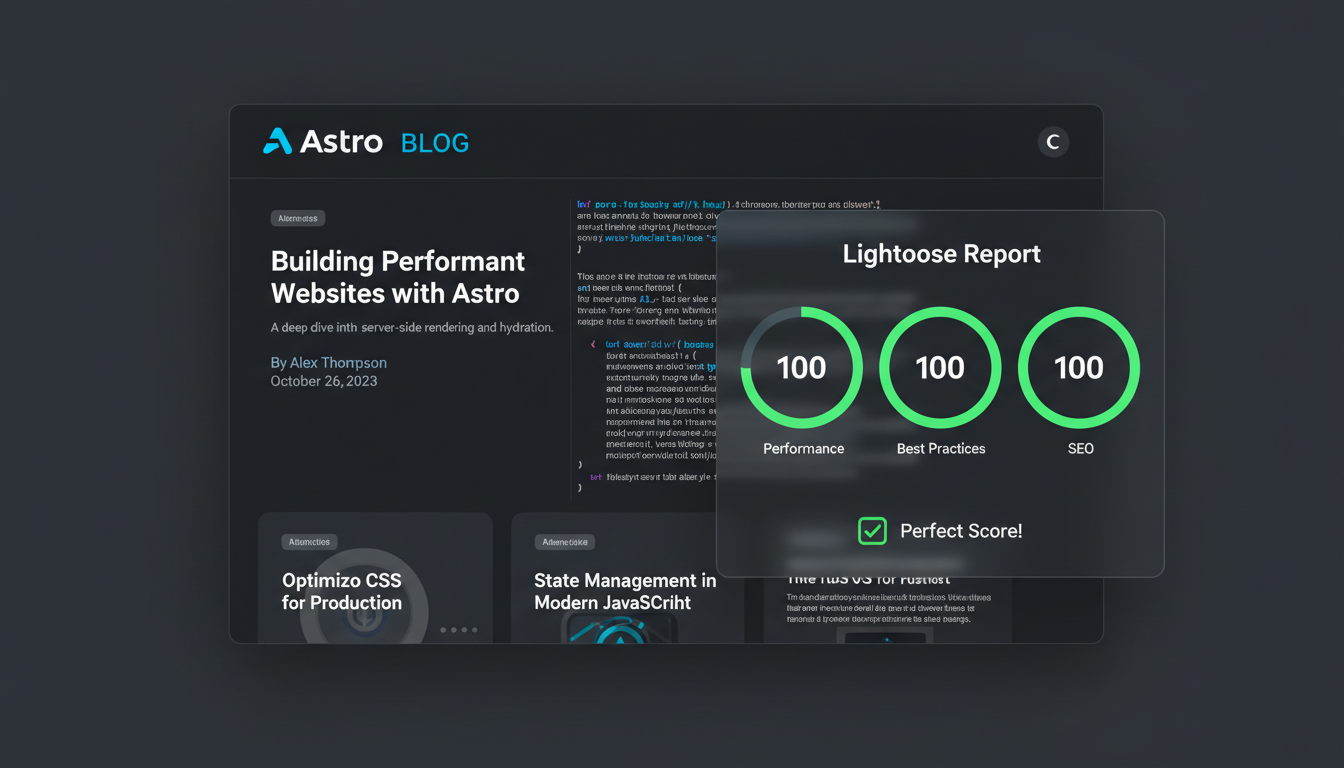
Templates like Astro SEO Blog showcase Astro's capabilities for blog publishing, achieving perfect 100 Lighthouse scores with comprehensive SEO features built-in. The template includes automatic sitemaps, structured data, and full-text search without external dependencies.
Astro suits developers prioritizing performance and SEO who want modern development experience without JavaScript bloat.
Next.js
Next.js from Vercel dominates React-based development with hybrid rendering options. Static generation, server-side rendering, and client-side rendering all work within the same framework.
Strengths:
- Hybrid rendering flexibility
- Excellent React ecosystem integration
- Vercel deployment optimization
- Large community and resources
Considerations:
- React dependency for all projects
- More complex than pure SSGs
- Larger bundle sizes by default
Next.js suits teams already invested in React who need flexibility beyond pure static generation.
Hugo
Hugo, written in Go, offers the fastest build times available. Large sites with thousands of pages build in seconds rather than minutes.
Strengths:
- Extremely fast builds
- Single binary with no dependencies
- Strong templating system
- Mature and stable
Considerations:
- Go templating has learning curve
- Less flexible than JavaScript frameworks
- Smaller ecosystem than JS options
Hugo suits large documentation sites and projects where build speed is critical.
11ty (Eleventy)
Eleventy provides maximum flexibility with minimal opinions. Multiple templating languages work out of the box, and the data cascade system handles complex content relationships.
Strengths:
- Extremely flexible
- Multiple template languages
- Performance-focused
- Low learning curve for basics
Considerations:
- Less opinionated means more decisions
- Smaller ecosystem than larger frameworks
- Complex projects require more custom work
Eleventy suits developers wanting complete control without framework constraints.
Gatsby
Gatsby pioneered React-based static generation but has lost momentum to Next.js. The GraphQL data layer provides powerful content sourcing but adds complexity.
Strengths:
- Rich plugin ecosystem
- GraphQL data layer
- Image optimization built-in
- Good for data-heavy sites
Considerations:
- Build times can be slow
- GraphQL complexity not always needed
- Competition from Next.js and Astro
Gatsby remains solid for existing projects but faces strong competition for new development.
Choosing Your Generator
Content-Focused Sites
For blogs, documentation, and marketing sites, Astro offers the best balance of performance, developer experience, and SEO optimization.
Astro SEO Blog demonstrates production-ready Astro implementation with:
- Perfect Lighthouse scores
- Automatic sitemap and RSS generation
- Built-in CMS for content management
- Full-text search without external services
- Dark mode with system preference detection
The template provides everything needed for professional blog publishing without custom development.
Application-Like Sites
For sites requiring significant client-side interactivity, Next.js provides the best path from static generation to full application features when needed.
Maximum Build Speed
Hugo remains unmatched for raw build speed. Projects with thousands of pages or very frequent builds benefit from Hugo's performance.
Maximum Flexibility
Eleventy offers the most flexibility for developers wanting complete control without framework constraints.
Deployment and Hosting
Static sites deploy anywhere serving files. Purpose-built platforms optimize the experience:
Vercel: Excellent for Next.js, good for others. Automatic preview deployments and global edge network.
Netlify: Pioneer of static hosting with excellent features. Form handling and serverless functions included.
Cloudflare Pages: Fast global CDN with generous free tier. Good integration with Cloudflare services.
GitHub Pages: Free hosting for public repositories. Simple but limited compared to dedicated platforms.
All these platforms support free tier usage for small projects, making static sites essentially free to host.
Key Takeaways
Static site generation provides exceptional performance, security, and cost benefits for content-focused sites. The right generator depends on your specific requirements and team expertise.
Astro leads for content sites with its performance focus and modern developer experience. Templates like Astro SEO Blog provide production-ready starting points that demonstrate the platform's capabilities.
Consider your content types, team skills, and long-term requirements when choosing. The best generator is the one that helps you ship quality sites efficiently.
Frequently Asked Questions
What is the best static site generator in 2025?
Astro leads for content-focused sites with its zero-JavaScript default and excellent SEO capabilities. Next.js dominates for React teams needing hybrid rendering. Hugo offers fastest builds for large sites.
Is Astro better than Next.js?
For content-focused sites prioritizing performance and SEO, yes. Astro's zero-JavaScript default produces faster pages. For applications requiring significant client-side interactivity, Next.js provides more flexibility.
What is the fastest static site generator?
Hugo offers the fastest build times, processing thousands of pages in seconds. For runtime performance, Astro produces the fastest-loading pages with its minimal JavaScript approach.
Are static sites good for SEO?
Excellent. Fast loading, simple crawling, and easy optimization make static sites ideal for SEO. Templates like Astro SEO Blog include comprehensive SEO features by default.
How do I host a static site for free?
Vercel, Netlify, Cloudflare Pages, and GitHub Pages all offer free tiers. Static sites are essentially free to host for typical traffic levels.
Make AI images and video in your browser
Characters, video, photo packs. No GPU, no setup. Check your welcome allowance and the displayed cost before generating.
Related Articles
Astro Web Framework: The Complete Developer Guide for 2025
Discover why Astro is changing web development in 2025. Complete guide to building lightning-fast websites with zero JavaScript overhead and modern tooling.

Best AI for Programming in 2025
Comprehensive analysis of the top AI programming models in 2025. Discover why Claude Sonnet 3.5, 4.0, and Opus 4.1 dominate coding benchmarks and...
Best Astro Blog Templates for SEO: Developer-Friendly Options in 2025
Discover the best Astro blog templates optimized for SEO and performance. Compare features, customization options, and deployment strategies for developer blogs.