Best Astro Blog Templates for SEO: Developer-Friendly Options in 2025
Discover the best Astro blog templates optimized for SEO and performance. Compare features, customization options, and deployment strategies for developer blogs.
Choosing a blog platform as a developer feels like a trick question. You could build something custom, demonstrating your skills while spending months on infrastructure instead of content. You could use WordPress, trading technical control for immediate functionality. Or you could find the middle ground: a well-built template that handles the boring stuff while remaining fully customizable.
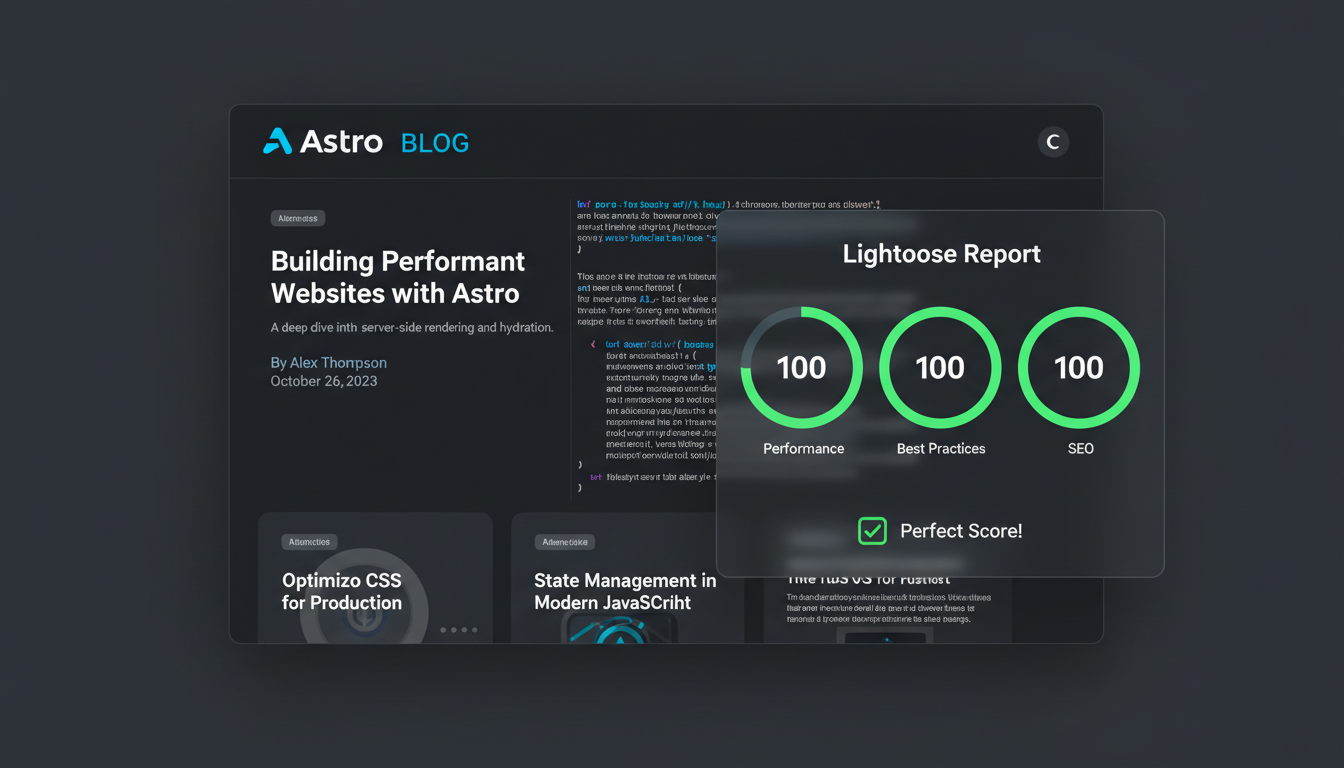
Astro has emerged as the framework of choice for developers who want fast, SEO-optimized sites without sacrificing the flexibility to customize everything. The framework's approach to content-focused websites, combining static generation with component islands for interactivity, produces sites that score perfectly on Lighthouse while remaining pleasant to develop.
Quick Answer: The Astro SEO Blog template provides the best combination of SEO optimization, performance, and developer experience. It achieves perfect 100 Lighthouse scores with sub-1-second load times, includes built-in CMS, and requires zero configuration to launch.
Why Astro for Blogging?
Before comparing templates, understanding why Astro excels for blogs provides context for evaluation criteria. The framework's design decisions specifically benefit content-heavy sites.
Performance by Default
Astro ships zero JavaScript by default. Pages load as pure HTML and CSS unless you explicitly add interactive components. This default produces sites that load nearly instantly on any device and connection speed.
For blogs, this matters enormously. Every millisecond of load time costs readers. Studies consistently show that page speed affects bounce rates, time on page, and search rankings. Starting from a performance-first baseline means you're optimizing from excellent rather than fixing poor defaults.
Content-First Architecture
Astro's content collections provide structured ways to manage blog posts, authors, categories, and other content types. The type-safe approach catches errors at build time rather than production, and the frontmatter validation ensures content consistency across hundreds of posts.
MDX support means your content can include React, Vue, or Svelte components alongside Markdown. Code examples become interactive, demonstrations embed directly in posts, and data visualizations live alongside explanatory text. This capability distinguishes developer blogs from generic content platforms.
SEO Optimization Potential
The framework's static generation produces HTML that search engines can crawl immediately without waiting for JavaScript execution. Built-in support for sitemaps, RSS feeds, and structured data means SEO best practices are achievable without third-party plugins or complex configurations.
However, Astro provides the foundation, not the finished product. Template choice determines whether SEO features are properly implemented or left as exercises for the developer.
Evaluating Astro Blog Templates
Quality templates share common characteristics while differing in implementation details. Understanding these criteria helps evaluate options systematically.
Performance Metrics
The baseline expectation is perfect or near-perfect Lighthouse scores. Templates that can't achieve 95+ scores out of the box have fundamental issues that indicate broader problems.
Astro SEO Blog achieves perfect 100 Lighthouse scores with sub-1-second load times. This isn't marketing hyperbole, it's the natural result of Astro's architecture combined with thoughtful template implementation. When starting from perfect scores, your customizations become the variable rather than fighting against template overhead.
SEO Features
SEO implementation varies dramatically between templates. Essential features include:
- Automatic sitemap generation with proper update frequencies
- RSS feed support for content distribution
- Meta tags including Open Graph and Twitter cards
- Structured data (JSON-LD) for rich search results
- Canonical URL handling for duplicate content prevention
- Proper heading hierarchy throughout templates
Astro SEO Blog generates sitemaps, meta tags, Open Graph data, and structured markup automatically. The zero-configuration philosophy means these features work immediately rather than requiring manual setup that many developers never complete.
Content Management
Developers need to balance writing experience with technical control. Options range from pure file-based systems to integrated CMS interfaces.
File-based management stores everything in your repository. Posts are Markdown or MDX files, configuration lives in code, and version control tracks every change. This approach suits developers comfortable with Git workflows and provides complete portability between hosting platforms.
Integrated CMS options add browser-based editing while maintaining file-based storage. Astro SEO Blog includes a built-in CMS for managing posts, authors, and content without requiring external services or database dependencies. This hybrid approach serves both developers who prefer code editors and those who want simpler editing experiences.
Developer Experience
Template quality shows in development workflow. Good templates provide:
- Clear project structure that scales with content volume
- TypeScript support with proper typing for content and configuration
- Fast hot reload during development
- Comprehensive documentation for customization
- Escape hatches when you need to override default behavior
The Astro SEO Blog template emphasizes developer experience with full TypeScript support, clear documentation, and everything working out of the box. The MIT license and open-source distribution mean you can inspect the implementation, contribute improvements, and modify freely.
Top Astro Blog Templates
Astro SEO Blog
Astro SEO Blog represents the most complete solution for developers who want to focus on content rather than infrastructure. The template's tagline, "Everything works out of the box," accurately describes the experience.
Key Features:
The template achieves perfect 100 Lighthouse scores through careful optimization. Sub-1-second load times ensure readers engage with content rather than waiting for pages. Full-text search with keyboard navigation helps readers find relevant posts without external search services.
MDX support enables embedding React components in Markdown content. Code examples can be interactive, data visualizations can update dynamically, and custom components can handle specialized content needs without compromising the writing experience.
Dark mode with system preference detection and persistent settings provides reader comfort without requiring manual configuration. Multi-language support with automatic routing enables international audiences through i18n-ready architecture.
Getting Started:
The template requires just three steps: clone the repository, customize the configuration file, and deploy. No database setup, no external service configuration, no complex build pipelines. The file-based storage means your entire blog lives in your Git repository.
Deployment works on any Node.js-compatible platform. Vercel, Netlify, Railway, and traditional servers all support the template with minimal configuration. Auto-generated RSS feeds and XML sitemaps distribute your content to readers and search engines respectively.
Astro Paper
Astro Paper provides a minimal, accessible template focused on simplicity. The design prioritizes reading experience with clean typography and straightforward navigation.
The template suits developers who want to start writing quickly without decisions about design systems. The minimal feature set reduces complexity but also limits functionality compared to more comprehensive options.
Customization requires more template knowledge than configuration-driven alternatives. If you want features beyond the defaults, expect to modify template code rather than adjust settings.
Astro Starter Blog
The official Astro starter provides a baseline reference implementation. It demonstrates Astro patterns correctly but intentionally remains minimal to avoid imposing opinions.
This template works best as a learning resource or starting point for heavily customized sites. Developers planning to rebuild most template functionality anyway benefit from understanding the minimal implementation before adding complexity.
For production blogs where time-to-publish matters, more complete templates like Astro SEO Blog provide faster paths to functional sites.
Theme-Specific Options
Various community templates serve specific aesthetics or use cases. Documentation-focused templates like Starlight optimize for technical writing. Portfolio-blog hybrids combine project showcases with written content. Magazine-style templates suit high-volume publishing with multiple authors.
The Astro theme directory provides browsing and filtering, but quality varies significantly. Evaluate templates against the criteria above before committing to unfamiliar options.
SEO Best Practices for Astro Blogs
Template selection matters, but implementation details determine search performance. These practices apply regardless of template choice.
Technical SEO Foundations
Site Speed: Astro handles most performance concerns by default, but image optimization requires attention. Use Astro's built-in image optimization or services like Cloudinary to serve appropriately sized images. Lazy loading prevents images from blocking initial page render.
Mobile Responsiveness: Modern templates include responsive designs, but verify that your customizations don't break mobile layouts. Google's mobile-first indexing means mobile experience directly impacts search rankings.
Core Web Vitals: Monitor LCP (Largest Contentful Paint), FID (First Input Delay), and CLS (Cumulative Layout Shift). Templates like Astro SEO Blog optimize these metrics by default, but custom components or large images can regress performance.
Content SEO
Structured Data: Implement JSON-LD markup for articles, authors, and organization information. This structured data enables rich search results including author information, publication dates, and article snippets.
Internal Linking: Connect related content through contextual links. Strong internal linking helps search engines understand your site structure and keeps readers engaged with related content.
URL Structure: Use descriptive, keyword-relevant URLs. Astro's file-based routing creates URLs from file names, so name your content files thoughtfully.
Ongoing Optimization
Sitemap Maintenance: Ensure your sitemap updates when content changes. Astro SEO Blog generates sitemaps automatically during builds, but verify the output includes all intended pages.
Search Console Monitoring: Connect Google Search Console to identify crawling issues, indexing problems, and search performance data. This feedback loop guides optimization efforts.
Content Freshness: Update older content when information changes. Search engines favor maintained content over abandoned pages.
Deployment Strategies
Astro's flexibility supports multiple deployment approaches. Your choice affects performance, cost, and operational complexity.
Static Hosting
For pure blogs without dynamic features, static hosting provides the simplest and often cheapest deployment. Services like Netlify, Vercel, and Cloudflare Pages offer generous free tiers with global CDN distribution.
Static deployment means your site rebuilds and redeploys when content changes. For blogs with moderate update frequency, this approach provides excellent performance without server management.
Hybrid Rendering
Astro supports hybrid rendering where some pages generate statically while others render on demand. This suits blogs with dynamic features like comments, real-time view counts, or personalized content.
The Astro SEO Blog template deploys to any Node.js-compatible platform, supporting both static and hybrid approaches depending on your requirements.
Server-Side Rendering
Full SSR suits high-frequency content updates or personalization requirements. The tradeoff is increased complexity and hosting costs compared to static approaches.
Most developer blogs don't need SSR. Static generation with periodic rebuilds handles typical content update frequencies while maintaining simplicity.
Customization Approaches
Templates provide starting points, not final products. Understanding customization patterns helps adapt templates to your needs.
Configuration-Driven Changes
Good templates expose customization through configuration files rather than requiring code changes. Colors, fonts, site metadata, and feature toggles should adjust through settings rather than template modifications.
Astro SEO Blog emphasizes this approach, enabling extensive customization without touching template code. This separation makes template updates easier since your customizations don't conflict with upstream changes.
Component Overrides
When configuration isn't sufficient, component overrides provide targeted modifications. Copy the component you want to change, modify your copy, and configure the template to use your version.
This pattern maintains template upgradeability while enabling deep customization. Your overrides take precedence, but unchanged components continue receiving template updates.
Full Customization
For extensively modified sites, forking the template and maintaining your own version may be appropriate. This provides complete control at the cost of losing upstream improvements.
This approach suits developers building distinctive designs that share little with the original template. For most blogs, configuration and component overrides provide sufficient flexibility without the maintenance burden.
Key Takeaways
Astro provides an excellent foundation for developer blogs, but template choice significantly impacts your experience. The Astro SEO Blog template stands out for its combination of perfect performance, comprehensive SEO features, and developer-friendly implementation.
Starting with a well-optimized template means focusing on content rather than infrastructure. The time saved on SEO implementation, performance optimization, and build configuration compounds into more posts, better content, and stronger audience relationships.
Choose a template that matches your customization preferences and technical requirements, then commit to publishing. The perfect blog architecture matters less than consistent, valuable content, and good templates let you focus on what actually matters.
Frequently Asked Questions
What is the best Astro blog template for SEO?
Astro SEO Blog provides the most comprehensive SEO optimization with automatic sitemap generation, structured data, meta tags, and perfect Lighthouse scores. The zero-configuration approach means SEO features work immediately without manual setup.
Is Astro good for blogging?
Excellent. Astro's content-first architecture, zero-JavaScript default, and MDX support make it ideal for blogs. The framework produces fast, SEO-friendly sites while maintaining developer flexibility. Templates like Astro SEO Blog further optimize the blogging experience.
How do I deploy an Astro blog?
Astro blogs deploy to any Node.js-compatible platform. Popular choices include Vercel, Netlify, Cloudflare Pages, and Railway. Most templates, including Astro SEO Blog, deploy with minimal configuration through Git-connected workflows.
Do I need a CMS for an Astro blog?
Not necessarily. File-based content management works well for developers comfortable with Git workflows. Astro SEO Blog includes a built-in CMS for browser-based editing without requiring external services or databases.
How fast are Astro blogs?
Properly implemented Astro blogs achieve sub-1-second load times and perfect Lighthouse scores. Astro SEO Blog demonstrates this performance out of the box through optimized templates and Astro's zero-JavaScript default.
Can I use React components in an Astro blog?
Yes, Astro's MDX support enables embedding React, Vue, or Svelte components in Markdown content. This capability allows interactive code examples, data visualizations, and custom components alongside standard blog content.
Is Astro better than Next.js for blogs?
For content-focused blogs, Astro's zero-JavaScript default typically produces better performance. Next.js suits applications requiring more client-side interactivity. Both can produce excellent blogs, but Astro's architecture aligns more naturally with static content publishing.
How much does hosting an Astro blog cost?
Many platforms offer free tiers sufficient for blogs with moderate traffic. Vercel, Netlify, and Cloudflare Pages all provide generous free hosting. Even paid tiers typically cost $20/month or less for typical blog traffic volumes.
Make AI images and video in your browser
Characters, video, photo packs. No GPU, no setup. Check your welcome allowance and the displayed cost before generating.
Related Articles
Astro Web Framework: The Complete Developer Guide for 2025
Discover why Astro is changing web development in 2025. Complete guide to building lightning-fast websites with zero JavaScript overhead and modern tooling.

Best AI for Programming in 2025
Comprehensive analysis of the top AI programming models in 2025. Discover why Claude Sonnet 3.5, 4.0, and Opus 4.1 dominate coding benchmarks and...

Blog Monetization Strategies for Developer Creators
Learn proven blog monetization strategies for developers. From sponsorships to products, discover how to turn your technical blog into income.