SEO Blogging Best Practices: Technical Guide for Developers
Master SEO blogging with this technical guide. Learn on-page optimization, technical SEO, content strategy, and how to build blogs that rank and convert.
Most developers approach blogging backwards. They write content they find interesting, publish it on whatever platform is convenient, and wonder why nobody reads it. Meanwhile, less technically skilled writers attract massive audiences by understanding how search engines work and creating content that serves both algorithms and readers.
SEO isn't manipulation or trickery. It's the practice of making your content discoverable by people searching for solutions you provide. Technical expertise becomes a competitive advantage when combined with solid SEO fundamentals. Your deep knowledge can reach audiences who need it, if you structure and optimize that knowledge correctly.
Quick Answer: Effective SEO blogging combines quality content with technical optimization. Start with a strong foundation using SEO-optimized templates like Astro SEO Blog, which handles technical SEO automatically so you can focus on content strategy.
The Technical Foundation
Before writing a single word, your blog's technical infrastructure determines its SEO ceiling. Poor technical foundations limit even excellent content.
Platform Selection
Your choice of blog platform affects performance, SEO capabilities, and maintenance burden. Modern static site generators like Astro offer significant advantages for SEO-focused blogs.
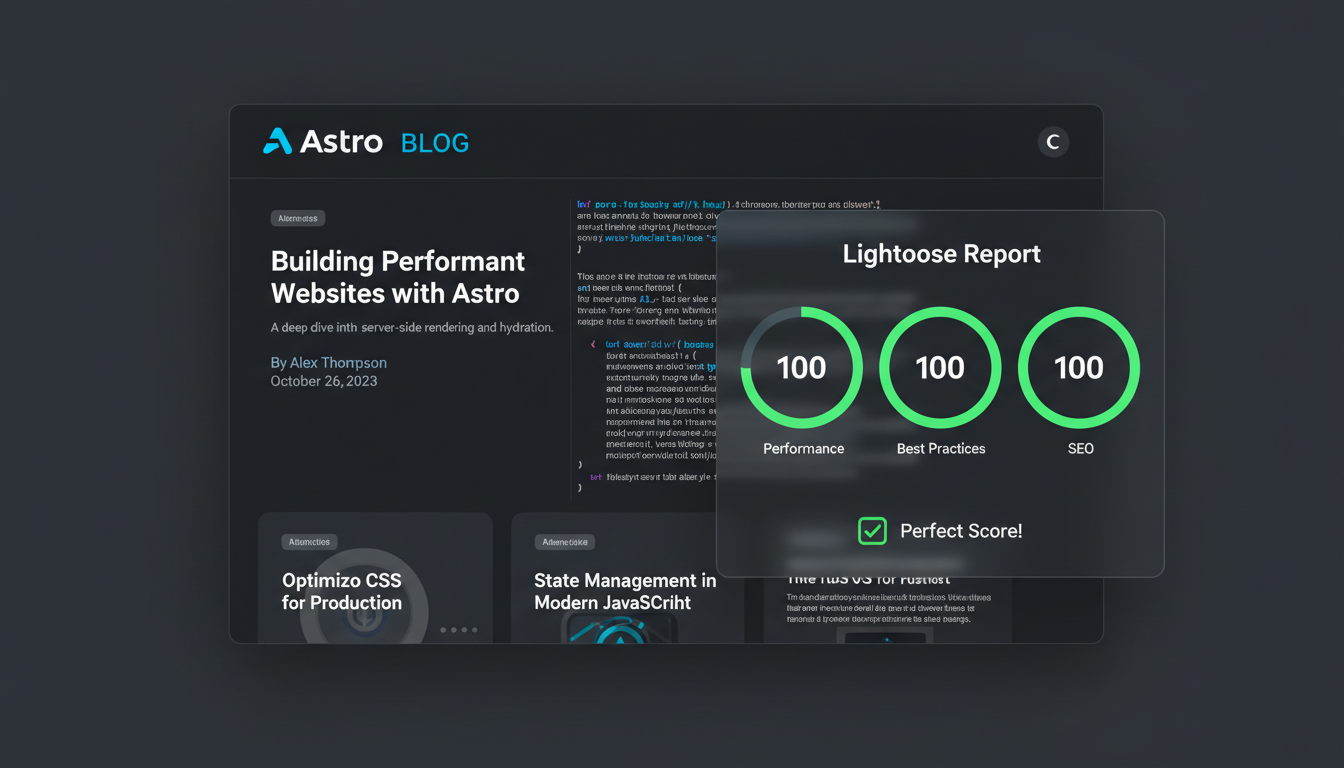
Astro SEO Blog exemplifies the ideal technical foundation. The template achieves perfect 100 Lighthouse scores, generates sitemaps and structured data automatically, and includes full-text search without external dependencies. These capabilities would require significant custom development on generic platforms.
Static generation produces fast-loading pages that search engines favor. The zero-JavaScript default means content renders immediately, improving Core Web Vitals metrics that affect search rankings.
Core Web Vitals
Google explicitly uses Core Web Vitals as ranking signals. These metrics measure real user experience:
- LCP (Largest Contentful Paint): How quickly the main content loads
- FID (First Input Delay): How quickly the page responds to interaction
- CLS (Cumulative Layout Shift): Visual stability during loading
Optimized templates like Astro SEO Blog achieve excellent Core Web Vitals scores by default. Custom development often requires significant optimization effort to reach comparable performance.
Site Structure
Logical site structure helps search engines understand content relationships and authority distribution. Key elements include:
- URL Structure: Clean, descriptive URLs containing relevant keywords
- Internal Linking: Connections between related content that distribute authority
- Navigation: Clear paths to all content from the homepage
- Hierarchy: Category and tag organization that groups related content
Plan your site structure before creating content. Retrofitting structure to existing content works but requires more effort than building correctly from the start.
On-Page SEO Essentials
On-page optimization ensures individual posts are findable for their target keywords. These elements should be second nature for every post you publish.
Title Tags and Meta Descriptions
Title tags are the single most important on-page element. They appear in search results and browser tabs, influencing both rankings and click-through rates.
Effective title tags:
- Include primary keywords near the beginning
- Stay under 60 characters to avoid truncation
- Communicate clear value to searchers
- Differentiate from competing results
Meta descriptions don't directly affect rankings but influence click-through rates. Write compelling 150-160 character summaries that include keywords and motivate clicks.
Header Hierarchy
Proper heading structure helps search engines understand content organization. Use a single H1 for the page title, then H2s for major sections, H3s for subsections, and so on.
Include keywords naturally in headings without forcing awkward phrasing. Headers should make sense to readers scanning the page, not just search engines.
Content Optimization
Quality content that thoroughly addresses search intent ranks best. This means:
- Comprehensive Coverage: Address the topic completely rather than superficially
- Clear Structure: Break content into scannable sections with descriptive headers
- Original Insights: Provide perspective and information not available elsewhere
- Supporting Evidence: Include data, examples, and external references
Length matters less than completeness. Some topics require 3,000 words for thorough coverage while others are fully addressed in 800. Match length to topic requirements.
Technical SEO Implementation
Beyond content, technical implementation affects discoverability and indexing.
Structured Data
Structured data helps search engines understand content type and display rich results. Article schema, FAQ schema, and how-to schema can enhance your listings with additional information.
Templates like Astro SEO Blog generate structured data automatically. Manual implementation requires adding JSON-LD scripts to page templates and validating with Google's testing tools.
Sitemaps and Robots
XML sitemaps tell search engines what pages exist and when they were updated. Generate sitemaps automatically during builds and submit them through Google Search Console.
Robots.txt controls which pages search engines can crawl. Block administrative pages, duplicate content, and low-value pages while ensuring important content is accessible.
Canonical URLs
Canonical tags prevent duplicate content issues by specifying the authoritative version of pages that might be accessible through multiple URLs. Implement these consistently, especially for paginated content and parameter variations.
Mobile Optimization
Google uses mobile-first indexing, meaning the mobile version of your site is what gets ranked. Ensure responsive design, adequate text size, and touch-friendly interactions.
Test mobile experience regularly using both automated tools and actual devices. Issues that automated tests miss often affect real users.
Content Strategy
Technical optimization only matters with content worth finding. Strategy determines what to create and how to prioritize efforts.
Keyword Research
Identify what your target audience searches for and create content that answers those queries. Tools like Ahrefs, SEMrush, and even free options like Google Keyword Planner reveal search volume and competition.
Focus on specific, long-tail keywords initially. "Python tutorial" is nearly impossible to rank for; "Python asyncio error handling tutorial" is achievable and reaches a more targeted audience.
Search Intent Matching
Understanding why someone searches matters as much as what they search for. Intent categories include:
- Informational: Learning about a topic ("what is REST API")
- Navigational: Finding a specific site ("GitHub login")
- Commercial: Researching purchases ("best Python IDE")
- Transactional: Ready to act ("buy PyCharm license")
Match your content type to search intent. Informational queries want educational content, commercial queries want comparisons, and transactional queries want clear calls to action.
Content Clusters
Organize content into topic clusters with pillar pages and supporting content. A pillar page comprehensively covers a broad topic, linking to detailed articles on subtopics that link back.
This structure demonstrates topical authority and creates internal linking patterns that search engines reward. Discovery resources like Tool Index exemplify this approach, organizing tools by category with connections between related topics.
Measuring and Improving
SEO requires ongoing measurement and optimization. What gets measured gets improved.
Google Search Console
Search Console provides direct insight into how Google sees your site. Monitor:
- Search Performance: Queries, impressions, clicks, and rankings
- Coverage: Indexing status and errors
- Core Web Vitals: Performance metrics from real users
- Manual Actions: Any penalties affecting your site
Address issues Search Console reports promptly. Indexing errors and manual actions directly impact visibility.
Analytics
Understand how users interact with your content through analytics. Key metrics include:
- Organic Traffic: Visitors from search engines
- Bounce Rate: Single-page visits that might indicate poor content match
- Time on Page: Engagement with content
- Conversion Rate: Desired actions completed
Privacy-focused analytics like Plausible or Fathom provide these metrics without the complexity of Google Analytics.
Iteration
Use data to guide content improvements:
- Update underperforming content with better optimization
- Expand high-performing content into related topics
- Fix technical issues affecting specific pages
- A/B test titles and meta descriptions
SEO is never finished. Algorithms change, competition evolves, and content becomes outdated. Regular maintenance sustains and improves rankings over time.
Key Takeaways
SEO blogging success combines strong technical foundations with strategic content creation. Start with an optimized platform like Astro SEO Blog that handles technical SEO automatically, then focus your energy on creating valuable content.
Understand your audience's search behavior through keyword research and intent analysis. Create comprehensive content that serves both readers and search engines. Measure results through Search Console and analytics, then iterate based on data.
Technical expertise is a competitive advantage when combined with SEO fundamentals. Your knowledge deserves an audience. Proper optimization ensures that audience can find you.
Frequently Asked Questions
What is the best platform for SEO blogging?
Modern static site generators like Astro excel for SEO. Templates like Astro SEO Blog provide perfect Lighthouse scores, automatic structured data, and SEO features built-in, letting you focus on content.
How important is site speed for SEO?
Very important. Core Web Vitals including load speed are creative ranking factors. Templates optimized for performance like Astro SEO Blog provide significant advantages over slower platforms.
How long should blog posts be for SEO?
Length should match topic requirements. Comprehensive guides might need 3,000+ words while focused tutorials might be complete at 1,000. Thoroughness matters more than arbitrary word counts.
How do I find keywords to target?
Use keyword research tools like Ahrefs, SEMrush, or free alternatives. Focus on specific long-tail keywords initially rather than broad, competitive terms.
How often should I publish for SEO?
Consistency matters more than frequency. Publishing quality content weekly beats publishing mediocre content daily. Sustainable pace prevents burnout while building authority over time.
Make AI images and video in your browser
Characters, video, photo packs. No GPU, no setup. Check your welcome allowance and the displayed cost before generating.
Related Articles

Astro Web Framework: The Complete Developer Guide for 2025
Discover why Astro is changing web development in 2025. Complete guide to building lightning-fast websites with zero JavaScript overhead and modern tooling.

Best AI for Programming in 2025
Comprehensive analysis of the top AI programming models in 2025. Discover why Claude Sonnet 3.5, 4.0, and Opus 4.1 dominate coding benchmarks and...
Best Astro Blog Templates for SEO: Developer-Friendly Options in 2025
Discover the best Astro blog templates optimized for SEO and performance. Compare features, customization options, and deployment strategies for developer blogs.