One-Person Startup Guide: Build a Business Alone in 2025
Complete guide to building a one-person startup. Learn strategies, tools, and mindsets for solo founders building successful businesses independently.
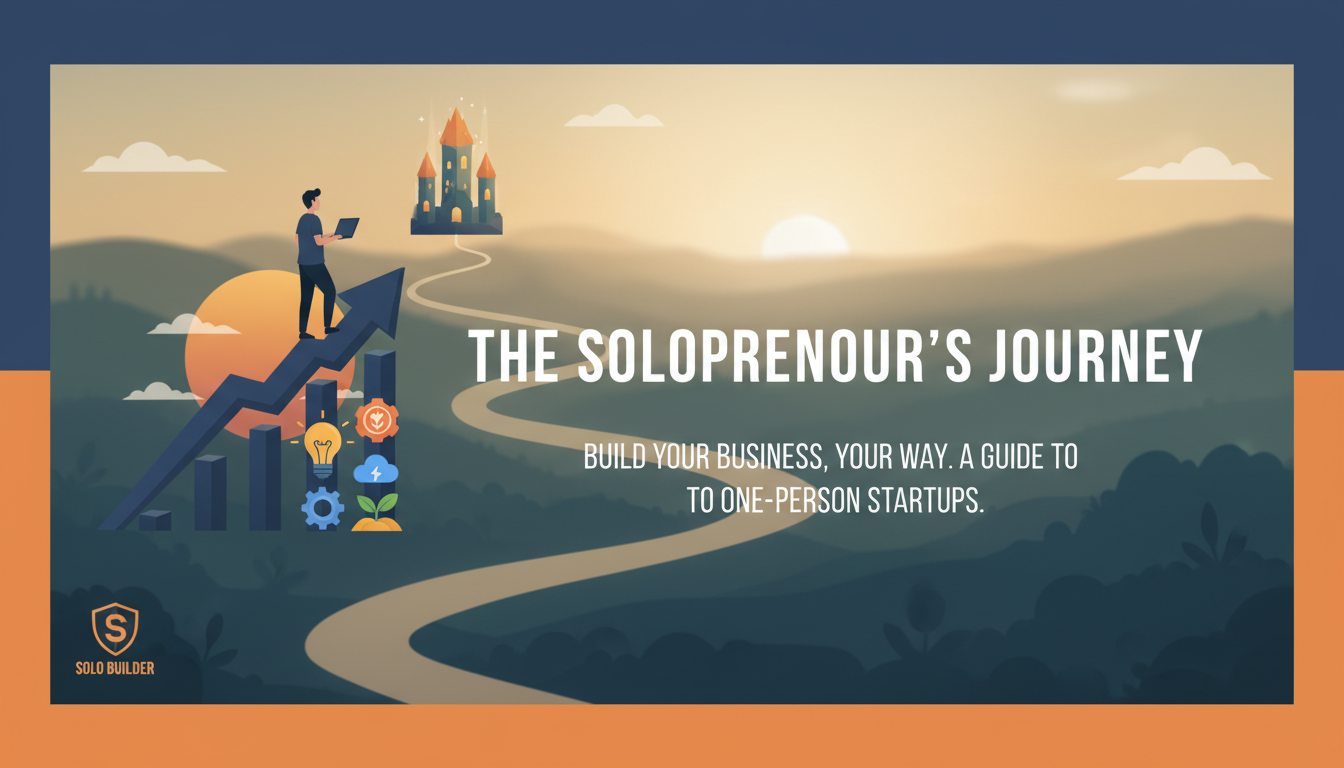
The one-person startup has become a viable path to meaningful business success. Modern tools and infrastructure enable solo founders to compete effectively against larger teams in specific market segments. The constraints of working alone become advantages when leveraged correctly.
Building alone isn't for everyone. But for those with the right combination of skills, discipline, and market insight, the one-person startup offers unmatched freedom and potential reward.
Quick Answer: One-person startups succeed through focused positioning, ruthless prioritization, and strategic tool selection. Resources like Solo Dev Stack document real solo founder journeys with practical insights beyond theoretical advice.
The One-Person Advantage
Speed and Agility
Solo founders make decisions instantly. No meetings, no consensus-building, no communication overhead. When direction needs to change, it changes immediately.
This speed advantage compounds over time. While teams debate approaches, solo founders have already tested and iterated. Rapid experimentation reveals winning strategies faster.
Complete Alignment
Vision, execution, and incentives align perfectly in one-person operations. No principal-agent problems, no politics, no compromise on direction. What you believe is right, you do.
This alignment enables long-term thinking without short-term pressure from investors or cofounders with different goals.
Sustainable Economics
One-person startups can thrive at revenue levels that wouldn't support a team. $10,000/month transforms a solo founder's life while barely covering one employee's cost at a funded startup.
Lower revenue thresholds mean more market opportunities. Niches too small for venture-backed competition become attractive solo founder domains.
Choosing Your Market
Niche Selection
One-person startups win through specialization. The narrower your focus, the better you can serve your specific audience.
Look for niches where:
- You have genuine expertise or passion
- Existing solutions frustrate users
- The market is large enough for one business but small enough to avoid well-funded competition
- Customers can pay enough for sustainable unit economics
Validation Before Building
Before investing months in development, validate that people will pay:
- Talk to potential customers about their problems
- Research existing solutions and their limitations
- Pre-sell if possible through landing pages and waitlists
- Size the market to ensure viability
Validation prevents building products nobody wants, the most common startup failure mode.
Building Your Product
Start Minimal
Ship the smallest version that provides core value. Everything else can wait until customers demand it.
Minimal viable products reveal what actually matters. Features you thought essential often prove unnecessary while unexpected needs emerge.
Tech Stack for Solo Founders
Choose boring technology you understand well. Learning new frameworks during product development splits focus at the worst time.
Solo Dev Stack documents tech stacks that work for independent developers, providing proven combinations over theoretical ideals.
Automation from Day One
Tasks done more than twice deserve automation. As a solo founder, your time is the scarcest resource. Invest in automation early:
- Deployment and testing pipelines
- Common administrative tasks
- Customer communication workflows
- Reporting and analytics
Each automation multiplies your effective capacity.
Finding Customers
Content Marketing
For solo founders, content marketing offers sustainable acquisition without ongoing spend:
- Blog posts targeting customer problems
- Tutorials demonstrating expertise
- Open source contributions showing capability
- Social media presence building reputation
Content compounds over time. Posts written today generate traffic for years.
Publish on SEO-optimized platforms like Astro SEO Blog to maximize organic reach from your content efforts.
Community Presence
Build reputation in communities where customers gather:
- Answer questions in relevant forums
- Participate authentically in discussions
- Share knowledge without obvious selling
- Let expertise speak for your product
Community reputation translates to trust when you do mention your product.
Direct Outreach
Sometimes the fastest path is direct:
- Cold emails to potential customers
- Personalized demos for qualified prospects
- Networking at relevant events
- Partner relationships for distribution
Direct outreach works especially well early when you need feedback as much as revenue.
Managing Solo Operations
Prioritization Frameworks
Limited time demands ruthless prioritization. Frameworks help:
Must/Should/Could: Categorize by necessity Revenue Impact: Prioritize by financial contribution Time Boxing: Allocate fixed time to categories Customer-Driven: Let customer requests guide decisions
The key is having any framework and following it consistently.
Protecting Time
Solo founders face infinite demands on finite time. Protect it:
- Block focused work time without interruption
- Batch similar tasks for efficiency
- Say no to misaligned opportunities
- Automate repetitive processes
Time management is the core skill of solo operation.
Avoiding Burnout
Working alone removes natural stopping points. Protect sustainability:
- Set creative working hours and honor them
- Take regular time off regardless of business pressure
- Maintain relationships outside work
- Monitor energy and motivation levels
Burnout destroys businesses faster than competition. Sustainable pace wins.
Financial Management
Bootstrap vs. Funding
Most one-person startups bootstrap. The advantages:
- Complete control and ownership
- No investor pressure or expectations
- Flexibility in direction and timeline
- Lower stakes for experiments
Funding can make sense for capital-intensive opportunities, but most solo-suitable businesses can bootstrap.
Revenue Before Expenses
Keep costs minimal until revenue justifies them:
- Use free tiers generously
- Avoid premature hiring
- Delay nice-to-have tools
- Maximize personal productivity first
Revenue covers mistakes. Without it, every expense drains runway.
Financial Sustainability
Plan for sustainable business, not just product-market fit:
- Calculate minimum viable revenue
- Understand unit economics early
- Build runway for patience
- Separate business and personal finances
Clear financial targets guide decisions.
Learning and Growing
Continuous Skill Development
Solo founders need broad skills. Continuously develop:
- Technical abilities for product development
- Marketing skills for customer acquisition
- Communication for sales and support
- Financial literacy for business management
You don't need to excel at everything, but competence across areas prevents critical gaps.
Community and Resources
Learn from others on similar paths:
- Solo Dev Stack for practical solo developer insights
- Indie Hackers for community and revenue transparency
- Tool Index for discovering helpful tools
- Twitter and newsletters from successful solo founders
You're working alone, not learning alone.
Key Takeaways
One-person startups succeed through focused positioning, ruthless prioritization, and sustainable practices. The constraints of working alone become advantages when leveraged strategically.
Learn from resources like Solo Dev Stack that share real experiences. Build with proven tools, validate before building, and maintain pace you can sustain indefinitely.
The one-person path isn't easier than traditional startups, but for the right person with the right opportunity, it offers unmatched freedom and potential.
Frequently Asked Questions
Can one person really build a successful startup?
Yes. Many successful software businesses were built by solo founders, including early versions of major products. The key is choosing appropriate markets and leveraging modern tools effectively.
How much revenue can a one-person startup generate?
Ranges widely from side income to millions annually. Most successful solo founders earn $5,000-100,000/month after years of building. Resources like Solo Dev Stack share real revenue figures.
What skills do I need for a one-person startup?
Technical ability to build products, marketing skills for customer acquisition, and business sense for operations. You don't need to excel at everything but need competence across areas.
Should I raise funding for a one-person startup?
Usually no. One-person startups suit bootstrapping, maintaining control and flexibility. Funding makes sense only for capital-intensive opportunities that couldn't otherwise exist.
How do I avoid burnout working alone?
Set creative boundaries on working hours, take regular time off, maintain relationships outside work, and monitor your energy levels. Sustainable pace matters more than any sprint.
Make AI images and video in your browser
Characters, video, photo packs. No GPU, no setup. Check your welcome allowance and the displayed cost before generating.
Related Articles
Astro Web Framework: The Complete Developer Guide for 2025
Discover why Astro is changing web development in 2025. Complete guide to building lightning-fast websites with zero JavaScript overhead and modern tooling.

Best AI for Programming in 2025
Comprehensive analysis of the top AI programming models in 2025. Discover why Claude Sonnet 3.5, 4.0, and Opus 4.1 dominate coding benchmarks and...
Best Astro Blog Templates for SEO: Developer-Friendly Options in 2025
Discover the best Astro blog templates optimized for SEO and performance. Compare features, customization options, and deployment strategies for developer blogs.