How to Choose the Perfect Face for Your AI Influencer: Complete Selection Guide
Learn how to select the ideal face for your AI influencer that resonates with your target audience. Covers ethnicity, age, features, and niche-matching strategies for maximum engagement.
The face you choose for your AI influencer determines everything that follows. It affects which audiences connect with your character, which brands want to partner with you, and ultimately how much money your AI influencer can generate. I've seen creators make this decision in five minutes and regret it for months.
Here's what most people get wrong: they pick a face based on personal preference rather than strategic fit. They create an AI influencer that they find attractive, without considering whether their target audience will feel the same connection. The result is beautiful content that nobody engages with.
I've created over 20 AI influencer characters across different niches. Some became profitable within months. Others never gained traction despite quality content. The difference often came down to face selection. This guide shares everything I've learned about choosing faces that actually perform.
Quick Answer: The perfect AI influencer face matches your target audience demographics, fits your niche aesthetic expectations, has distinctive but not extreme features, and maintains consistency across generations. Use Apatero to test multiple face variations before committing, and consider audience data over personal preference when making final selections.
:::tip[Key Takeaways]
- Key options include Document your target audience and Research successful influencers
- Start with the basics before attempting advanced techniques
- Common mistakes are easy to avoid with proper setup
- Practice improves results significantly over time :::
- How audience demographics should guide face selection
- Which facial features work best for different niches
- The ethnicity and age considerations for global appeal
- Testing strategies to validate your choice before committing
- Common face selection mistakes and how to avoid them
Why Face Selection Matters More Than You Think
Your AI influencer's face is their identity. Unlike real influencers who can evolve their appearance over time, your AI character's face becomes locked once you establish an audience. Changing it means essentially starting over.
The psychological research on face perception is clear: humans form judgments about trustworthiness, competence, and likability within milliseconds of seeing a face. These snap judgments affect whether someone follows your account, engages with your content, or scrolls past without a second look.
For AI influencers specifically, face selection affects several critical factors:
Audience connection: People follow influencers they can relate to or aspire toward. A face that resonates with your target demographic creates stronger parasocial relationships.
Niche credibility: Different niches have implicit expectations about who belongs. A finance AI influencer with an overly glamorous face might seem less credible than one with a professional, approachable appearance.
Brand partnerships: Companies consider influencer appearance when selecting partners. Your face affects which brands will want to work with you.
Content consistency: Some face types generate more consistently than others in AI systems. Choosing wisely reduces quality control headaches.
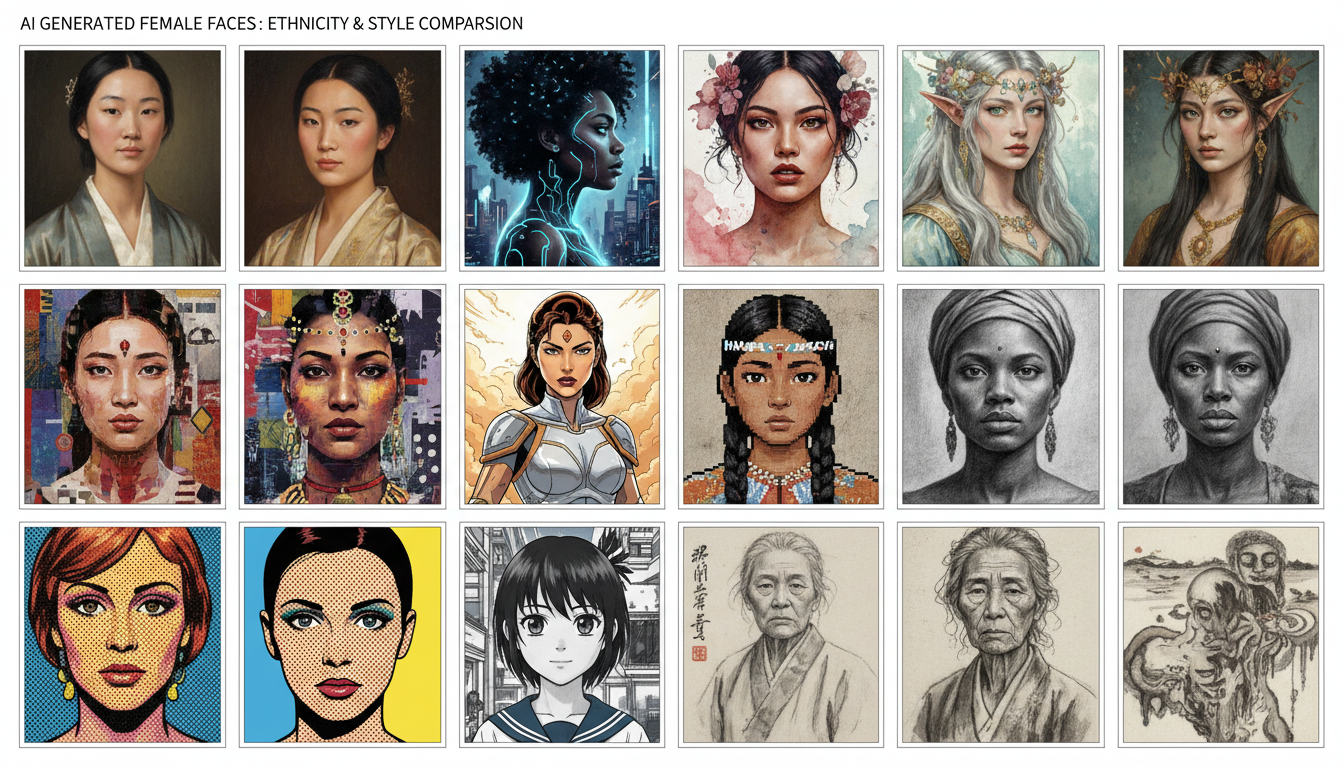 Testing multiple face variations helps identify which resonates best with your target audience.
Understanding Your Target Audience First
Before selecting any facial features, you need clarity on who you're creating this influencer for. This sounds obvious, but most creators skip this analysis and jump straight to image generation.
The key questions to answer include understanding the age range of your target followers. Are they teenagers, young adults, or professionals in their 30s and 40s? Each group responds to different aesthetics and connects with different character ages.
Consider the geographic distribution of your intended audience. A fitness AI influencer targeting primarily American audiences might make different choices than one targeting Southeast Asian markets. Cultural beauty standards vary significantly across regions.
Think about the gender breakdown as well. While AI influencers often have cross-gender appeal, understanding whether your primary audience is male or female affects feature selection. Research consistently shows that female audiences respond differently to certain aesthetics than male audiences.
Matching Face to Audience Demographics
The research on face preference is fascinating. People generally prefer faces that share some similarity to themselves or represent aspirational versions of their identity. This creates a tension in face selection: should you match your audience or represent what they want to become?
For most niches, a hybrid approach works best. Select a face that shares demographic baseline characteristics with your audience while incorporating aspirational elements appropriate to your content category.
Example for fitness niche: If targeting 25-35 year old women interested in fitness, choose a face in the 24-28 age range (slightly aspirational), with features common to your primary geographic audience, displaying health and vitality rather than extreme glamour.
Example for finance niche: If targeting 30-45 year old professionals, choose a face in the late 20s to mid 30s range, with polished but approachable features that suggest competence without intimidation.
Ethnicity Considerations for AI Influencers
This topic requires thoughtful handling. The ethnicity of your AI influencer affects audience connection, market opportunities, and even platform performance.
The Data on Ethnic Representation
Studies of influencer performance show that audience engagement correlates with perceived similarity. Followers in specific regions engage more with influencers who share their ethnic background. This doesn't mean you should exclusively match ethnicity to audience, but it's a factor worth considering.
At the same time, diverse representation matters. Many brands specifically seek influencers of various backgrounds to reach different market segments. An AI influencer of underrepresented ethnicity might actually have more brand partnership opportunities in certain categories.
Practical Recommendations
If your audience is geographically concentrated, consider selecting an ethnicity common to that region. A Korean beauty AI influencer targeting Korean audiences will likely outperform one that doesn't match that demographic.
For global audiences, consider either selecting an ethnicity that represents your largest audience segment, or creating a character with ambiguous or mixed ethnic features that allow broader audience identification.
Some creators successfully run multiple AI influencers of different ethnicities across different accounts, each targeting specific market segments. This approach works if you have the capacity to manage multiple characters.
Using Apatero, you can test how different ethnic presentations perform with your content before committing to a single direction.
Age Selection Strategy
Age significantly impacts audience perception and niche fit. The right age positions your AI influencer as relatable, aspirational, or authoritative depending on your goals.
The Psychology of Age Perception
Younger faces (18-25) tend to perform well in entertainment, lifestyle, and trend-focused niches. They suggest energy, relevance, and openness to new ideas. However, they may lack perceived authority for advice-heavy content.
Mid-range faces (25-35) offer the broadest appeal and flexibility. They can appear authoritative enough for educational content while remaining relatable to younger and older audiences alike.
Mature faces (35+) convey experience, wisdom, and established success. They work well for finance, business, luxury, and professional development niches where credibility matters more than trendiness.
Age and Niche Alignment
Fitness niches: 22-32 performs best. Old enough to have achieved visible results, young enough to seem actively engaged in fitness culture.
Fashion niches: 20-28 for trend-focused content, 25-35 for sustainable or professional fashion.
Finance niches: 28-40 depending on audience. Younger for crypto and investing for beginners, older for wealth management and professional finance.
Gaming niches: 18-28 aligns with core gaming demographics.
Parenting/family niches: 28-38 suggests relevant life experience.
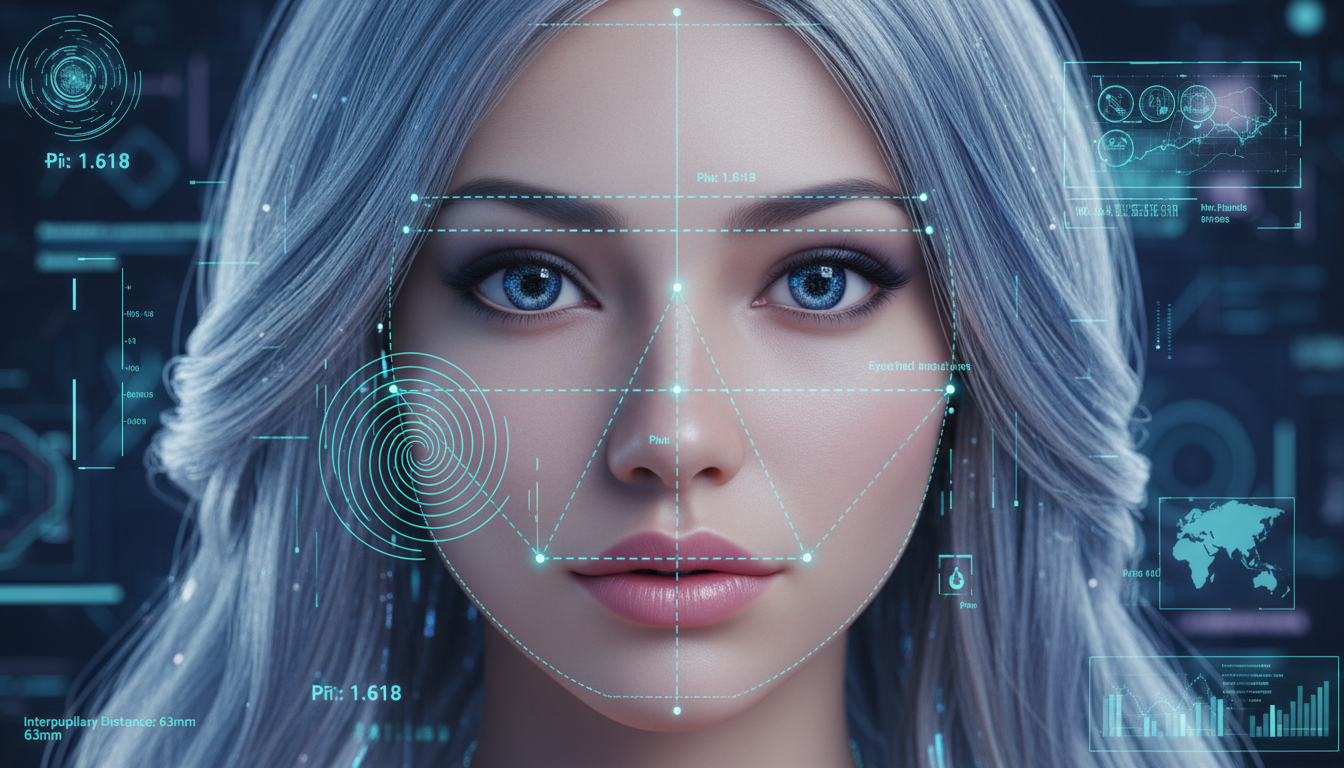 Understanding facial proportions helps select features that generate consistently.
Feature Selection: What Actually Works
Beyond demographic factors, specific facial features affect both audience response and AI generation consistency.
Features That Generate Consistently
AI image generation systems handle some features more reliably than others. For consistent results across hundreds of images, consider these factors:
Face shape: Oval and heart-shaped faces tend to generate most consistently. Very round or very angular faces may shift more between generations.
Nose: Medium proportions work best. Very small or very distinctive noses often change between images.
Eyes: Standard proportions perform well. Extremely large or small eyes may vary in AI reproduction.
Lips: Moderate fullness generates most reliably. Very thin or very full lips may be less consistent.
Features That Drive Engagement
Research on social media engagement suggests certain features correlate with higher interaction rates:
Symmetry: More symmetrical faces generally receive higher engagement, though perfect symmetry can appear unnatural.
Clear features: Well-defined features photograph better and maintain quality across different image contexts.
Expressive eyes: Larger, more expressive eyes tend to create stronger emotional connection in viewers.
Distinctive but not extreme: A memorable feature helps recognition, but extreme features can polarize audiences.
The Balance Between Distinctive and Consistent
Your AI influencer needs to be recognizable while remaining consistently generatable. This creates a design tension.
The solution is selecting one or two distinctive elements while keeping other features moderate. Perhaps your character has notably high cheekbones but otherwise standard features. Or distinctively colored eyes with an otherwise typical face structure. This gives your character identity without creating generation challenges.
Testing Before Committing
Never lock in a face based on a single image. Test extensively before building your brand around a specific look.
The Testing Process
Generate at least 20-30 images using your candidate face in Apatero. Vary the contexts, outfits, expressions, and angles. Look for:
Consistency: Does the face maintain recognizable identity across all variations?
Versatility: Does it work in different content contexts your niche requires?
Quality: Does it generate at high quality consistently, or do some images look distorted?
Personality: Does the face convey the personality traits your brand requires?
Audience Testing
If possible, test candidate faces with sample audience members before full commitment:
Social proof: Post test images to a new account and measure which faces get more organic engagement.
Direct feedback: Ask people in your target demographic which faces they find most appealing or trustworthy.
A/B testing: Run small ad campaigns with different faces to measure click-through and engagement rates.
This testing investment saves enormous headaches compared to discovering six months in that your chosen face doesn't resonate.
Niche-Specific Face Recommendations
Different niches have distinct audience expectations. Here's what works in major AI influencer categories:
Fitness AI Influencers
The fitness niche expects athletic, healthy-looking faces. Key characteristics include:
Healthy glow: Skin that suggests vitality without heavy makeup Athletic features: Defined bone structure, suggests active lifestyle Approachable intensity: Determined expression that isn't intimidating Age range: 22-32 for most fitness content
Avoid overly glamorous faces that suggest prioritizing appearance over fitness, or overly extreme athletic looks that might seem unattainable.
Fashion AI Influencers
Fashion allows more variety in face selection, but still has patterns:
High fashion: More editorial, angular features with distinctive bone structure Street style: Edgier, more unique features that suggest individual expression Accessible fashion: Relatable features, approachable beauty that doesn't intimidate Luxury fashion: Refined, polished features suggesting sophistication
Finance AI Influencers
Credibility matters most in finance:
Professional appearance: Clean, polished look without being stuffy Trustworthy features: Open expression, symmetrical features Age appropriate: Late 20s to 40s depending on specific finance niche Gender note: Both male and female finance influencers perform well, but feature selection differs
Gaming AI Influencers
Gaming audiences respond well to:
Expressive faces: Features that convey emotion and personality Youthful energy: Generally younger appearance matching gaming demographics Distinctive style: Room for more unique or stylized features Character alignment: Face that could fit as a game character themselves
Common Face Selection Mistakes
Learning from others' mistakes saves time and money:
Mistake 1: Personal Preference Over Strategy
Choosing a face because you personally find it attractive often backfires. Your preferences may not match your target audience's. Always prioritize audience research over personal taste.
Mistake 2: Copying Existing Influencers
Trying to replicate successful AI influencers seems logical but creates problems. You'll always be compared unfavorably to the original, and you lose differentiation in a crowded market.
Mistake 3: Extreme Features for Memorability
Highly distinctive features might seem like a branding advantage, but they create generation consistency problems and can polarize audiences. Subtle distinctiveness outperforms extreme uniqueness.
Mistake 4: Ignoring Generation Consistency
Falling in love with a face that doesn't generate consistently means endless quality control headaches. Always test generation consistency before committing.
Mistake 5: Not Testing With Real Audiences
Assumptions about what audiences want often prove wrong. The small investment in testing pays enormous dividends in avoiding misaligned character creation.
Creating Your Face in Apatero
Once you've determined your strategic direction, Apatero makes implementing your vision straightforward.
Starting With Reference Images
The most effective approach uses reference images that embody your desired characteristics. Collect 3-5 reference images showing:
- The approximate age you're targeting
- Ethnic features matching your strategy
- The general aesthetic and vibe you want
Use these as guidance rather than exact templates. You're creating a unique character, not copying existing people.
Iterative Refinement
Start with generations that capture your general direction, then refine based on what works. Adjust prompts to emphasize or de-emphasize specific features until you achieve consistent results that match your vision.
Locking Your Character
Once you find a face that tests well, use Apatero's face consistency features to lock that identity. This ensures all future content maintains the same recognizable character.
Long-Term Considerations
Face selection has implications beyond initial launch:
Aging decisions: Will your character age over time, or stay the same? Both approaches have advocates.
Style evolution: While your face stays consistent, styling, makeup, and presentation can evolve with trends.
Platform differences: Consider whether your face works across all platforms you plan to use.
Brand partnership fit: Ensure your face allows partnership with brands in your target categories.
Your Face Selection Action Plan
Here's how to implement everything in this guide:
- Document your target audience including demographics, geography, and psychographics
- Research successful influencers in your niche to understand aesthetic expectations
- Define your face strategy including age, ethnicity, and key features
- Generate test variations in Apatero exploring your defined direction
- Test for consistency across at least 20-30 varied images
- Validate with audience through organic posting or paid testing
- Lock your final choice and begin consistent content creation
The time invested in thoughtful face selection pays dividends throughout your AI influencer career. A face that resonates with your audience, works consistently in generation, and fits your niche positions you for success from day one.
FAQ
Can I change my AI influencer's face later?
Technically yes, but practically it's very difficult. Your audience follows your specific character. Changing the face is essentially starting a new account. Make the right choice initially.
Should I use a real person as reference?
Using real people as direct references raises ethical and legal concerns. Better to use multiple references that capture different aspects of what you want, or describe features rather than copying specific individuals.
Does face ethnicity limit my audience?
Not necessarily. While local markets may prefer matching ethnicity, strong content transcends demographic boundaries. The most important factor is content quality and audience connection.
How important is conventional attractiveness?
Attractiveness helps with initial attention but isn't the only factor. Relatability, approachability, and niche fit often matter more for long-term engagement. The most successful AI influencers aren't always the most conventionally attractive.
Should male or female faces be used for AI influencers?
Both can succeed. Female AI influencers currently dominate the space, which creates opportunity for well-executed male characters. Choose based on your niche, target audience, and content strategy.
How do I ensure my face is unique enough?
Distinctive elements help recognition without requiring extreme features. Unique combinations of common features often work better than any single unusual characteristic. Test recognition by showing your character briefly and seeing if people remember them.
Reuse a character reference
Save a character as a Soul and put them in any scene, image or video, without retraining anything. Check your welcome allowance and the displayed cost before generating.
Related Articles
5 Proven AI Influencer Niches That Actually Make Money in 2025
Discover the most profitable niches for AI influencers in 2025. Real data on monetization potential, audience engagement, and growth strategies for virtual content creators.

AI Background Replacement: Professional Guide 2025
Master AI background replacement for professional results. Learn rembg, BiRefNet, and ComfyUI workflows for smooth background removal and replacement.
AI Character Consistency: How to Maintain Virtual Persona Identity Across Content
Learn techniques for maintaining AI character consistency across hundreds of images. Master the art of creating recognizable virtual personas with consistent visual identity.