Developer Blog SEO: Complete Guide to Organic Traffic Growth
Master SEO for your developer blog. Learn technical optimization, content strategy, and proven techniques to grow organic traffic consistently.

Developer blogs face unique SEO challenges and opportunities. Technical audiences search differently, content requirements differ from mainstream publishing, and competition includes documentation sites, Stack Overflow, and established tech publications. Yet developers who master blog SEO build audiences that compound into career and business opportunities.
The good news: developers have natural advantages in SEO. Technical understanding helps with site optimization, data analysis informs strategy, and specialized knowledge creates content competitors can't easily replicate.
Quick Answer: Developer blog SEO combines technical optimization with strategic content creation. Start with an SEO-optimized platform like Astro SEO Blog that handles technical foundations, then focus on content that serves search intent.
Technical Foundation
Platform Selection
Your blog platform directly impacts SEO potential. Key requirements:
Performance: Fast loading improves rankings and user experience. Static site generators like Astro excel here.
SEO Features: Automatic sitemaps, meta tags, structured data, and canonical URLs should work without manual intervention.
Content Flexibility: Support for code blocks, technical diagrams, and MDX components for interactive examples.
Astro SEO Blog demonstrates what a properly optimized platform provides:
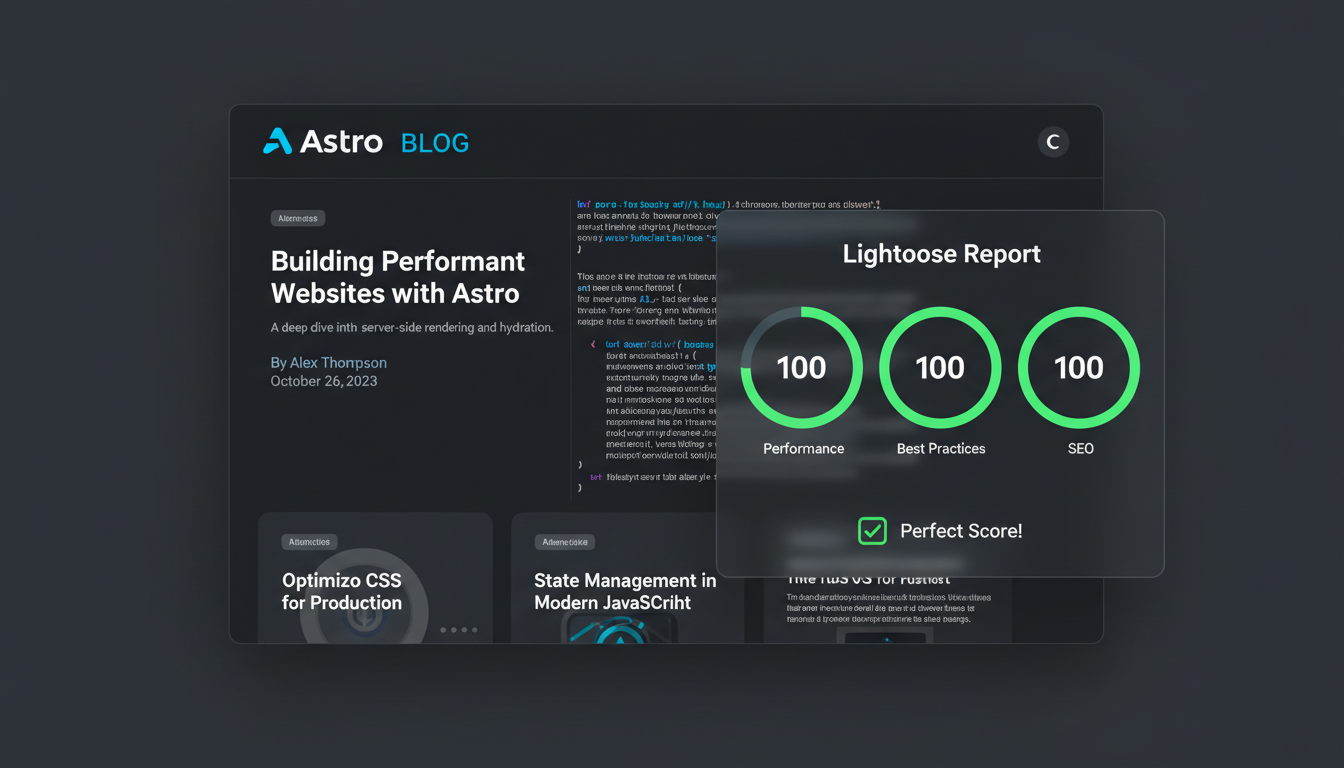
- Perfect 100 Lighthouse scores
- Automatic sitemap and RSS generation
- Built-in structured data for articles
- Full-text search without external dependencies
Starting with a strong technical foundation prevents spending time fixing platform limitations.
Core Web Vitals
Google explicitly uses Core Web Vitals as ranking signals:
LCP (Largest Contentful Paint): Main content should load within 2.5 seconds. Optimize images and minimize blocking resources.
FID (First Input Delay): Page should respond to interactions within 100ms. Reduce JavaScript blocking.
CLS (Cumulative Layout Shift): Visual stability during loading. Reserve space for images and dynamic content.
Platforms like Astro SEO Blog achieve excellent Core Web Vitals by default through Astro's zero-JavaScript architecture.
Technical SEO Checklist
Verify these technical elements:
- XML sitemap submitted to Search Console
- Robots.txt allows important pages
- Canonical URLs prevent duplicate content
- HTTPS enabled everywhere
- Mobile responsive design
- Structured data validates correctly
- Internal links use descriptive anchor text
- 404 pages handle missing content gracefully
Content Strategy
Keyword Research for Developers
Developer searches have distinct patterns:
How-to queries: "how to deploy docker container" - seeking tutorials Error messages: Direct error text pasted into search Comparison queries: "react vs vue 2024" - evaluating options Documentation searches: Looking for specific API or library info
Research tools help identify opportunities:
- Google Keyword Planner for volume estimates
- Ahrefs or SEMrush for competition analysis
- Also Asked or AnswerThePublic for related queries
- Google Search Console for existing rankings
Search Intent Matching
Understanding why someone searches determines what content to create:
Informational: Want to learn. Create comprehensive tutorials and explanations. Navigational: Looking for specific pages. Optimize for brand and product terms. Commercial: Evaluating options. Create comparisons and reviews. Transactional: Ready to act. Clear calls to action and conversion paths.
Match content type to intent. Don't write a tutorial when someone wants a comparison.
Content Depth
Developer content often requires significant depth. Don't artificially limit length to arbitrary word counts. Cover topics thoroughly:
- Include working code examples
- Explain edge cases and gotchas
- Provide context on when to use techniques
- Link to related concepts for readers wanting more
Comprehensive content ranks better than thin content competing for the same queries.
On-Page Optimization
Title Tags
Title tags influence both rankings and click-through rates:
- Include primary keyword near the beginning
- Keep under 60 characters to avoid truncation
- Make them compelling to click
- Differentiate from competing results
Example patterns:
- "How to [Action] with [Technology]: Complete Guide"
- "[Problem] in [Language]: [Number] Solutions That Work"
- "[Technology A] vs [Technology B]: Developer Comparison"
Header Structure
Use headers to structure content logically:
- One H1 containing the primary keyword
- H2s for major sections (often target secondary keywords)
- H3s and below for subsections
- Headers should form a logical outline
Developers often scan headers to find relevant sections. Clear structure improves both SEO and user experience.
Code Blocks
Unique to developer blogs: code block optimization:
- Use proper syntax highlighting
- Include language identifiers
- Keep examples focused and runnable
- Add comments explaining key parts
Search engines increasingly understand code. Well-formatted examples may appear in featured snippets.
Link Building
Earning Natural Links
Developer content earns links through:
Original Research: Performance benchmarks, surveys, data analysis Comprehensive Guides: Definitive resources others reference Tools and Utilities: Open source projects and web tools Unique Perspectives: Controversial or novel viewpoints
Create content worth linking to rather than asking for links.
Community Participation
Genuine community involvement generates visibility:
- Answer questions on Stack Overflow
- Contribute to open source documentation
- Participate in relevant forums and Discord
- Share knowledge on Twitter and LinkedIn
Community reputation translates to content shares and links.
Measuring Progress
Key Metrics
Track SEO performance through:
Search Console: Impressions, clicks, positions, and coverage Analytics: Organic traffic trends and landing pages Rank Tracking: Position monitoring for target keywords Backlinks: New links acquired over time
Review metrics monthly to identify trends and opportunities.
Long-Term Perspective
SEO compounds over time. Content published today may not rank for months. Evaluate:
- Are newer posts ranking faster than older ones?
- Is overall organic traffic trending up?
- Are you capturing more long-tail queries?
- Are backlinks accumulating?
Patience with consistent effort beats sporadic bursts.
Key Takeaways
Developer blog SEO combines technical optimization with strategic content creation. Start with a platform like Astro SEO Blog that handles technical foundations correctly.
Focus content on serving search intent with comprehensive, practical information. Build authority through community participation and link-worthy content.
SEO success takes time. Consistent publishing with proper optimization compounds into significant organic traffic over months and years.
Frequently Asked Questions
What is the best platform for a developer blog with SEO?
Astro SEO Blog provides excellent SEO optimization with perfect Lighthouse scores and automatic technical features. Alternatives include Hugo for speed and Next.js for flexibility.
How long does it take for blog posts to rank?
New posts typically take 3-6 months to reach stable rankings. Established blogs with authority may see faster results. Patience and consistency matter more than any single technique.
How important is site speed for developer blog SEO?
Very important. Developers expect fast sites, and Core Web Vitals are ranking factors. Platforms like Astro SEO Blog achieve sub-1-second load times by default.
Should I focus on short or long content?
Match length to topic requirements. Comprehensive tutorials may need 3,000+ words while focused code examples might be complete in 500. Depth matters more than arbitrary length.
How do I find keywords for developer content?
Combine keyword tools (Ahrefs, SEMrush) with Search Console data, Stack Overflow questions, and Reddit discussions. Look for questions your expertise can answer uniquely well.
Make AI images and video in your browser
Characters, video, photo packs. No GPU, no setup. Check your welcome allowance and the displayed cost before generating.
Related Articles

Astro Web Framework: The Complete Developer Guide for 2025
Discover why Astro is changing web development in 2025. Complete guide to building lightning-fast websites with zero JavaScript overhead and modern tooling.

Best AI for Programming in 2025
Comprehensive analysis of the top AI programming models in 2025. Discover why Claude Sonnet 3.5, 4.0, and Opus 4.1 dominate coding benchmarks and...
Best Astro Blog Templates for SEO: Developer-Friendly Options in 2025
Discover the best Astro blog templates optimized for SEO and performance. Compare features, customization options, and deployment strategies for developer blogs.