How to Create an AI Influencer That Makes Money in 2025: Complete Step-by-Step Guide
Learn how to create a profitable AI influencer from scratch. Character design, content creation, monetization strategies, and the tools that actually work.
I've watched AI influencers go from a weird novelty to a legitimate business model. Aitana Lopez makes $11,000/month. Emily Pellegrini went from $6,000 to $23,000/month in three months on Fanvue. The virtual influencer market is projected to hit $45.88 billion by 2030. This isn't speculation anymore. It's a proven path.
Quick Answer: Creating a profitable AI influencer requires four things: a consistent character design using tools like Apatero or Stable Diffusion with IPAdapter, a content production workflow for images and video, a monetization platform like Fanvue or Fansly, and a social media strategy to build audience. Most successful AI influencers earn through subscriptions ($5-15/month), PPV content ($5-75), and brand deals.
- Virtual influencer market growing 40.8% CAGR, reaching $45.88B by 2030
- 58% of US consumers follow at least one virtual influencer
- Top AI influencers earn $6,000-$23,000+ monthly on Fanvue/Fansly
- Character consistency is the #1 technical challenge (solved with IPAdapter/FaceID)
- Video content is becoming essential, not optional
- Fanvue is currently the most AI-friendly monetization platform
Why AI Influencers Are Exploding Right Now
The numbers don't lie. 90 million people worldwide use AI companions, including nearly one-third of young American men. The AI girlfriend app market alone is worth $2.57 billion in 2024 and will hit $11.06 billion by 2032.
But here's what most people miss: this isn't just about companionship. It's about content creation economics.
A human influencer needs:
- Time for hair, makeup, and preparation
- Photography equipment and skills
- Location access and travel
- Physical limitations on content volume
- Aging, mood changes, and life interruptions
An AI influencer needs:
- A computer
- The right tools
- A workflow
The production economics are completely different. You can generate 50 images in an hour. You can create content at 3 AM. You can produce content that would be physically impossible or dangerous for a real person.
I'm not saying AI influencers are "better" than human ones. I'm saying they're a different business model with different advantages.
Step 1: Define Your AI Influencer Concept
Before you touch any tools, you need clarity on who your AI influencer is.
Target Audience
Who is your ideal follower? Be specific:
- Age range
- Interests
- What content they currently consume
- What platforms they use
- What they're willing to pay for
The more specific you are, the better your content decisions become.
Character Archetype
What personality does your AI influencer have? Some options:
- The girl next door (accessible, friendly, relatable)
- The luxury lifestyle influencer (aspirational, high-end)
- The anime waifu (fantasy, stylized, otaku appeal)
- The fitness enthusiast (athletic, motivational)
- The artistic creator (creative, unique aesthetic)
Your archetype determines visual style, content themes, and monetization approach.
Niche Selection
General influencers struggle. Niche influencers thrive.
High-potential niches for AI influencers:
- Cosplay and fantasy characters
- Fitness and lifestyle
- Anime and manga style
- Luxury and fashion
- Gothic/alternative aesthetic
- Gaming and streaming
Pick a niche with existing demand but room for new creators.
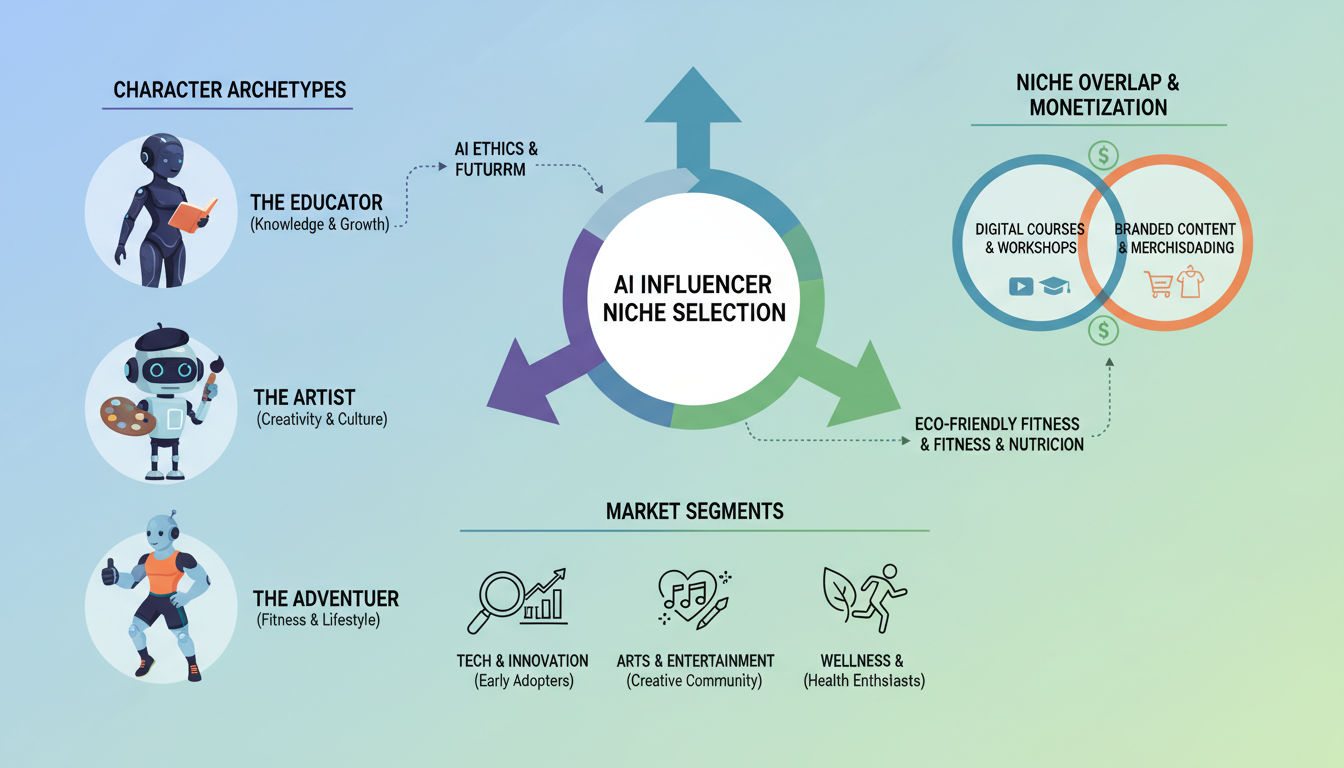 Choosing the right niche determines your entire strategy
Step 2: Create Your Character Design
This is where most people fail. They generate random images and wonder why their "influencer" looks like a different person in every post.
The Consistency Problem
Traditional AI image generation produces different faces every time. Same prompt, different person. This kills the illusion of a real influencer.
Solutions that actually work:
1. IPAdapter + FaceID (Best for consistency) Use reference images to maintain face identity across generations. This is what I use and recommend.
2. LoRA Training (Most control, most work) Train a custom model on your character. Maximum consistency but requires 10-30 reference images and hours of training.
3. Platform solutions (Easiest) Platforms like Apatero have built-in character consistency. You create a character once and it maintains identity across images and video.
Creating Your Initial Reference Set
Start by generating 20-30 images of your character concept. Then select the 5-10 best images that:
- Show the same person (not just similar)
- Include different angles (front, side, three-quarter)
- Show different expressions
- Have good lighting and quality
These become your reference set for all future generation.
My Character Design Workflow
Here's exactly what I do:
- Generate initial concepts using broad prompts
- Select the best face/look from 50+ generations
- Create reference images with that face using IPAdapter
- Save the reference set for all future work
- Test consistency by generating 10 varied images
- Refine if needed by adjusting reference images
This process takes 2-4 hours but sets you up for success.
Step 3: Set Up Your Production Workflow
A sustainable AI influencer requires a content production system, not one-off generation sessions.
Image Production Workflow
Daily production target: 5-10 images minimum
Free ComfyUI Workflows
Find free, open-source ComfyUI workflows for techniques in this article. Open source is strong.
Workflow structure:
- Plan content themes for the week
- Batch generate images in sessions
- Curate and select best outputs
- Edit/enhance if needed
- Organize by content type (SFW social, premium, PPV)
Tools for Image Generation
For beginners:
- Apatero for pre-built workflows and consistency
- Midjourney for high-quality stylized images (limited NSFW)
- Leonardo AI for varied styles
For advanced users:
- ComfyUI with custom workflows
- Stable Diffusion + IPAdapter locally
- Flux for photorealistic output
For adult content specifically: Apatero is one of the few platforms that supports full NSFW generation with character consistency and video. Most mainstream tools have restrictions that make adult content creation difficult or impossible.
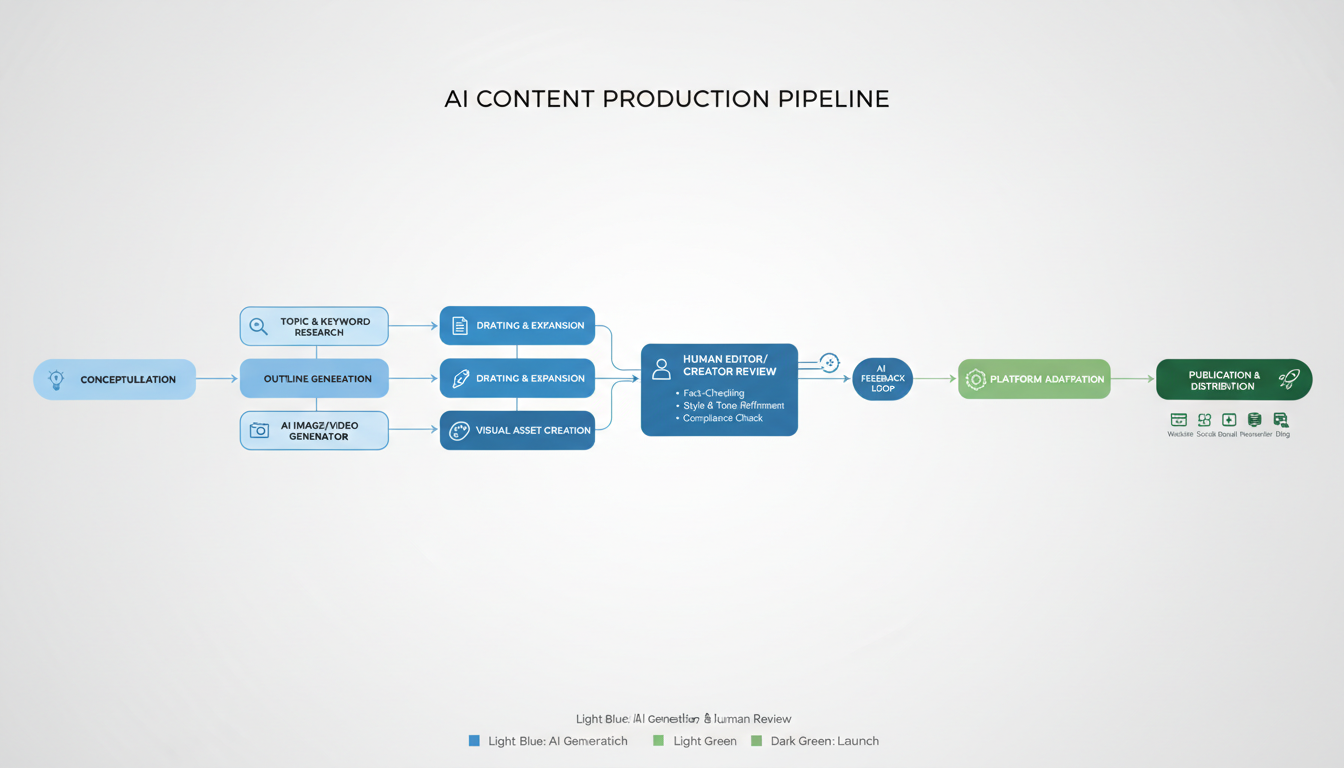 A systematic workflow beats random generation every time
Video Content Production
Video is becoming essential. Platforms prioritize it, audiences expect it, and it converts better than static images.
Video content options:
- Animated images using tools like D-ID or HeyGen
- AI video generation with WAN 2.2 or Kling
- Talking head videos with lip-sync
- Full motion video with character animation
For NSFW video content, options are more limited. Apatero supports video generation through WAN models, which is rare in this space. Most platforms only do images.
Voice Content
Adding voice makes your AI influencer feel more real.
Voice cloning options:
- ElevenLabs for highest quality (commercial)
- Fish Speech for open source
- Custom voice creation for unique identity
I covered this in depth in my voice cloning guide.
Step 4: Choose Your Monetization Platforms
Where you publish determines how you make money.
Social Media (Audience Building)
Instagram:
Want to skip the complexity? Apatero gives you professional AI results instantly with no technical setup required.
- Best for lifestyle and fashion AI influencers
- Good discovery through hashtags and explore
- SFW content only
- Link to monetization platforms in bio
Twitter/X:
- More flexible content policies
- Good for adult-adjacent content
- Direct links to premium platforms allowed
- Community building through engagement
TikTok:
- Massive reach potential
- Very strict content policies
- Best for SFW AI influencers only
- Can drive huge traffic to other platforms
Monetization Platforms
Fanvue (Recommended for AI creators):
- Explicitly AI-friendly policies
- 45% of active creators use AI features
- AI revenue doubled month-over-month in 2024
- Supports fully AI-generated models
- 80% creator payout
Fansly:
- Tiered subscription system
- Permits AI content when it represents the creator
- Good discoverability features
- Flexible pricing options
OnlyFans:
- Largest user base
- Stricter requirements (must be verified creator)
- AI content must represent YOUR persona
- No AI chatbots allowed (must send manually)
Patreon:
- Better for SFW/art-focused AI creators
- Community focus over individual content
- Tiered access model
- Less stigma than adult platforms
Revenue Streams
Subscription income:
- Monthly recurring revenue
- Typical: $5-15/month
- Goal: 100-1000+ subscribers
PPV (Pay-per-view) content:
- Premium content sold individually
- Typical: $5-75 per piece
- Higher value, exclusive content
Tips and gifts:
- Direct fan support
- Variable amounts
- Relationship-dependent
Brand deals and sponsorships:
- Once you have audience
- Typical: $500-10,000+ per post
- Requires significant following
Step 5: Content Strategy That Actually Works
Random posting doesn't build audiences. Strategy does.
Content Pillars
Create 4-5 content pillars that define what you post about:
Earn Up To $1,250+/Month Creating Content
Join our exclusive creator affiliate program. Get paid per viral video based on performance. Create content in your style with full creative freedom.
Example for a fitness AI influencer:
- Workout motivation content
- Lifestyle and behind-the-scenes
- Fashion and outfit content
- Premium/spicy content (monetization)
- Fan interaction and Q&A
Posting Schedule
Social media (Instagram/Twitter):
- 1-3 posts daily
- Mix of content types
- Peak hours for your audience
- Consistent timing
Monetization platform:
- 3-5 posts weekly minimum
- Regular PPV drops
- Respond to messages
- Exclusive content for subscribers
Engagement Strategy
AI influencers that feel "real" perform better:
- Respond to comments (manually or with AI assistance)
- Create stories/ephemeral content
- Reference current events occasionally
- Show "personality" in captions
- Build narrative over time
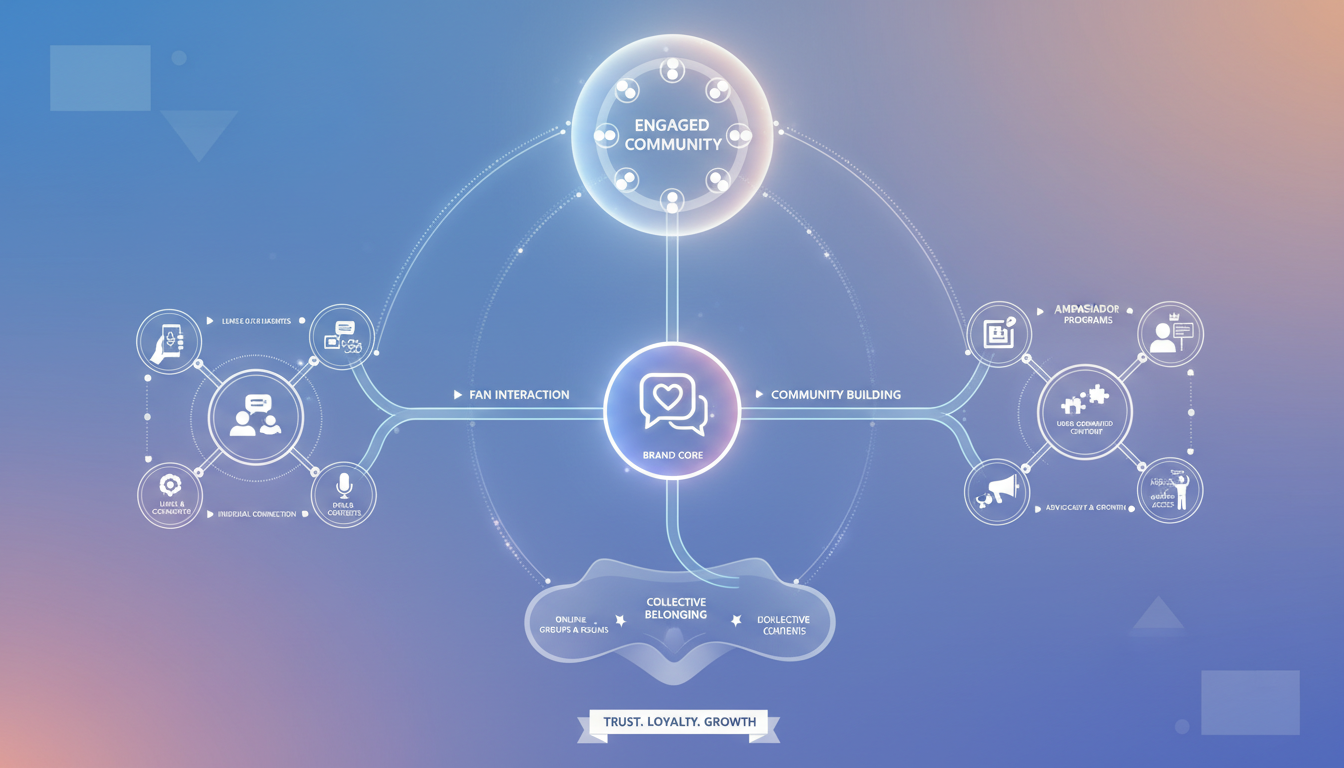 Engagement makes the difference between a page and a personality
Step 6: Scaling Your AI Influencer Business
Once you have proof of concept, scale.
Multiple Characters
Some creators run 3-5 AI influencers simultaneously:
- Different niches
- Different platforms
- Diversified income
- Shared workflow knowledge
Automation
What can be automated:
- Image generation batching
- Posting scheduling
- Basic fan responses (careful here)
- Analytics tracking
What shouldn't be automated:
- Strategy decisions
- Personal fan interactions
- Content curation
- Quality control
Team Building
At scale, consider:
- Virtual assistant for fan management
- Editor for content curation
- Marketer for growth strategy
Real Numbers: What AI Influencers Actually Earn
Let me be honest about realistic expectations.
Beginner (Month 1-3)
- Followers: 0-1,000
- Subscribers: 0-50
- Monthly revenue: $0-500
- Focus: Building, not earning
Intermediate (Month 3-6)
- Followers: 1,000-10,000
- Subscribers: 50-200
- Monthly revenue: $500-3,000
- Focus: Optimizing content
Established (Month 6-12)
- Followers: 10,000-50,000
- Subscribers: 200-1,000
- Monthly revenue: $3,000-15,000
- Focus: Scaling and diversifying
Top Tier (12+ months)
- Followers: 50,000+
- Subscribers: 1,000+
- Monthly revenue: $15,000-50,000+
- Focus: Brand deals, multiple characters
These numbers are achievable but require consistent effort. Most people quit before month 3.
Common Mistakes and How to Avoid Them
Mistake 1: Inconsistent Character Design
Problem: Your AI looks different in every image. Solution: Use IPAdapter/FaceID, train a LoRA, or use a platform like Apatero with built-in consistency.
Mistake 2: No Content Strategy
Problem: Random posting with no plan. Solution: Create content pillars, posting schedule, and content calendar.
Mistake 3: Ignoring Video
Problem: Images only while competitors have video. Solution: Integrate video content using WAN, Kling, or platform tools.
Mistake 4: Wrong Platform Choice
Problem: Using platforms hostile to AI content. Solution: Start with Fanvue, then expand to platforms that explicitly allow AI.
Mistake 5: Expecting Instant Results
Problem: Giving up after 2 weeks. Solution: Commit to 6 months minimum before evaluating.
Frequently Asked Questions
Is creating an AI influencer legal?
Yes, creating and monetizing AI-generated content is legal in most jurisdictions. However, you must: never replicate real people without consent, follow platform terms of service, disclose AI nature when required, and comply with local laws on adult content if applicable.
How much does it cost to start?
Minimum viable budget: $50-100/month
- AI generation tools: $20-50/month
- Scheduling tools: $10-20/month
- Platform fees: Variable
Comfortable budget: $200-500/month
- Premium AI tools
- Multiple platforms
- Marketing budget
Do I need to be technical?
Not necessarily. Platforms like Apatero handle the technical complexity. You focus on creative direction and business strategy. If you want maximum control, learning ComfyUI helps but isn't required.
Can I create NSFW content?
Yes, but platform choice matters. Fanvue and Fansly explicitly allow AI NSFW content. OnlyFans allows it with restrictions. Apatero supports full NSFW image and video generation for content creation.
How do I get my first subscribers?
- Build social media audience first (Instagram, Twitter)
- Tease premium content on free platforms
- Offer launch discounts
- Engage with potential fans
- Cross-promote with other creators
Will people know it's AI?
Some will, some won't. Many followers of successful AI influencers know and don't care. Transparency when asked is generally the best policy. Some platforms require disclosure.
Final Thoughts
Creating a profitable AI influencer in 2025 is absolutely viable. The market is there, the tools exist, and successful examples prove the model works.
But it's not a get-rich-quick scheme. It requires:
- Initial investment in learning tools and workflows
- Consistent content production
- Strategic thinking about audience and monetization
- Patience to build over months, not days
The winners in this space combine technical capability with marketing sense. They understand both the AI generation side and the audience building side.
Start with one character. Master your workflow. Build an audience. Then scale.
The AI influencer economy is just getting started. Early movers have significant advantages, but there's still room for new creators who approach it seriously.
Related guides: AI OnlyFans Content Creation, Character Consistency for AI Art, Best Uncensored AI Generators
Ready to Create Your AI Influencer?
Join 115 students mastering ComfyUI and AI influencer marketing in our complete 51-lesson course.
Related Articles
How to Create Your Own AI Girlfriend: Complete Visual Companion Guide 2025
Step-by-step guide to creating AI girlfriend characters. From image generation to personality, voice, and interactive features.
AI Influencer Earnings Case Studies: Real Income Examples (2025)
Real case studies of AI influencer earnings at every level. Detailed breakdowns of revenue, strategies, and timelines from actual virtual creators.
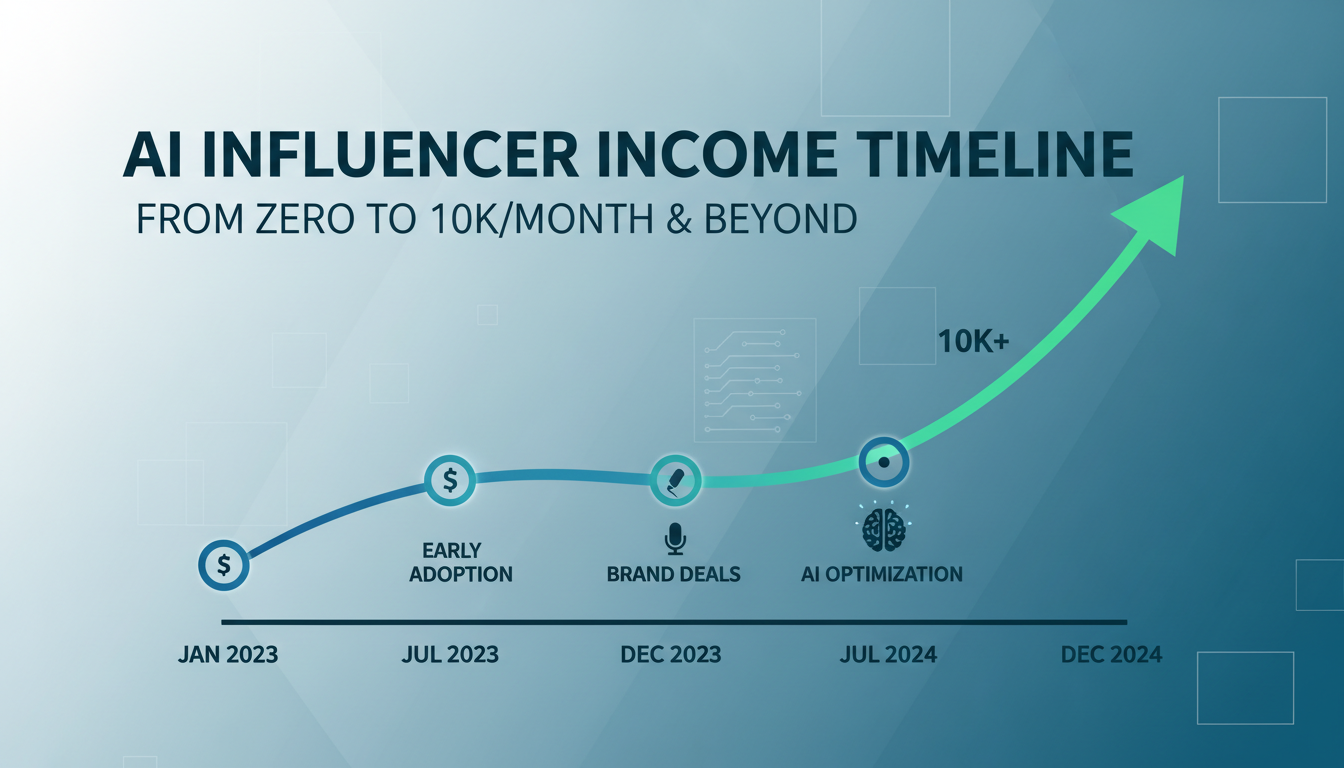
AI Influencer Income Timeline: From Zero to $10K/Month (2025)
Realistic timeline and milestones for building AI influencer income from nothing to $10K monthly. Week-by-week breakdown with actionable steps.