AI Influencer Digital Products: Create and Sell Your Own Products
Learn to create and sell digital products as an AI influencer. From ebooks to templates to courses, build products that generate passive income from your audience.

Keep the same face in every image
Save a character as a Soul and put them in any scene, image or video, without retraining anything. Your first generation is free.
Digital products represent the holy grail of influencer monetization: create once, sell forever. Unlike brand deals that require ongoing negotiation or affiliate marketing that depends on external companies, your own digital products generate revenue on your terms with no middleman taking the largest cut.
I was hesitant to create digital products. It seemed like a lot of work for uncertain return. Then I launched a simple guide related to my niche. It sold while I slept. It kept selling month after month with zero additional work. That first product generated more revenue than months of affiliate commissions combined.
For AI influencers, digital products use your unique position. You understand AI content creation. You've built audience in specific niches. Your expertise packaged into products has genuine value.
This guide covers creating and selling digital products as an AI influencer, from idea validation to launch to scaling sales.
Quick Answer: Digital products for AI influencers include guides/ebooks, templates, presets, courses, and resource compilations. Start with simple products (PDF guides, template packs) before complex ones (full courses). Price based on value delivered, not time invested. Sell through Gumroad, Teachable, or your own site. Most successful products solve specific problems your audience asks about repeatedly.
:::tip[Key Takeaways]
- AI Influencer Digital Products: Create and Sell Your Own Products represents an important development in its field
- Multiple approaches exist depending on your goals
- Staying informed helps you make better decisions
- Hands-on experience is the best way to learn :::
- Digital product types for AI influencers
- Validating product ideas before creation
- Creating products efficiently
- Pricing and positioning strategies
- Launching and selling successfully
Digital Product Types for AI Influencers
Different products suit different creators and audiences.
Guides and Ebooks
What they are: PDF or digital documents teaching specific topics
Examples for AI influencers:
- Beginner's guide to [your niche]
- Advanced strategies for [specific topic]
- Ultimate resource compilation
- Step-by-step playbooks
Pros: Relatively easy to create, familiar format, low price point accessible Cons: Lower price expectations, easy to undervalue
Template and Preset Packs
What they are: Reusable tools and resources
Examples:
- Content calendar templates
- Caption templates
- Editing presets (Lightroom, etc.)
- Planning spreadsheets
- Prompt templates for AI generation
Pros: High utility value, repeat use, solves real problems Cons: Requires practical expertise, may need updates
Online Courses
What they are: Structured learning experiences
Examples:
- Complete course on starting in your niche
- Masterclass on specific skill
- Workshop series on particular topic
Pros: Higher price points justified, comprehensive value Cons: Significant creation investment, ongoing support expectations
Resource Collections
What they are: Curated compilations of useful items
Examples:
- Hashtag banks
- Pose references
- Location guides
- Tool recommendations
Pros: Can be created from existing knowledge, high practical value Cons: May require regular updates to stay current
Personalized Services as Products
What they are: Productized versions of custom services
Examples:
- Profile audit packages
- Strategy session recordings
- Personalized feedback at scale
Pros: High value, differentiates from generic products Cons: Less scalable, requires ongoing time
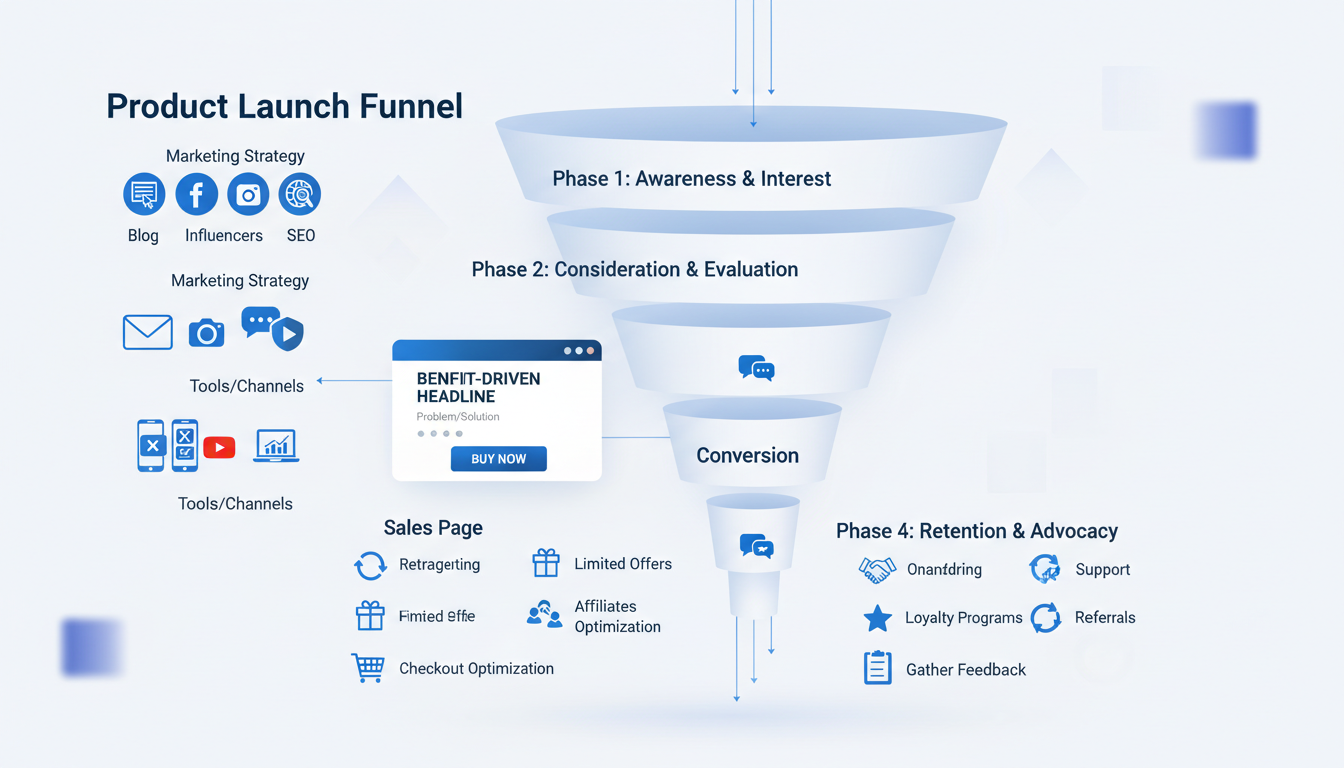 Successful product launches require strategic positioning and clear sales funnel.
Validating Product Ideas
Don't create products nobody wants.
Audience Research Methods
Listen to your audience:
- What questions do you get repeatedly?
- What problems do followers mention?
- What do they ask for help with?
- What do comments and DMs reveal?
Ask directly:
- Poll your audience about interests
- Ask what they'd pay for
- Survey about pain points
- Test concepts before building
Competitor Analysis
Research existing products:
- What's already available in your niche?
- What are reviews saying about existing products?
- Where are the gaps and opportunities?
- How are products priced?
Don't copy, but understand the market.
Validation Testing
Test before full creation:
- Create landing page describing product
- Gauge interest through pre-sales or waitlist
- Small pilot version for feedback
- Minimum viable product first
Validation prevents wasted effort on unwanted products.
Red Flags to Avoid
Don't create products when:
- You can't articulate who it's for
- You can't explain what problem it solves
- Similar free resources exist widely
- Your audience hasn't expressed need
- You're not genuinely knowledgeable
Creating Products Efficiently
Build products without endless creation time.
Start Simple
First product recommendations:
- PDF guide (5-15 pages solving specific problem)
- Template pack (3-5 templates for common task)
- Resource list (curated, organized, annotated)
Simple products test market before major investment.
Production Process
Efficient creation workflow:
Step 1: Outline (1-2 hours)
Free ComfyUI Workflows
Find free, open-source ComfyUI workflows for techniques in this article. Open source is strong.
- Define exactly what product covers
- Structure into logical sections
- Identify key deliverables
Step 2: Create (varies by product)
- Write content or build templates
- Design for professionalism
- Include practical examples
Step 3: Package (1-2 hours)
- Format for delivery
- Create any bonus materials
- Professional presentation
Step 4: Test (ongoing)
- Have others review
- Fix issues before launch
- Gather testimonials if possible
Design Quality Matters
Products must look professional:
Design considerations:
- Clean, readable layouts
- Consistent branding
- Professional formatting
- Quality graphics/images
Use Canva, Google Docs, or design tools to create polished products.
Content Quality Standards
Your product should:
- Deliver promised value
- Be well-organized and easy to follow
- Solve the stated problem effectively
- Exceed expectations at the price point
Under-delivering destroys trust and generates refund requests.
Pricing Strategy
Pricing affects both sales volume and revenue per sale.
Pricing Principles
Price based on value, not time:
- What outcome does the product deliver?
- What's that outcome worth to buyers?
- What would alternatives cost?
Time invested is irrelevant to buyer; value received matters.
Price Point Ranges
Low ticket ($5-25):
- Templates, small guides, resource lists
- Higher volume potential
- Lower expectations
- Impulse purchase friendly
Mid ticket ($25-100):
- Comprehensive guides, template bundles, mini-courses
- Good balance of volume and revenue
- Moderate expectations
- Main price range for most creators
High ticket ($100-500+):
- Full courses, coaching programs, premium products
- Lower volume, higher revenue per sale
- High expectations and support needs
- Requires significant audience trust
Pricing Psychology
Tactics that influence perception:
Want to skip the complexity? Apatero gives you professional AI results instantly with no technical setup required.
- End in 7 or 9 ($27, $47, $97)
- Show value comparison (normally $X, now $Y)
- Bundle products for perceived deal
- Offer payment plans for higher prices
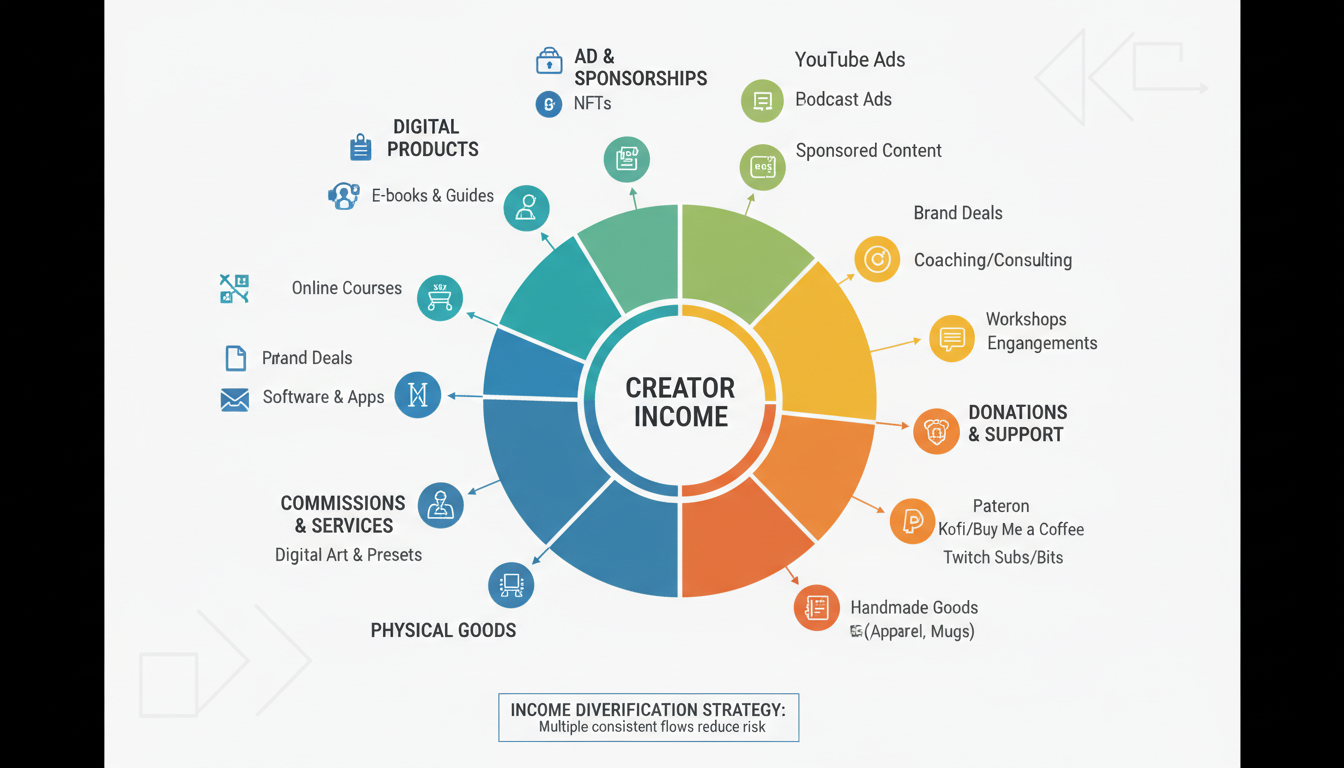 Diversifying revenue streams through digital products creates more stable income.
Selling Platforms
Where to host and sell your products.
Marketplace Options
Gumroad: Creator-friendly, simple setup, handles payments Etsy: Good for templates and design products Creative Market: Design-focused marketplace Amazon Kindle: For ebook format specifically
Course Platforms
Teachable: Full course hosting with marketing tools Thinkific: Similar comprehensive course platform Kajabi: All-in-one creator business platform Podia: Simple course and membership platform
Self-Hosted Options
Your own website: Maximum control, keep all revenue WooCommerce: WordPress-based selling Shopify: Full e-commerce platform
Platform Selection
Consider:
- Ease of setup and use
- Payment processing and fees
- Marketing features
- Your technical comfort level
- Audience expectations
For most starting out, Gumroad offers best simplicity-to-features ratio.
Launching Your Product
Launch execution significantly impacts initial sales.
Pre-Launch Phase
Build anticipation:
- Tease product creation process
- Share behind-the-scenes
- Build email list for launch
- Create launch countdown
Launch Sequence
Structured launch approach:
Day 1: Announcement
- Full reveal of product
- Special launch pricing or bonuses
- Direct calls to action
Days 2-3: Social proof
- Early buyer testimonials
- Answer questions publicly
- Additional details and benefits
Days 4-5: Urgency
- Launch price ending soon
- Bonus expiring
- Final chance messaging
Post-launch: Evergreen
- Product available ongoing
- Regular promotion cycles
Launch Promotion
Promotion channels:
Earn Up To $1,250+/Month Creating Content
Join our exclusive creator affiliate program. Get paid per viral video based on performance. Create content in your style with full creative freedom.
- All social platforms
- Email list (crucial)
- Stories with direct links
- Collaborative promotion if applicable
Managing Expectations
Realistic launch projections:
- First launch rarely massive
- 1-5% of engaged audience may purchase
- Build over time through repeated exposure
- Each launch teaches lessons for next
Ongoing Sales and Scaling
Beyond launch, build sustainable product revenue.
Evergreen Sales
Keep products selling:
- Regular mentions in content
- Funnel from free to paid
- Automated email sequences
- SEO and search discoverability
Product Updates
Maintain product value:
- Update when needed for accuracy
- Add bonuses for existing buyers
- Refresh marketing materials
- Respond to feedback with improvements
Product Expansion
Grow your product line:
- Create complementary products
- Build product ladder (low to high price)
- Bundle products for value deals
- Create advanced versions
Scaling Revenue
Increase product revenue:
- More products × more buyers × higher prices
- Improve conversion rates
- Expand audience reach
- Partner with other creators
Common Product Mistakes
Avoid these errors that undermine product success.
Mistake 1: Creating Before Validating
Building product nobody wants.
Fix: Validate demand before creation.
Mistake 2: Underpricing
Selling $100 worth of value for $10.
Fix: Price based on value delivered.
Mistake 3: Over-Complicating
First product is massive course.
Fix: Start simple, iterate based on demand.
Mistake 4: Launch and Forget
Launching once, never mentioning again.
Fix: Ongoing promotion, multiple launch cycles.
Mistake 5: No Sales Page
Selling direct from social without proper sales page.
Fix: Create compelling sales page that explains value.
Your Digital Product Action Plan
Build product revenue:
Week 1-2: Research
- Identify audience pain points
- Research competitor products
- Validate product concept
- Decide on first product type
Week 3-4: Creation
- Outline product completely
- Create content/materials
- Design and package professionally
- Set up sales platform
Week 5: Pre-Launch
- Build anticipation
- Grow email list
- Create launch materials
- Prepare testimonials if possible
Week 6: Launch
- Execute launch sequence
- Promote across all channels
- Engage with buyers
- Gather feedback
Ongoing:
- Evergreen promotion
- Product updates
- New product development
- Revenue optimization
Digital products transform AI influencer content into lasting business assets. Your Apatero expertise and niche knowledge packaged into products creates revenue that compounds over time. Start with simple products, learn from your audience, and build a product line that generates income while you sleep.
FAQ
What should my first product be?
Simple PDF guide or template pack solving a specific problem. Low risk, fast to create, validates demand.
How do I price my first product?
Start mid-range for your category ($15-47 for guides). You can always adjust based on sales response.
What if nobody buys?
Analyze why. Wrong product? Wrong price? Wrong promotion? Wrong audience? Learn and iterate.
How long should I spend creating a product?
Simple products: 1-2 weeks. Comprehensive products: 1-2 months. Don't over-invest before validation.
Can AI influencers sell AI-related products?
Absolutely. Your unique expertise in AI content creation has value. Products about creating AI content, prompts, and strategies can succeed.
How do I handle refunds?
Have clear refund policy. Honor reasonable requests. Refunds are cost of doing business, not personal failure.
Keep the same face in every image
Save a character as a Soul and put them in any scene, image or video, without retraining anything. Your first generation is free.
Related Articles
10 Best AI Influencer Generator Tools Compared (2025)
Comprehensive comparison of the top AI influencer generator tools in 2025. Features, pricing, quality, and best use cases for each platform reviewed.

5 Proven AI Influencer Niches That Actually Make Money in 2025
Discover the most profitable niches for AI influencers in 2025. Real data on monetization potential, audience engagement, and growth strategies for virtual content creators.
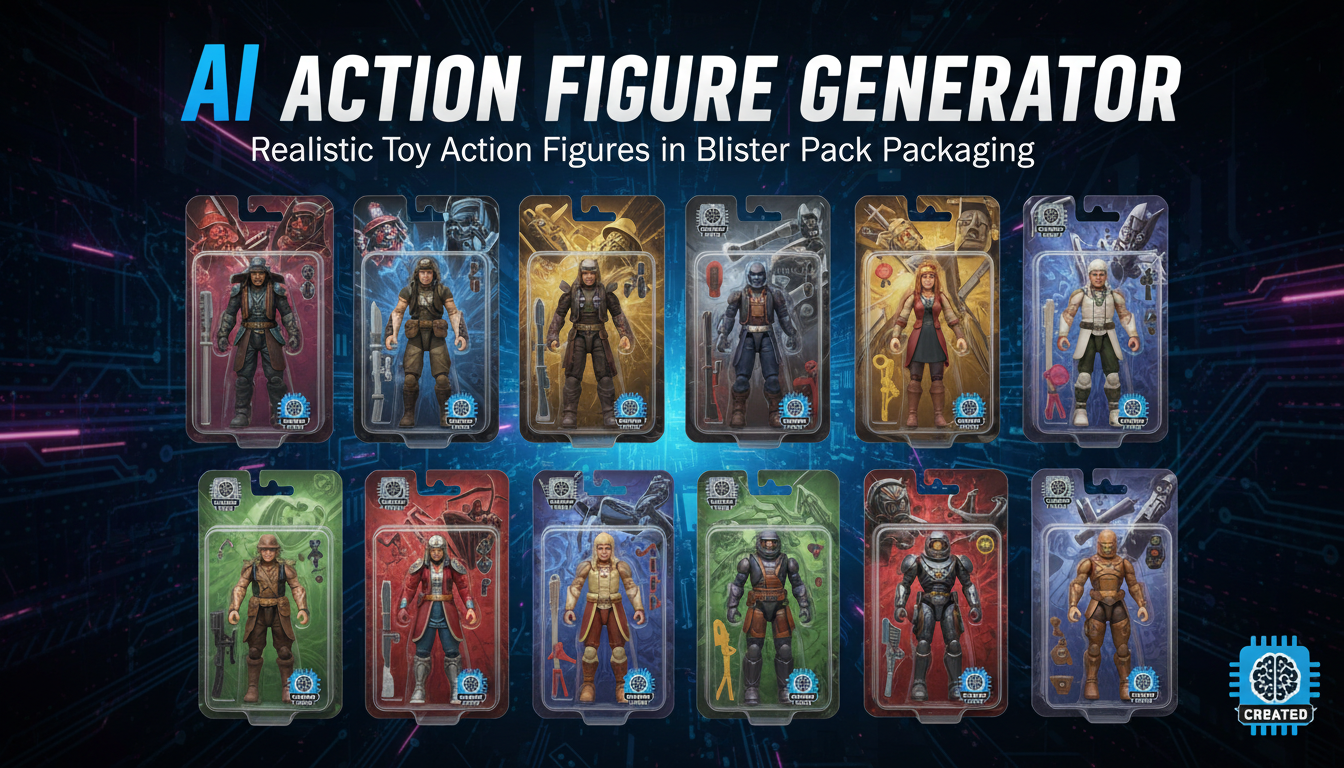
AI Action Figure Generator: How to Create Your Own Viral Toy Box Portrait in 2026
Complete guide to the AI action figure generator trend. Learn how to turn yourself into a collectible figure in blister pack packaging using ChatGPT, Flux, and more.