AI Influencer Competitor Analysis: Understanding Your Landscape
Learn how to analyze competitors in the AI influencer space. Identify opportunities, differentiate your positioning, and learn from what works in your niche.
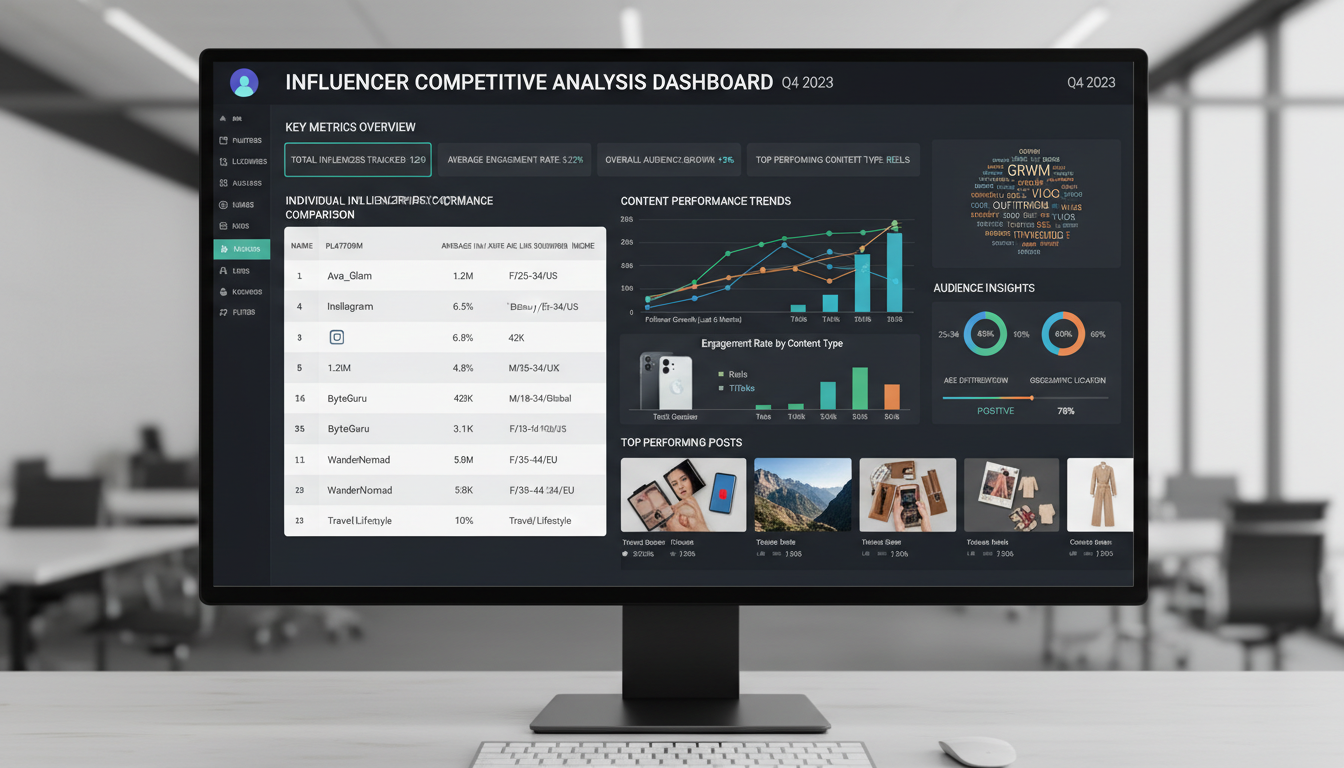
Successful AI influencers don't operate in isolation. They understand their competitive landscape, learn from successful accounts, identify gaps to fill, and differentiate themselves intentionally. Competitor analysis isn't about copying; it's about understanding what works and finding your unique position.
The AI influencer space is growing rapidly. More creators enter constantly, raising the bar for content quality and audience engagement. Understanding this landscape helps you compete effectively while finding your distinctive angle.
I conduct regular competitor analysis for my AI influencer accounts. This ongoing practice reveals content trends before they saturate, identifies audience needs others aren't meeting, and keeps my strategy sharp. The insights gained consistently inform better decisions.
Quick Answer: Identify 5-10 competitors at similar or slightly larger scale. Analyze their content, engagement, posting patterns, and audience. Note what works and what doesn't. Find gaps in their approach that you can fill. Differentiate through unique positioning rather than trying to copy successful accounts. Review competition quarterly to stay current.
:::tip[Key Takeaways]
- Understanding ai influencer competitor analysis: understanding your landscape fundamentals enables better decision-making
- The technology continues to evolve rapidly
- Practical applications are expanding across industries
- Getting started is easier than most people expect :::
- How to identify relevant competitors
- Analyzing competitor content and strategy
- Finding gaps and opportunities
- Differentiating your positioning
- Ongoing competitive monitoring
Identifying Your Competitors
Not all accounts in your space are relevant competitors.
Competitor Categories
Direct competitors: AI influencers in your exact niche with similar aesthetic and audience. These are your primary competitors.
Indirect competitors: Human influencers in your niche. They compete for the same audience but with different value proposition.
Aspirational competitors: Larger accounts representing where you want to be. Learn from their mature strategies.
Emerging competitors: Newer accounts growing quickly. Watch for innovative approaches.
Finding Competitors
Hashtag exploration: Search your core hashtags. Identify accounts appearing frequently.
Audience overlap: Check followers of accounts in your niche. Who else do they follow?
Platform search: Search relevant keywords. See who appears.
AI influencer communities: Communities and directories of AI influencers.
Selecting Analysis Targets
For regular analysis, choose:
- 3-5 direct competitors at similar scale
- 2-3 larger accounts you're growing toward
- 2-3 emerging accounts to watch
- 1-2 human influencer benchmarks
Criteria for selection:
- Active posting (not dormant accounts)
- Genuine engagement (not fake followers)
- Relevance to your niche
- Different enough to learn from
 Systematic competitor research reveals opportunities and strategic insights.
Analyzing Competitor Content
Examine what competitors post and how it performs.
Content Categories
Identify their content mix:
- What percentage is each content type?
- What topics do they cover most?
- What formats do they use?
- What content gets best engagement?
Content types to track:
- Educational vs entertainment
- Lifestyle vs niche-specific
- Promotional vs organic
- Image vs video vs carousel
Performance Analysis
Metrics to estimate:
- Average likes per post
- Comment volume
- Estimated engagement rate
- Which posts outperform their average
- Which content underperforms
Pattern identification:
- What characterizes their top posts?
- When do they post best content?
- What hooks do they use?
- What drives their engagement?
Posting Strategy
Analyze patterns:
- Posting frequency
- Posting times
- Content calendar patterns
- Story vs feed balance
- Consistency level
Visual Analysis
Examine aesthetics:
- Color palette
- Image quality
- Composition patterns
- Character consistency
- Brand visual identity
For AI influencers specifically:
- What Apatero or generation quality?
- How do they handle consistency?
- What makes their character distinctive?
Voice and Positioning
Analyze communication:
- Caption style and length
- Personality expression
- How they address audience
- Brand positioning
- Unique value proposition
Identifying Gaps and Opportunities
Analysis should reveal actionable opportunities.
Content Gaps
What aren't they covering?
- Topics in your niche they ignore
- Questions their audience asks that go unanswered
- Content types they don't use
- Angles they haven't explored
Opportunity assessment: Would filling this gap serve your audience? Does it fit your brand?
Audience Gaps
Who aren't they reaching?
- Demographics they don't appeal to
- Needs they don't address
- Perspectives they don't represent
- Price points they don't serve
Opportunity assessment: Can you reach these underserved segments? Do they align with your goals?
Quality Gaps
Where can you exceed them?
- Image quality improvements
- Content depth opportunities
- Engagement quality differences
- Consistency gaps
Positioning Gaps
What positions are unclaimed?
- Brand positioning opportunities
- Personality differentiation
- Unique value propositions
- Unoccupied aesthetic directions
 Finding differentiated positioning creates competitive advantage in crowded spaces.
Differentiation Strategy
Don't try to be a better version of competitors; be different.
Differentiation Dimensions
Visual differentiation: Distinctive aesthetic that's clearly different from competitors.
Personality differentiation: Unique voice and character that stands out.
Content differentiation: Topics, depth, or approach that others don't offer.
Audience differentiation: Serving a specific segment better than generalists.
Value differentiation: Unique benefit or outcome you provide.
Creating Your Unique Position
Process:
- Map competitor positions
- Identify white space
- Define your differentiated position
- Communicate it clearly
- Deliver on it consistently
Positioning statement: "I am the [unique descriptor] AI influencer for [specific audience] who [unique value]."
Avoiding Differentiation Traps
Don't differentiate on:
- Things audiences don't care about
- Positions you can't maintain
- Differences that don't matter
- Negative positioning (against competitors)
Do differentiate on:
- Genuine strengths
- Authentic character traits
- Real value differences
- Sustainable advantages
Learning from Competitors
Competitive analysis should generate actionable learning.
What to Learn
Successful tactics: What's working for them that you could adapt?
Engagement drivers: What causes their best engagement?
Audience insights: What does their audience response reveal about the market?
Trend indicators: What's gaining traction across multiple accounts?
Learning Without Copying
Adapt, don't duplicate:
- Understand the principle behind success
- Apply it in your unique way
- Add your own twist
- Maintain your brand integrity
Example: If competitor's behind-the-scenes content performs well:
- Don't: Copy their exact format
- Do: Create your own behind-the-scenes approach
What Not to Learn
Ignore:
- Tactics that don't fit your brand
- Approaches that compromise integrity
- Strategies requiring resources you lack
- Methods that work for their positioning, not yours
Ongoing Competitive Monitoring
Competitor analysis isn't one-time.
Monitoring Cadence
Weekly:
- Quick check on competitor posts
- Note anything significantly different
- Track major wins or changes
Monthly:
- Deeper content review
- Engagement pattern analysis
- Note strategy shifts
Quarterly:
- Full competitive assessment
- Positioning review
- Gap analysis update
- Strategy refinement
What to Monitor
Account changes:
- Follower growth rate
- Bio or positioning changes
- New content types
- Partnership activity
Content trends:
- What's performing best
- New format adoption
- Topic evolution
- Quality changes
Market shifts:
- New competitors entering
- Competitors exiting or pivoting
- Industry-wide changes
- Platform changes affecting landscape
Documentation
Track:
- Competitor metric baselines
- Notable content examples
- Strategic observations
- Action items from analysis
Use:
- Spreadsheet tracking
- Screenshot collections
- Regular notes
- Strategic planning input
Common Competitor Analysis Mistakes
Avoid these errors that undermine competitive intelligence.
Mistake 1: Obsessive Comparison
Spending too much time watching competitors instead of building your own presence.
Fix: Set boundaries. Scheduled analysis time, then focus on your work.
Mistake 2: Copying Instead of Learning
Duplicating successful content rather than understanding and adapting principles.
Fix: Ask "why does this work?" not just "what did they do?"
Mistake 3: Ignoring Smaller Competitors
Only watching big accounts while nimble emerging competitors innovate.
Fix: Include emerging accounts in your analysis. Innovation often comes from below.
Mistake 4: Reacting to Everything
Changing strategy based on every competitor move.
Fix: Maintain strategic direction. Learn from competitors without chasing them.
Mistake 5: Analysis Without Action
Gathering competitive intel but never applying insights.
Fix: End each analysis with action items. Implement learnings.
Your Competitive Analysis Plan
Implement systematic competitor analysis.
Initial setup:
- Identify 8-10 competitors across categories
- Create tracking document
- Baseline each competitor's current metrics and approach
Weekly routine (30 minutes):
- Quick review of competitor posts
- Note anything significant
- Add to running observations
Monthly review (2 hours):
- Deeper content analysis
- Engagement pattern review
- Strategic observation documentation
- Action item generation
Quarterly assessment (half day):
- Full competitive landscape review
- Positioning analysis
- Gap identification
- Strategy refinement based on findings
Ongoing:
- Maintain awareness without obsession
- Apply learnings to your strategy
- Stay differentiated while staying informed
Competitor analysis sharpens your AI influencer strategy by revealing what works in your market and where opportunities exist. Use insights to differentiate and improve, not to copy. Build your unique position based on competitive understanding, and you'll find your place in the landscape.
FAQ
How many competitors should I track?
5-10 is manageable for regular monitoring. Too many becomes overwhelming; too few misses important players.
What if my niche has few AI influencer competitors?
Analyze human influencers in your niche as indirect competitors. Also watch adjacent niches for emerging competition.
Should I engage with competitors?
Strategic engagement can be beneficial. Support genuine content, build relationships, participate in community. Avoid negative competition.
How do I know if I'm too focused on competitors?
If competitor analysis takes more time than content creation, or if you're constantly reactive rather than strategic, you're over-invested.
What if competitors have much larger budgets?
Compete on differentiation, not resources. Find angles where budget doesn't determine success.
Should I worry about new competitors entering?
Awareness is appropriate; worry isn't. Focus on your unique value. New entrants may expand the market rather than just take share.
Reuse a character reference
Save a character as a Soul and put them in any scene, image or video, without retraining anything. Check your welcome allowance and the displayed cost before generating.
Related Articles

5 Proven AI Influencer Niches That Actually Make Money in 2025
Discover the most profitable niches for AI influencers in 2025. Real data on monetization potential, audience engagement, and growth strategies for virtual content creators.

AI Background Replacement: Professional Guide 2025
Master AI background replacement for professional results. Learn rembg, BiRefNet, and ComfyUI workflows for smooth background removal and replacement.

AI Character Consistency: How to Maintain Virtual Persona Identity Across Content
Learn techniques for maintaining AI character consistency across hundreds of images. Master the art of creating recognizable virtual personas with consistent visual identity.