AI Fashion PhotoShot - Complete Virtual Try-On and Fashion Generation Guide 2025
Master AI fashion photography and virtual try-on technology. Complete guide to generating professional fashion imagery, outfit visualization, and e-commerce product shots.
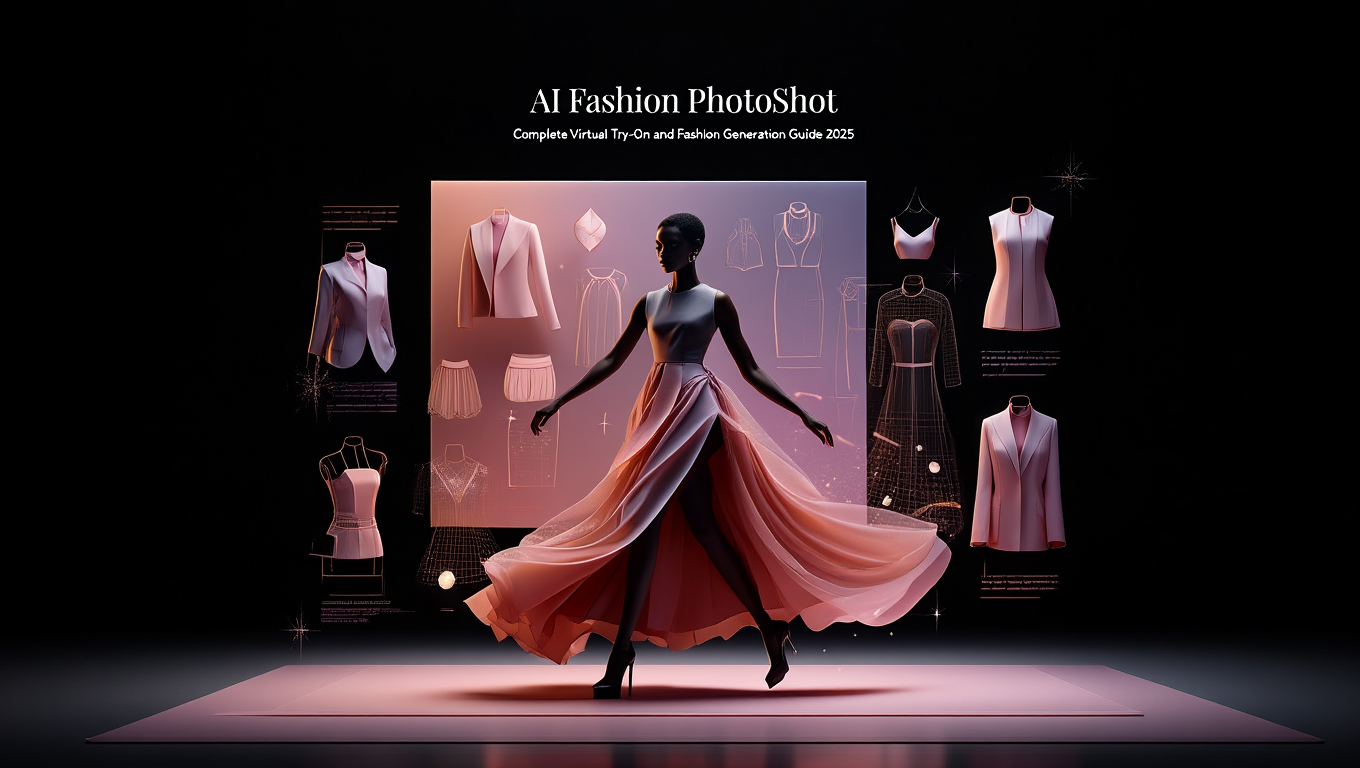
Professional fashion photography costs thousands per shoot. Virtual try-on technology and AI fashion generation are transforming how brands create product imagery and how consumers visualize clothing. From generating catalog photos to letting customers see themselves in outfits, AI fashion tools deliver results previously requiring expensive studios.
Quick Answer: AI Fashion PhotoShot combines virtual try-on technology (showing clothes on different bodies) with AI image generation for creating professional fashion imagery. Tools like Google's AI try-on, FASHN AI, Kolors Virtual, and Kling AI enable visualizing clothing on any model or customer selfie in seconds.
- Virtual try-on works from product images plus model/selfie photos
- AI understands fabric draping, folding, and body interaction
- Major platforms include Google Shopping, FASHN AI, Kolors Virtual
- E-commerce returns reduced up to 40% with virtual try-on
- Processing takes 10-15 seconds for realistic results
What Is AI Fashion Technology?
AI fashion encompasses two main capabilities: generating fashion imagery from scratch and virtual try-on that shows existing clothes on different bodies.
Fashion Image Generation:
Create professional product photos, catalog imagery, and marketing content without traditional photography. AI generates models wearing clothing based on product images and descriptions.
Virtual Try-On:
Take a clothing image and show it on any model or customer. The AI understands how fabric behaves, ensuring realistic draping, stretching, and interaction with the body.
- How virtual try-on technology works
- Major platforms and their capabilities
- Creating professional fashion imagery
- E-commerce applications and benefits
- Limitations and best practices
How Does Virtual Try-On Technology Work?
Virtual try-on uses deep learning to understand bodies, clothing, and their interaction.
The Process:
The AI detects facial, body, and pose features from the model/selfie. It analyzes the clothing item's structure, material, and design. The system calculates how the clothing would drape and fit on that specific body. Finally, it generates a realistic composite showing the person wearing the item.
Technical Components:
| Component | Function |
|---|---|
| Body Detection | Identifies pose and body shape |
| Garment Analysis | Understands clothing structure |
| Fabric Simulation | Models how material behaves |
| Rendering | Creates final realistic image |
Why It Looks Realistic:
Modern systems understand fabric physics. They know how silk drapes differently than denim, how knits stretch, and how structured jackets hold shape. This fabric intelligence creates believable results.
What Platforms Offer AI Fashion Capabilities?
Several major platforms provide fashion AI tools.
Google Shopping AI Try-On (2025):
Google's system now works with just a selfie - no full-body photo required. It's powered by a custom image generation model for fashion that understands human bodies and clothing nuances like how different materials fold, stretch, and drape on different bodies.
The discovery feed features AI-generated videos of real products and suggests outfits based on personalized style.
FASHN AI:
FASHN develops in-house AI models and fashion-focused products for brands and agencies. Create realistic on-model photos in seconds from a single product image - no photoshoot required.
Kolors Virtual:
Leverages AI technology to instantly generate realistic images and videos of outfits on your photo or model with accuracy and speed.
Kling AI:
State-of-the-art generative AI platform supporting video generation, image creation, and advanced editing for content creators. Includes virtual try-on capabilities.
Pic Copilot:
Upload any model and clothing images to create instant try-on photos. Clients report up to 40% reduction in returns related to fit and design.
FitRoom:
AI virtual try-on technology ensures each generated image looks natural, capturing distinctive features of each fabric material and clothing pattern - from silk sheen to wool texture.
For users wanting fashion visualization alongside image generation, Apatero.com provides AI image capabilities that can support fashion content creation.
How Do You Create Professional Fashion Imagery?
Beyond try-on, AI generates complete fashion photography.
Product Photo Generation:
Upload your garment image. AI generates professional product shots with virtual models, multiple angles, and studio lighting without physical photography.
Catalog Creation:
Generate consistent imagery across product lines. Same model, same lighting, same style - impossible economics with traditional photography become trivial with AI.
Marketing Content:
Create lifestyle imagery, campaign visuals, and social content. AI generates models in your clothing in various environments and scenarios.
Workflow:
Provide flat-lay or mannequin product photos. Describe desired model, pose, and environment. AI generates on-model imagery. Select and refine results for use.
What E-Commerce Benefits Does AI Fashion Provide?
Retailers see significant benefits from AI fashion technology.
Reduced Returns:
Virtual try-on helps customers understand fit and appearance before purchase. Pic Copilot reports up to 40% reduction in fit and design related returns.
Lower Production Costs:
Traditional product photography requires studios, models, photographers, stylists. AI reduces or eliminates these costs for many applications.
Faster Time to Market:
New products can have complete imagery same-day rather than waiting for photo shoots. Seasonal and trending items reach customers faster.
Infinite Variation:
Generate the same product on models of different sizes, ethnicities, and styles. Personalization previously impossible at scale becomes practical.
A/B Testing:
Test different visual approaches without production costs. Try various models, poses, and environments to find what converts.
What Are Current Limitations?
Understanding limitations helps set realistic expectations.
Accuracy Limits:
Complex patterns, unusual cuts, and detailed embellishments may not render perfectly. Results vary by clothing type.
Fit Prediction:
While visual try-on improves, predicting actual fit from AI images remains approximate. Size recommendations still benefit from traditional measurement approaches.
Quality Variation:
Results depend on input image quality. Poor product photos produce poor try-on results.
Processing Time:
FitRoom notes 10-15 seconds typical processing time. Not instant, but fast enough for practical use.
Style Limitations:
Some fashion styles, particularly avant-garde or highly structured pieces, challenge current systems.
How Do You Optimize for Best Results?
Several practices improve AI fashion output quality.
Product Image Quality:
Start with high-resolution, well-lit product images. Clean backgrounds help AI isolate the garment accurately.
Model Selection:
Choose model reference images that match your target customer. Diverse model options increase relevance.
Lighting Consistency:
Maintain consistent lighting style across product images for coherent catalog appearance.
Post-Processing:
Light post-processing may enhance results. Color correction, background adjustment, and detail enhancement remain useful.
Iteration:
Generate multiple versions and select best results. AI output varies, and selection improves final quality.
Frequently Asked Questions
Can customers use their own photos for try-on?
Yes, consumer-facing try-on tools allow selfie upload. Google Shopping now works with just a selfie, not requiring full-body photos.
How accurate is virtual try-on for sizing?
Visual representation is good; actual fit prediction is approximate. Virtual try-on shows appearance, not precise measurements.
What clothing types work best?
Relatively simple garments with clear structure work best. Complex layering, unusual constructions, or very detailed items are more challenging.
Can AI replace all product photography?
For many applications, yes. High-end brands may still prefer traditional photography for flagship campaigns, but routine product imagery can be AI-generated.
How do customers respond to AI fashion imagery?
Studies show customers engage well with quality AI imagery. The 40% return reduction demonstrates real impact on purchase satisfaction.
What resolution can AI fashion tools produce?
Most tools produce web-quality imagery. Some offer higher resolution for print applications.
Can I use AI try-on for video content?
Emerging tools like PixVerse and Kling AI support video. Expect rapid improvement in AI fashion video.
Are there copyright concerns with AI fashion images?
Generated images are typically owned by the creator. Review specific platform terms for commercial use rights.
Conclusion
AI fashion technology transforms how the industry creates and presents clothing imagery. Virtual try-on reduces returns and improves customer confidence. AI generation eliminates traditional photography costs for routine imagery.
Key Applications:
Virtual try-on for customer visualization. Product photo generation for catalogs. Marketing content creation. Personalized shopping experiences.
Getting Started:
Choose a platform matching your needs - Google for consumer try-on, FASHN or Pic Copilot for business applications. Prepare quality product images. Test with representative samples before full deployment.
Looking Forward:
Expect continued improvement in fabric simulation, fit prediction, and generation quality. AI fashion will increasingly become standard for e-commerce imagery.
For users wanting AI image generation capabilities that support fashion content alongside other creative needs, Apatero.com provides versatile generation tools through an accessible interface.
The democratization of professional fashion imagery opens possibilities for brands at every scale. AI fashion tools make quality product presentation achievable without traditional photography investments.
Turn a phone snapshot into a listing photo
Clean, styled product shots for Etsy, Shopify and Amazon, from the photo you already have. Check your welcome allowance and the displayed cost before generating.
Related Articles
5 Proven AI Influencer Niches That Actually Make Money in 2025
Discover the most profitable niches for AI influencers in 2025. Real data on monetization potential, audience engagement, and growth strategies for virtual content creators.

AI Background Replacement: Professional Guide 2025
Master AI background replacement for professional results. Learn rembg, BiRefNet, and ComfyUI workflows for smooth background removal and replacement.
AI Character Consistency: How to Maintain Virtual Persona Identity Across Content
Learn techniques for maintaining AI character consistency across hundreds of images. Master the art of creating recognizable virtual personas with consistent visual identity.